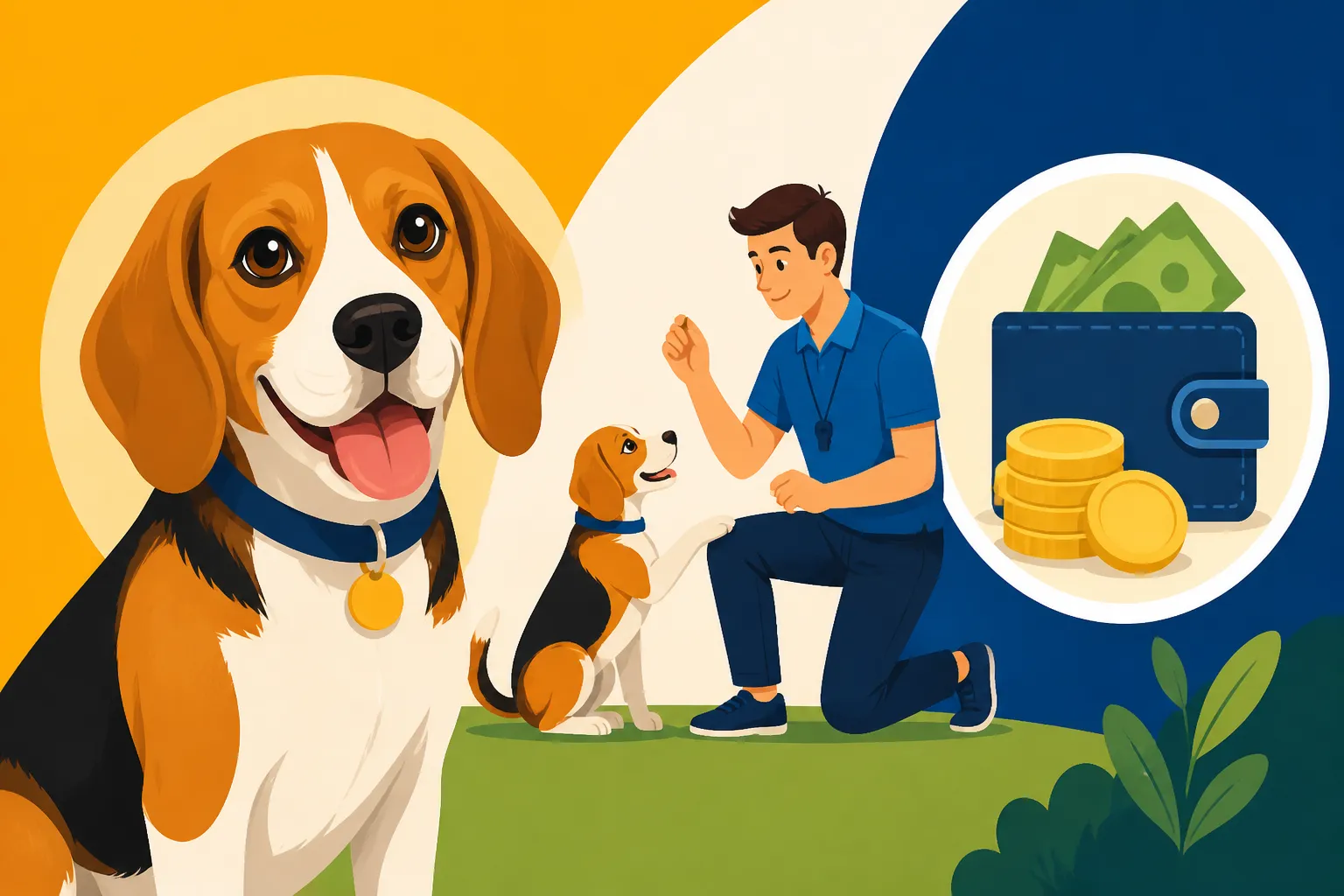
Beagle Training Class Fees
Bringing a new Beagle into your life is an absolute joy, but let's be real – these charming hounds come with their own unique set of quirks and challenges. Many Beagle owners quickly discover that their dog's incredible nose, booming bay, and independent spirit can make traditional obedience training feel like an uphill battle. You might find yourself frustrated when your Beagle ignores your calls the moment a fascinating scent wafts by, or when their enthusiastic vocalizations upset the neighbors. This guide is here to walk you through the various types of training classes available for Beagles, what those classes typically cost, and how investing in professional guidance can transform your life with your beloved hound.
Understanding the Value of Professional Beagle Training
It’s easy to feel like you’re doing something wrong when your Beagle seems to forget everything you’ve taught them the second they catch a whiff of something interesting. But it's not you, and it's certainly not because your Beagle isn't smart! It’s because Beagles are purpose-bred scent hounds, and their instincts are incredibly powerful. Professional training helps you work with, rather than against, these innate drives, turning potential problems into opportunities for enrichment and connection.
Why Beagles Need Specialized Training
Beagles are unique in the canine world, largely due to their extraordinary sense of smell. With an estimated 220 million scent receptors, their noses are their primary way of experiencing the world, making them highly susceptible to environmental distractions. Imagine trying to concentrate on your boss's voice when a five-star meal is being cooked right next to you – that's how a Beagle feels on a walk! This deep sensory absorption is why traditional "come" commands often fail when a particularly enticing scent trail takes over. Getting reliable Beagle Recall and Why Your Voice Stops Registering requires specific techniques and a deep understanding of their drive.
Beyond their noses, Beagles are also famously vocal. Their characteristic bay, a deep, resonant sound, was bred into them to signal to hunters when they were on a trail. While charming in the field, this can quickly become problematic in a suburban home. Without proper guidance, a Beagle’s natural tendency to vocalize can escalate into excessive barking, baying, or howling, leading to stress for both you and your neighbors. Understanding Beagle Howling, Baying and Barking Explained is crucial for managing this trait effectively. A professional trainer can help you identify triggers and teach your Beagle more appropriate ways to communicate.
These dogs are intelligent, but they're also independent and, let's face it, a little stubborn when their instincts kick in. They weren't bred to be eager-to-please lap dogs; they were bred to work a scent trail for hours. This means they often need more motivation and consistency than some other breeds. What might work for a Golden Retriever might not cut it for a Beagle, whose focus can be intensely narrow on a particular scent, making them seem selectively deaf.
The Long-Term Benefits of Early Investment
Investing in professional training, especially starting early in your Beagle's life, isn't just about teaching commands; it's about setting a foundation for a well-adjusted, happy dog and a harmonious household. Think of it as preventative medicine for behavioral issues. Common Beagle tendencies like destructive chewing, counter-surfing, or even resource guarding can become deeply ingrained habits if not addressed early. Learning how to properly Beagle-Proof a Kitchen Counter and redirect those natural scavenging behaviors can save you significant frustration and even potential vet bills down the line.
Moreover, training builds a stronger bond between you and your Beagle. When you both understand what’s expected, communication becomes clear, trust deepens, and your relationship flourishes. It empowers you to better understand your dog's needs and cues, fostering a respectful partnership. A well-trained Beagle is also a safer Beagle. Reliable recall and leash manners mean they are less likely to bolt into traffic, wander off, or get lost, significantly reducing stress and anxiety for you both. While a microchip is a vital backup for Beagle Microchips and Getting a Lost Dog Back, training aims to prevent that scenario from happening in the first place.
The initial cost of training classes might seem like an expense, but consider it an investment. The cost of fixing entrenched behavioral problems, dealing with property damage, or managing neighbor complaints can far outweigh the upfront cost of good training. Plus, a Beagle that is a joy to live with is much less likely to end up in a shelter, contributing to a longer, happier life for your furry family member.
Types of Beagle Training Classes and Their Costs
The world of dog training offers a wide array of options, each with its own focus and price point. For Beagles, understanding which type of class best suits their unique needs and drives is key to getting the most out of your investment.
Puppy Socialization and Basic Obedience Classes
For new Beagle puppies, starting with a good puppy socialization class is paramount. These classes are typically designed for puppies between 8 and 16 weeks of age, focusing on crucial early experiences. They provide a safe, supervised environment for puppies to interact with other dogs and people, helping them develop appropriate social skills and preventing future fear or aggression issues. Beyond just play, these classes often introduce positive exposure to novel sights, sounds, and textures, all vital for a well-rounded puppy. This is where you'll begin to learn how to properly Socializing a Beagle Puppy for Pack Life, preparing them for a lifetime of happy interactions.
Once your Beagle puppy is a little older, or if you've adopted an adult, basic obedience classes are the next logical step. These sessions cover foundational commands like sit, stay, down, come, and polite leash walking. For a Beagle, these classes are particularly effective when leveraging their incredible food drive. Trainers often teach you how to use high-value treats to motivate your Beagle, turning training into a fun, rewarding game. It's truly amazing what a Beagle will do for a tasty morsel, making Using a Beagle's Food Drive as the Training Lever an indispensable tool. You'll learn to capture their attention amidst distractions and establish clear communication.
| Class Type | Age Range (Typical) | Focus | Estimated Cost (Per Session/Package) |
|---|---|---|---|
| Puppy Socialization | 8-16 weeks | Social skills, bite inhibition, novel exposure, basic cues | $120 – $250 (4-6 week package) |
| Basic Obedience | 4 months+ | Sit, Stay, Come, Down, Leash Manners, Name Recognition | $150 – $350 (6-8 week package) |
| Advanced Obedience | 6 months+ | Proofing commands, reliable recall, polite greetings, distraction work | $180 – $400 (6-8 week package) |
| Scent Work/Nose Work | All ages | Channeling natural scent drive, focused searching | $150 – $300 (6 week package) |
| Agility (Intro) | 1 year+ | Basic obstacles, body awareness, handler communication | $180 – $350 (6-8 week package) |
| Private Training Session | All ages | Tailored behavioral modification, specific skill development | $75 – $200 (per hour) |
Typical costs for these foundational classes can vary significantly. Puppy socialization and basic obedience courses are often offered in multi-week packages, ranging from around $120 to $350 for a 4-8 week program. Many facilities, like local humane societies or pet store chains such as Petco or PetSmart, offer these entry-level courses. When choosing a class, especially for a Beagle, look for small class sizes, positive reinforcement methods, and trainers who understand breed-specific challenges. Remember that consistency at home is just as important as the class itself. Early guidance on What to Teach a Beagle Puppy Before It Finds Its Nose can make a huge difference in their training journey.
Advanced Obedience and Specific Skill Classes
Once your Beagle has mastered the basics, you might find yourself wanting to refine their skills or tackle more complex behaviors. Advanced obedience classes build upon the foundation of sit, stay, and come, taking them into more distracting environments and adding duration and distance to commands. This is where you really "proof" your Beagle's understanding, ensuring they respond reliably even when surrounded by enticing smells, sounds, or other dogs. These classes often include preparation for certifications like the Canine Good Citizen (CGC) test, which demonstrates your dog's good manners in public.
Other specific skill classes might focus on particular challenges or goals. For Beagles, recall workshops are incredibly popular, and for good reason. Improving Hiring a Trainer Just for Beagle Recall can be a game-changer, allowing you more freedom in safely fenced areas and vastly improving your peace of mind. Other specialized courses might include polite greetings (to prevent jumping on guests), loose-leash walking in high-traffic areas, or even preparing for therapy dog work, given the Beagle's generally friendly disposition.
The costs for advanced obedience and specific skill classes are typically similar to or slightly higher than basic obedience, often ranging from $180 to $400 for a 6-8 week package. Workshops focused on a single skill, like a "recall clinic" or "loose-leash walking seminar," might be priced individually, from $50 to $150 for a half-day or full-day session. These classes are often held at dedicated dog training facilities or by independent trainers. The value here comes from pushing your Beagle's learning and solidifying behaviors in real-world scenarios, making your life together much more enjoyable and less stressful.
Specialized Scent Work and Agility Training
For a Beagle, no type of training taps into their very essence quite like scent work. These activities are designed to harness and develop their natural, unparalleled olfactory abilities in a structured and fun way. Scent work classes, sometimes called nose work or K9 Nose Work, teach your Beagle to detect specific odors (like essential oils) and communicate their findings. It’s an incredibly enriching activity that provides immense mental stimulation, often tiring a Beagle out more effectively than a long walk. Learning Scent Work as the Job a Beagle Was Built For can be a revelation for owners, seeing their dog thrive in their natural element.
Beyond structured classes, there are also competitive forms of scent work like Barn Hunt, where Beagles use their noses to find rats (safely enclosed in aerated tubes) hidden in bales of hay, mimicking their traditional hunting role. Tracking involves following a human scent trail, while detection work can even lead to more serious applications, like those performed by the USDA's Beagle Brigade. Initial scent work classes typically run from $150 to $300 for a 6-week introductory package, with advanced levels costing more.
Agility training is another fantastic outlet for an energetic Beagle, offering both physical exercise and mental engagement. It involves guiding your dog through an obstacle course including tunnels, jumps, weave poles, and seesaws. Agility builds teamwork and communication, and many Beagles absolutely love it. However, given their slightly longer backs and propensity for disc issues, it’s crucial that agility training is done safely and correctly, with an emphasis on proper form to protect their joints. While it may not directly discuss agility, learning about Ramps and Steps That Protect a Beagle Spine can give you an idea of the kind of joint care considerations to keep in mind, even for active Beagles.
Introductory agility classes usually cost between $180 and $350 for a 6-8 week session. As you progress, you might invest in private coaching, competition entry fees, and specialized equipment. Retailers like Chewy offer various agility starter kits and tunnels if you want to practice some elements at home, but professional instruction is highly recommended to ensure safety and correct technique.
Factors Influencing Training Class Fees
The cost of dog training isn't static; it can fluctuate based on several key elements. Understanding these factors can help you make an informed decision and find the best value for your investment in your Beagle's education.
Group Classes vs. Private Sessions
One of the most significant factors determining cost is whether you opt for group classes or private one-on-one sessions. Group classes are generally more affordable, ranging from $150 to $400 for a multi-week course. The benefits extend beyond just cost; they offer excellent opportunities for your Beagle to socialize with other dogs and learn to focus amidst distractions, which is a crucial skill for a scent hound. The communal learning environment can also be motivating for owners, fostering a sense of camaraderie.
Private training sessions, on the other hand, offer individualized attention tailored specifically to your Beagle's unique needs and your family's lifestyle. These sessions are ideal for addressing specific behavioral issues that might be too disruptive for a group setting, such as reactivity, severe separation anxiety, or intense resource guarding. They also offer flexibility in scheduling and allow the trainer to work with your Beagle in their home environment, which can be invaluable for behaviors that occur only at home, like counter-surfing or nuisance barking. Because of this personalized attention and convenience, private sessions are significantly more expensive, typically costing anywhere from $75 to $200 per hour, or $400 to $1,000 for a package of 3-5 sessions. For complex or deeply ingrained issues, this higher investment often yields faster and more targeted results.
Location, Instructor Experience, and Facility Quality
Where you live can play a big role in training costs. Facilities in large metropolitan areas or regions with a high cost of living generally have higher fees than those in more rural or suburban settings. This is simply a reflection of overhead costs for the business and the trainer's living expenses.
The experience and certifications of the instructor are also paramount. A highly qualified, certified professional dog trainer (CPDT-KA, KPA CTP) or a certified behavior consultant (CBCC-KA) will likely charge more than an uncertified trainer. These certifications indicate that the trainer has met rigorous standards of knowledge and experience, often requiring hundreds or thousands of hours of practical experience and continuing education. For a breed like a Beagle with specific behavioral traits, investing in a trainer who truly understands hound psychology and positive reinforcement methods is invaluable. Their expertise can save you time, frustration, and potential setbacks, making the higher fee a worthwhile investment in the long run.
Finally, the quality of the training facility itself can impact pricing. A clean, well-maintained indoor facility with appropriate equipment, climate control, and ample space will usually command higher fees than an outdoor park class or a less-equipped space. Facilities with low student-to-instructor ratios (ensuring more individual attention in group settings) also tend to be pricier but offer a better learning environment. Before committing, it's always a good idea to visit the facility, observe a class, and speak with the trainers to ensure it's a good fit for you and your Beagle.
Package Deals and Membership Options
Many training schools and independent trainers offer package deals to incentivize enrollment in multiple courses or longer-term programs. For instance, you might find a discounted rate if you sign up for both a puppy class and a basic obedience course together, or if you commit to a series of private sessions upfront. These packages can represent a significant saving compared to paying for each class or session individually, and they provide a clear progression for your Beagle's learning journey.
Some training centers also offer membership programs, which might include access to drop-in classes, open practice times, or discounts on workshops and specialty courses. These can be particularly appealing for Beagle owners who want to commit to ongoing training and enrichment, keeping their dog's skills sharp and providing continuous mental stimulation. For a breed that thrives on having a "job" to do, a membership might be a cost-effective way to ensure they're always learning something new.
When evaluating package deals or memberships, consider your Beagle's specific needs and your long-term training goals. If you're planning to take your Beagle through several levels of obedience or explore different dog sports, a package deal could offer excellent value. Always read the terms and conditions carefully, checking for expiration dates or restrictions. Sometimes, the initial sticker shock of a large package price can obscure the per-class or per-session savings you're actually getting. It's about finding the balance between upfront cost and the sustained benefits for your Beagle.
Beyond Class Fees: Other Training-Related Expenses
While the cost of the training classes themselves is a significant part of the budget, it's important to remember that training extends beyond the classroom. There are several other expenses you'll likely incur to support your Beagle's learning and ensure their continued success.
Essential Training Tools and Supplies
To make the most of your training classes and practice at home, you'll need a few key supplies. First and foremost for a Beagle: high-value treats. These aren't your everyday kibble; we're talking about small, soft, incredibly palatable treats that your Beagle will do anything for. Many owners find that soft, fresh-food options work best, as they are highly motivating and easy for a dog to swallow quickly without interrupting the flow of training. If you're already feeding high-quality fresh food like Ollie to your Beagle, you can often portion out small bits of their regular meal as these powerful rewards. A treat pouch that attaches to your waist is also essential for quick and easy access during sessions. A clicker is another inexpensive but highly effective tool for marking desired behaviors precisely.
Beyond treats, you'll need appropriate equipment. For a pulling Beagle, a front-clip harness is often recommended as it redirects their forward momentum without causing discomfort or damage to their neck. A good quality, comfortable leash is also a must. For practicing recall in safe, open spaces, a long line (15-30 feet) is invaluable, allowing your Beagle to explore scents while still being securely attached. You can find a wide variety of these tools and supplies at pet retailers like Chewy, which often have sales and loyalty programs.
Finally, don't underestimate the power of enrichment toys and puzzle feeders. Beagles are incredibly smart and need mental stimulation. A puzzle feeder that makes them work for their meal can slow down a fast eater and engage their brain, preventing boredom that often leads to destructive behaviors. Durable chew toys are also crucial, especially for puppies going through their teething phase, to redirect their chewing from your furniture. For dogs that need to learn to settle in their crate, providing appropriate enrichment can make a world of difference, as discussed in Beagle Crate Training From the First Day.
Ongoing Enrichment and Maintenance Costs
Training isn't a one-and-done event; it's an ongoing journey. To maintain your Beagle's skills and keep them mentally and physically stimulated, you'll incur costs related to continued enrichment. This might include periodically enrolling in new classes to learn advanced skills or explore a new dog sport like Rally Obedience or Earthdog trials. Even simple things like new puzzle toys or interactive feeders for home can add up over time.
For Beagles who struggle with separation anxiety or simply thrive on company, daycare or professional pet sitters can be a valuable investment. Daycare provides a structured environment for socialization, exercise, and mental stimulation, preventing boredom and loneliness when you're away. Pet sitters, whether in your home or theirs, ensure your Beagle receives attention and care, often following your training protocols. These services can range from $25-$60 per day for daycare or $20-$40 per visit for a sitter. If you travel frequently, knowing the typical Beagle Boarding, Sitters and Travel Costs is essential for your overall budget.
It's also important to factor in the unexpected. While training can help prevent some accidents (like a Beagle eating something toxic from the counter), Beagles are still curious creatures who can get into trouble. Having pet insurance, such as a plan from Healthy Paws, can provide immense peace of mind. It won't cover training fees, but it can help offset the costs of emergency vet visits, surgeries, or ongoing treatment for illnesses or injuries that might occur regardless of training. For instance, if your active Beagle were to suffer an injury during an agility session, or simply as they age, having insurance can make a significant difference in your ability to afford the best medical care.
Budgeting for Your Beagle's Training Journey
Bringing a Beagle into your home is a commitment, and part of that commitment involves ensuring they are well-trained and well-adjusted. Budgeting effectively for their training journey can help you provide them with the best start and continued support without breaking the bank.
How to Find Affordable and Effective Training
While top-tier trainers can be expensive, effective training doesn't always have to come with a hefty price tag. Many local animal shelters and humane societies offer highly affordable, high-quality obedience classes for puppies and adult dogs. These organizations often have dedicated, experienced trainers who are passionate about helping dogs and their owners succeed, and their fees are usually lower to make training accessible to more pet owners. This can be a fantastic way to get professional guidance without a huge financial outlay.
Another option is to look for newer trainers or those who are completing an apprenticeship. They might offer slightly lower rates as they build their client base and gain more hands-on experience under the mentorship of a seasoned professional. Always ensure they are working under supervision or have verifiable qualifications, even if they are just starting out. You can also explore local dog clubs or breed-specific organizations (like a local Beagle club); these groups often host training workshops or classes at a reduced cost for members, taught by volunteers or experienced members.
For those on a very tight budget, numerous online resources, books, and YouTube channels offer valuable training advice. While these self-study options can be a good supplement, they generally can't replace the personalized feedback and hands-on guidance of an in-person trainer, especially for a Beagle's unique challenges. A physical class helps with real-time corrections and gives you the benefit of an experienced eye to spot subtle cues you might miss. Mixing online learning with a foundational group class can be a cost-effective strategy.
The True Cost of Skipping Professional Training
It might be tempting to skip professional training to save money, especially when looking at the overall monthly cost of a Beagle puppy. However, the truth is that the cost of not training your Beagle can often far outweigh the expense of classes. Untrained Beagles are more prone to developing behavioral issues that can lead to significant financial strain and emotional distress.
Consider the financial implications: a Beagle that counter-surfs might ingest something toxic, leading to an emergency vet bill that could be hundreds or even thousands of dollars. A Beagle that digs under fences or bolts out the door without reliable recall could get lost, incurring costs for searching, impound fees, or even lead to accidents. Nuisance barking or howling can result in fines from your homeowner's association or local authorities, not to mention strained relationships with neighbors. Destructive chewing due to boredom or anxiety can mean replacing furniture, shoes, or personal belongings. These "hidden costs" can quickly add up, making the initial investment in training seem like a bargain by comparison.
Beyond the financial aspect, there's the emotional toll. Living with an untrained dog, especially one as intelligent and energetic as a Beagle, can be incredibly stressful and frustrating. You might feel isolated, unable to take your Beagle to public places or even have guests over. The bond between you and your dog can suffer if communication breaks down, leading to feelings of resentment or helplessness. Sadly, behavioral issues are one of the leading reasons dogs are surrendered to shelters. Investing in training is an investment in your mental well-being and in ensuring your Beagle lives a full, happy life as a cherished member of your family. Proactive training not only helps your wallet but, more importantly, ensures a positive, lasting relationship with your beloved Beagle.
Disclaimer
The information provided in this guide is for general informational purposes only and does not constitute professional veterinary or dog training advice. Always consult with a qualified veterinarian or certified professional dog trainer for any health or behavioral concerns specific to your Beagle. Training costs are estimates and can vary significantly by location, instructor, and specific program.