Beagle Toys and Puzzle Feeders Worth Buying
Beagles are wonderful companions, full of personality and an insatiable curiosity that often leads their incredible noses into all sorts of mischief. If you've ever come home to a shredded cushion or found your favorite shoe meticulously deconstructed, you know the frustration that can arise from an understimulated or bored Beagle. This comprehensive guide will walk you through the world of Beagle-appropriate toys and puzzle feeders, helping you choose options that cater to their unique instincts, keep them mentally engaged, and save your household items from becoming their next chew project.
Understanding Your Beagle's Play Needs
When we talk about Beagles, we're talking about a breed with a deep-seated history as scent hounds. They were literally bred for a job that involved following their noses for hours on end, and that instinct is still very much alive in the modern-day pet Beagle. Understanding these inherent traits is the first step in selecting toys that truly enrich their lives and prevent undesirable behaviors.
The Scent-Driven Instinct
A Beagle's nose is legendary, boasting an estimated 220 million scent receptors. For context, we humans have about 5 million. This means their world is primarily experienced through scent, and ignoring this fundamental aspect of their being can lead to significant behavioral challenges. When your Beagle walks with their nose glued to the ground, they're not just sniffing casually; they're reading an entire story written in odors, deciphering who's been by, what they ate, and where they went. It's a complex, absorbing activity for them.
Indoors, this powerful instinct can manifest as constant searching, even when there's nothing obvious to find. They might nose through laundry, root under furniture, or investigate every crumb on the floor. Without appropriate outlets for this drive, a Beagle can become restless, anxious, or even destructive as they try to create their own "scent trails" by tearing things apart. Providing toys that engage their sense of smell isn't just about entertainment; it's about fulfilling a primal need. Think of it as intellectual stimulation for their most powerful organ.
The Beagle's High Food Motivation
If there's one thing almost as strong as a Beagle's nose, it's their stomach. Beagles are notoriously food-motivated, a trait that was advantageous in their hunting past (where finding food meant survival) but can be a real challenge in a domestic setting. This high food drive often leads to common Beagle behaviors like counter-surfing, trash raiding, and an uncanny ability to find dropped morsels that seemed to vanish into thin air. Many a Beagle owner has learned the hard way about leaving food unattended or not securing garbage bins.
This intense focus on food, while sometimes exasperating, is also a powerful tool for positive reinforcement training and enrichment. Instead of fighting it, we can channel it. Food-dispensing toys and puzzle feeders are specifically designed to leverage this motivation, turning mealtime or treat time into a mental workout. By making your Beagle "work" for their food, even for just a few minutes, you're tapping into their problem-solving abilities and providing a much-needed mental challenge that satiates both their mind and their stomach, helping to reduce the likelihood of destructive scavenging. For strategies on managing this, you might find our guide on Beagle Counter Surfing and Trash Raiding particularly helpful.
Energy Levels and Destructive Potential
Despite their relatively small size, Beagles are energetic dogs. They were bred to keep pace with hunters on foot for hours, covering miles while following a scent. While a pet Beagle might not be tracking rabbits all day, that innate energy still needs an outlet. A bored Beagle is almost inevitably a destructive Beagle. Without sufficient physical and mental stimulation, they will create their own entertainment, which often involves chewing, digging, or vocalizing excessively.
This destructive behavior isn't out of malice; it's a symptom of unmet needs. A Beagle left alone with nothing to do for long stretches is likely to find an inappropriate chew item – your sofa leg, a remote control, or a child's toy. The frustration for owners can be immense, leading to damaged property and strained relationships. The right combination of exercise and engaging toys can dramatically reduce these problems, giving them appropriate outlets for their energy and chewing instincts, helping them to settle contentedly rather than inventing their own, often costly, forms of play.
Essential Categories of Beagle Toys
Choosing the right toys for your Beagle isn't just about throwing a few things their way; it's about understanding which types of toys best suit their particular instincts and energy levels. From hardcore chewers to avid fetch players, there's a world of toys out there.
Durable Chew Toys for Persistent Gnawers
Beagles are known for their strong jaws and their love of chewing, especially during puppyhood and adolescence. Beagle Puppy Teething and Hard Mouthing is a serious business, but even adult Beagles benefit greatly from appropriate chew toys. Without designated chew items, your Beagle will turn to furniture, shoes, or anything else they can get their mouths on. The key here is durability and safety. Look for toys that can withstand vigorous chewing without breaking into small, swallowable pieces.
Brands like Kong are a classic for a reason. Their natural rubber toys, especially the black "extreme" line, are incredibly tough and can be stuffed with treats or peanut butter, turning them into a long-lasting puzzle. Nylabone and Benebone also offer a variety of nylon chew toys in different shapes and flavors that are designed to be gnawed on for extended periods. When selecting, consider the size – it should be large enough that your Beagle can't accidentally swallow it whole, but small enough for them to comfortably get their mouth around. Always supervise new chew toys, especially at first, to ensure they are safe for your individual dog. Remember, a toy that is too soft will be shredded quickly, becoming a potential choking hazard, while one that's too hard might risk dental damage.
Engaging Fetch and Tug Toys
While Beagles are primarily scent hounds, they can certainly enjoy a good game of fetch or tug-of-war, especially if it's introduced early and made rewarding. These interactive toys are fantastic for burning off physical energy and strengthening the bond between you and your dog. Toys designed for throwing, like sturdy rubber balls (avoid standard tennis balls which can be easily chewed apart and abrasive to teeth) or even specific fetch toys like those from Chuckit!, can provide excellent cardiovascular exercise in a fenced yard or large, safe area.
Tug toys, typically made from strong rope or durable rubber, are excellent for channeling predatory instincts in a controlled way. The key with tug is to establish clear rules: the game starts and stops on your command, and your Beagle should release the toy when asked. This not only makes the game safer but also reinforces your leadership. Playing tug or fetch provides a different kind of mental engagement than scent work, requiring focus on you and the game, and offering a fantastic way for you to actively participate in their playtime.
Comfort and Cuddly Companions
Even the toughest Beagle has a soft spot, and many enjoy having plush toys to carry around, "kill," or snuggle with. These softer toys fulfill a different need – perhaps a maternal instinct, a desire for comfort, or simply the joy of shaking something satisfyingly soft. However, for a Beagle, "plush" often translates to "something to disembowel." It's crucial to select plush toys that are as durable as possible, ideally with reinforced stitching and minimal stuffing.
Look for brands that market their plush toys as "tough" or "tear-resistant." Some plush toys are designed with extra layers of fabric or come with squeakers that are harder to remove. Always inspect soft toys regularly for damage. If stuffing starts to come out, or if parts like eyes or noses become loose, it's time to discard the toy to prevent ingestion, which can lead to serious gastrointestinal issues requiring veterinary attention. A good option is often plush toys designed for larger breeds, which tend to have sturdier construction.
The Magic of Puzzle Feeders and Slow Bowls
For a breed as driven by food and scent as the Beagle, puzzle feeders and slow bowls aren't just toys; they're essential enrichment tools. They transform mealtime from a quick gulping session into a mentally stimulating activity that engages their natural foraging instincts.
Why Puzzle Feeders are a Game Changer for Beagles
Beagles, bless their hearts, tend to inhale their food. This isn't just poor table manners; it can lead to health issues like indigestion, vomiting, and in severe cases, potentially life-threatening bloat. More importantly, it's a missed opportunity for mental enrichment. A meal that takes 30 seconds to consume offers no mental challenge. Puzzle feeders, on the other hand, force your Beagle to slow down, think, and work for their food. This engagement taps into their natural problem-solving abilities and satisfies their instinct to forage.
The benefits are numerous. Firstly, it extends mealtime, preventing rapid ingestion. Secondly, it provides significant mental stimulation, which is just as tiring for a Beagle as physical exercise. A dog that has spent 15-20 minutes pushing, nudging, and manipulating a puzzle feeder to get their breakfast will often be more relaxed and less prone to destructive behaviors afterward. It's a fantastic way to combat boredom and mild Beagle Separation Anxiety in a Pack Breed when you have to leave them alone. Many owners report a calmer, more satisfied Beagle when puzzle feeders become a regular part of their routine. You can find a huge variety of these beneficial products at places like Chewy, offering options for every budget and skill level.
Types of Puzzle Feeders and How They Work
The world of puzzle feeders is vast, ranging from simple to incredibly complex. The key is to start with something relatively easy and gradually increase the difficulty as your Beagle masters each level.
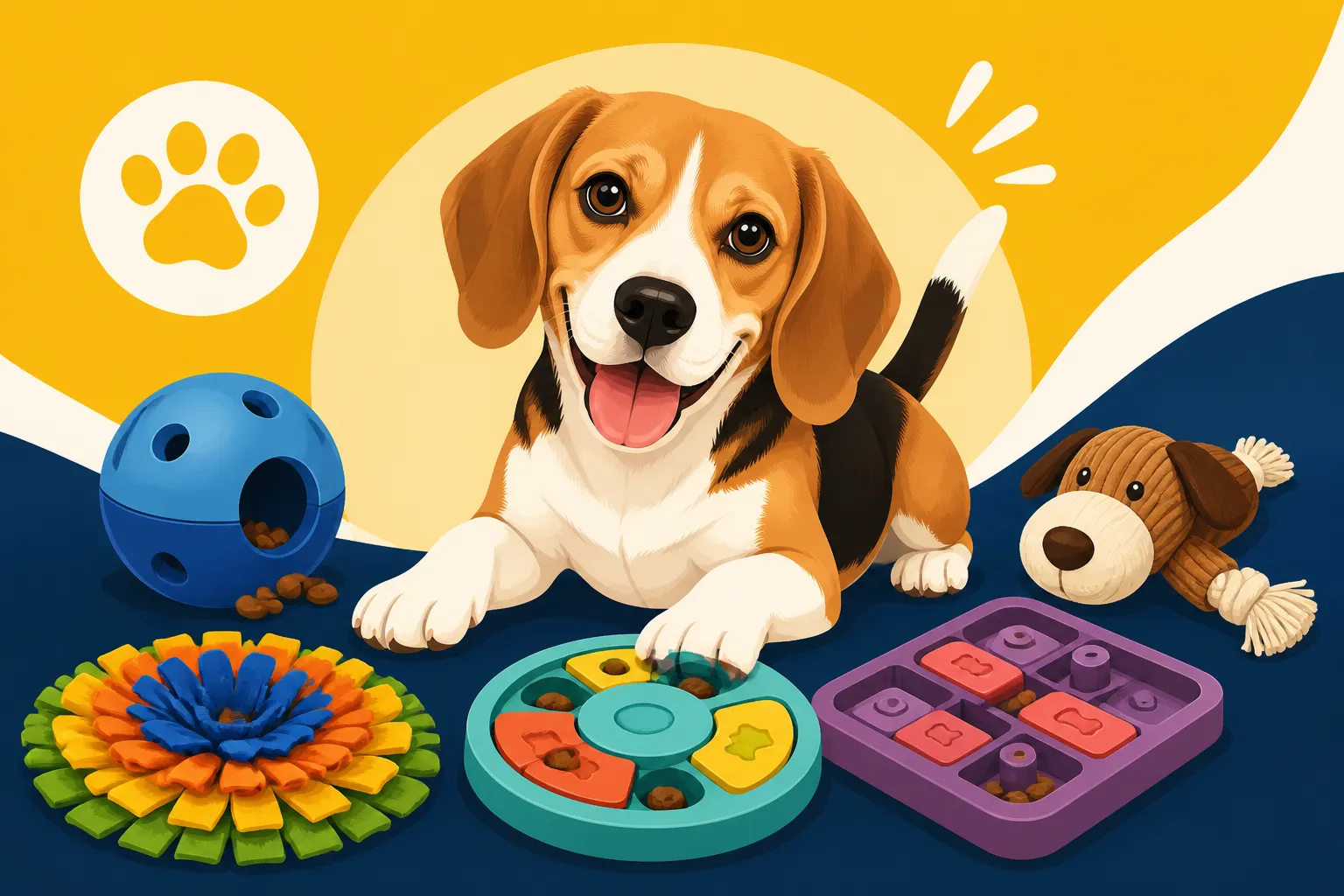
- Snuffle Mats: These are fabric mats with dozens of fabric strips sewn on, creating a "grass" texture where you can hide kibble or small treats. Your Beagle uses their nose to root around and find the food, mimicking natural foraging. They're excellent for beginners and deeply engage their scent drive.
- Treat-Dispensing Balls/Kongs: These are hollow toys with an opening where kibble or treats fall out as your Beagle rolls, bats, or nudges them. Classic examples include the Kong Wobbler, which stands upright and wobbles when nudged, releasing food. These are durable and offer a good physical and mental challenge.
- Sliding or Flipping Puzzles: These are typically made of plastic or wood and feature compartments or covers that your Beagle needs to slide, lift, or flip to reveal hidden food. Brands like Nina Ottosson (now part of Outward Hound) offer a range of these, from basic to advanced. They require more fine motor skills and cognitive effort.
- Automatic Feeders with Games: Some advanced feeders integrate simple games where your Beagle might press a button or step on a pad to release food. While more expensive, these can offer extended engagement.
When introducing a new puzzle feeder, show your Beagle how it works a few times, making it easy for them to succeed initially. Success builds confidence and keeps them engaged.
Slow Feeder Bowls for the Gulping Beagle
While not strictly "puzzles," slow feeder bowls are an invaluable tool for Beagles who eat their meals in seconds flat. These bowls have various ridges, mazes, or obstacles built into the design of the bowl itself, which force your Beagle to eat around them, thereby slowing down their consumption. This simple intervention can have significant health benefits.
By preventing rapid gulping, slow feeder bowls help to reduce the risk of digestive upset, gas, and regurgitation. It gives their digestive system more time to process the food. While they don't offer the same level of mental challenge as a complex puzzle feeder, they are a practical everyday solution for slowing down mealtime. You can find slow feeder bowls in various materials, including ceramic, stainless steel, and BPA-free plastic. Combine a slow feeder bowl with a portion of their regular diet, perhaps even a well-balanced custom meal plan from a service like Ollie, to ensure they’re getting proper nutrition while also slowing down their eating pace. This small change can make a big difference in your Beagle's overall digestive health and comfort.
Choosing the Right Toys for Your Specific Beagle
Selecting the perfect toy isn't a one-size-fits-all endeavor. Your Beagle's age, individual personality, and even their current health status should influence your choices. Thoughtful selection ensures safety, engagement, and lasting enjoyment.
Age-Appropriate Selections: Puppies to Seniors
A Beagle's play needs evolve throughout their life. What's perfect for a puppy might be too challenging or too easily destroyed by an adult, and what an adult loves might be too strenuous for a senior.
- Beagle Puppies: These little bundles of energy are primarily focused on exploring their world with their mouths. Teething is a big factor, so rubber chew toys that can be frozen (like specific puppy Kongs) offer relief for sore gums. Soft, durable plush toys are great for comfort and gentle play, but always supervise to ensure they're not ingesting stuffing. Puzzle toys with easily accessible treats can introduce mental stimulation early on. Remember, a puppy's mouth is smaller, so choking hazards are a significant concern.
- Adolescent/Adult Beagles: This is often when their destructive chewing peaks, alongside boundless energy. Invest in the toughest chew toys you can find. Puzzle feeders should become a daily staple, challenging their intelligence. Interactive toys like tug ropes and sturdy fetch balls are great for burning physical energy. These are the years when consistent exercise is crucial, so toys that encourage movement are invaluable. You might also notice their prey drive really kicks in during this phase, making the need for Why a Beagle Should Never Be Off Leash Unfenced even more apparent.
- Senior Beagles: As Beagles age, their energy levels naturally decrease, and they may develop joint issues like Beagle Arthritis Arriving in Middle Age. Their play might become gentler. Soft chew toys, comfortable plush companions, and easier puzzle feeders (or those with larger openings) are ideal. Scent games like snuffle mats are still wonderful for mental stimulation without putting strain on their bodies. Short, gentle fetch sessions are fine, but be mindful of their stamina. Always prioritize comfort and safety for your older companion. Our guide on Senior Beagle Care Once the Nose Slows Down offers more insights into caring for aging Beagles.
Safety First: Materials, Size, and Durability
Safety should always be your top priority when choosing toys. A poorly chosen toy can quickly become a serious health hazard.
- Materials: Opt for non-toxic materials. Reputable brands will usually state their materials are pet-safe. Avoid toys with small parts that can easily be chewed off and swallowed, such as plastic eyes, bells, or squeakers that are not securely embedded. Some Beagles, especially those with sensitive stomachs, might react to certain plastics or dyes, so observe them closely when introducing new toys.
- Size: This is critical for preventing choking. A toy should be large enough that your Beagle cannot fit the entire object into their mouth, or swallow it in one gulp. If a toy breaks apart, immediately remove any smaller pieces. Similarly, if a chew toy wears down to a small nub, replace it before it becomes a choking hazard. This is particularly important for enthusiastic chewers.
- Durability: Beagles can be power chewers. Invest in toys known for their durability. While it might seem cheaper to buy flimsy toys, they often break quickly, creating hazards and ultimately costing more in replacements. Always supervise your Beagle with new toys to see how they interact with them. Inspect all toys regularly for signs of wear and tear, cracks, or loose pieces, and discard them immediately if they become damaged. Should an emergency arise from an ingested toy part, having pet insurance like Healthy Paws can provide significant financial relief for unexpected vet bills.
Rotation and Novelty to Keep Interest High
Even the best toy can become boring if it's always available. Beagles thrive on novelty and mental challenge. Implementing a toy rotation strategy can keep them engaged and prevent boredom from setting in.
Think of it like a child's toy chest; too many options can be overwhelming, but a few fresh ones are exciting. Keep a selection of toys put away, and rotate them out every few days or once a week. This makes old toys feel new again. When you reintroduce a toy they haven't seen in a while, their interest will be rekindled, and they'll often engage with it as if it were brand new.
Beyond rotation, actively engaging with your Beagle is paramount. No toy, however fancy, can replace quality interactive time with you. Play a game of fetch, engage in a structured tug session, or even hide kibble around the house for a "scavenger hunt." These activities not only provide physical and mental exercise but also strengthen your bond, making your Beagle feel loved and valued. A dog that is regularly engaged by its owner will be less likely to turn to destructive behaviors out of boredom or loneliness.
Integrating Food-Based Toys into a Healthy Diet
Beagles and food are a classic pairing, and puzzle feeders are a fantastic way to leverage this drive. However, it’s important to integrate them wisely to maintain your Beagle’s health and waistline, especially since they are prone to weight gain. Our guide on Beagle Obesity Treated as a Health Problem offers a deeper dive into this important issue.
Managing Calories with Food-Dispensing Toys
While food-dispensing toys are wonderful for enrichment, it's easy to inadvertently overfeed your Beagle if you're not careful. Beagles will happily eat all day, every day, if given the chance, which means those extra treats from puzzle toys can quickly add up and contribute to unwanted weight gain.
The best strategy is to use a portion of your Beagle's regular daily kibble in their puzzle feeders. Instead of simply putting their entire meal in a bowl, divide it: part in a slow feeder, part in a treat-dispensing ball, and perhaps some hidden in a snuffle mat. This way, they're working for their food, getting mental stimulation, and not consuming any extra calories. If you do use treats, opt for low-calorie options like small pieces of carrot, green beans, or commercially available low-calorie dog treats. You can also break larger treats into tiny pieces to make them last longer and provide more rewards for less caloric intake. Measuring your Beagle's food accurately, perhaps by weight rather than volume, and adhering to their recommended daily calorie target (often provided by your vet or by specific pet food brands) is crucial for managing their weight. Our guide on The Annual Cost of Feeding One Beagle also highlights how these considerations factor into your overall budget and your dog's health.
Creative Ways to Use Food Puzzles Beyond Mealtime
Food puzzles aren't just for breakfast and dinner; they can be integrated throughout the day to provide bursts of mental stimulation and keep your Beagle occupied when you're busy or when they need a quiet activity.
- Frozen Delights: For a long-lasting activity, stuff a Kong or similar toy with wet food, plain yogurt, canned pumpkin, or even a mix of kibble soaked in water or broth, and then freeze it. This creates a challenging and cooling treat that can keep your Beagle busy for a significant amount of time, perfect for a hot afternoon or when you need them settled.
- Scavenger Hunts: Hide small portions of your Beagle's kibble or low-calorie treats around the house, encouraging them to use their incredible nose to find them. Start in an easy area and gradually make it more challenging. This taps directly into their natural foraging instincts and provides fantastic scent work, which can be incredibly tiring (in a good way!) for a Beagle. Remember, Sniffing Walks and Why They Tire a Beagle Out applies indoors too!
- Training Rewards: Use a portion of their daily food allowance as training treats throughout the day. This makes training sessions more valuable and helps manage their overall caloric intake. Puzzle toys can also serve as a reward for completing a training session, giving them a satisfying "job well done" activity.
By being creative and consistent, you can turn mealtime and snack time into enriching experiences that support your Beagle's physical and mental well-being, keeping them happy, healthy, and less inclined to chew on your furniture.
| Toy Category | Description | Beagle Benefit | Best For | Safety Considerations |
|---|---|---|---|---|
| Durable Chew Toys | Solid rubber, nylon, or hard plastic toys for gnawing. | Satisfies natural chewing instinct, dental health (some types), boredom relief. | Power chewers, puppies, Beagles prone to destructive chewing. | Appropriate size (not swallowed), non-toxic, monitor for breakage/wear. |
| Interactive Puzzles | Toys requiring manipulation (sliding, rolling) to dispense food/treats. | Mental stimulation, slows eating, reduces boredom and anxiety, engages foraging drive. | Food-motivated Beagles, all ages (adjust difficulty), indoor enrichment. | Correct difficulty level, clean regularly, monitor for damage. |
| Slow Feeder Bowls | Bowls with ridges or mazes to prevent fast eating. | Prevents gulping, reduces risk of bloat/indigestion, extends mealtime. | All Beagles that eat too fast, everyday meal delivery. | Easy to clean, durable material, choose appropriate size. |
| Fetch & Tug Toys | Balls, frisbees, sturdy ropes for active play. | Physical exercise, strengthens bond, channels prey drive positively. | Energetic Beagles, outdoor play, Beagles who enjoy interactive games. | Durable materials, appropriate size, supervise tug games to set rules. |
| Plush/Comfort Toys | Soft fabric toys for carrying, snuggling, or gentle shaking. | Comfort, security, mild play, can satisfy "carrying" instinct. | Beagles needing comfort, gentle players. | Durable stitching, minimal stuffing, remove if torn (ingestion risk). |
| Scent/Foraging Mats | Fabric mats with hidden compartments for kibble/treats. | Deeply engages natural scent drive, mental fatigue, low-impact enrichment. | All Beagles, especially seniors, rainy day activity, stress relief. | Washable, durable fabric, ensure treats don't get permanently stuck. |
Disclaimer
This guide offers general information and recommendations regarding Beagle toys and puzzle feeders. Always consult with your veterinarian for advice tailored to your individual Beagle's health, diet, and specific needs. Toy safety and suitability can vary for each dog, and supervision is always recommended during playtime.