The Formats a Beagle Field Trial Can Take
If you've ever watched your Beagle follow an invisible trail with laser focus, nose to the ground, completely deaf to the world around them, you've witnessed the essence of a field trial. Many Beagle owners are curious about these events, often seeing snippets or hearing about "hunting Beagles," but don't quite understand what they entail or how a pet Beagle could ever participate. This guide is here to unravel the different formats of Beagle field trials, explaining what happens and why these events are so important to the breed's heritage and future.
Understanding the Heart of a Beagle Field Trial
The idea of a "field trial" might conjure images of elaborate competitions, but at its core, a Beagle field trial is about celebrating and evaluating the natural instincts that make Beagles, well, Beagles! These aren't obedience competitions or agility courses. Instead, they are designed to test a Beagle's ability to find, follow, and push a rabbit or hare scent, echoing the very purpose for which the breed was developed centuries ago. It's a sport that connects owners directly to the historical roots of their beloved hounds, fostering a deep appreciation for their keen noses and melodious voices.
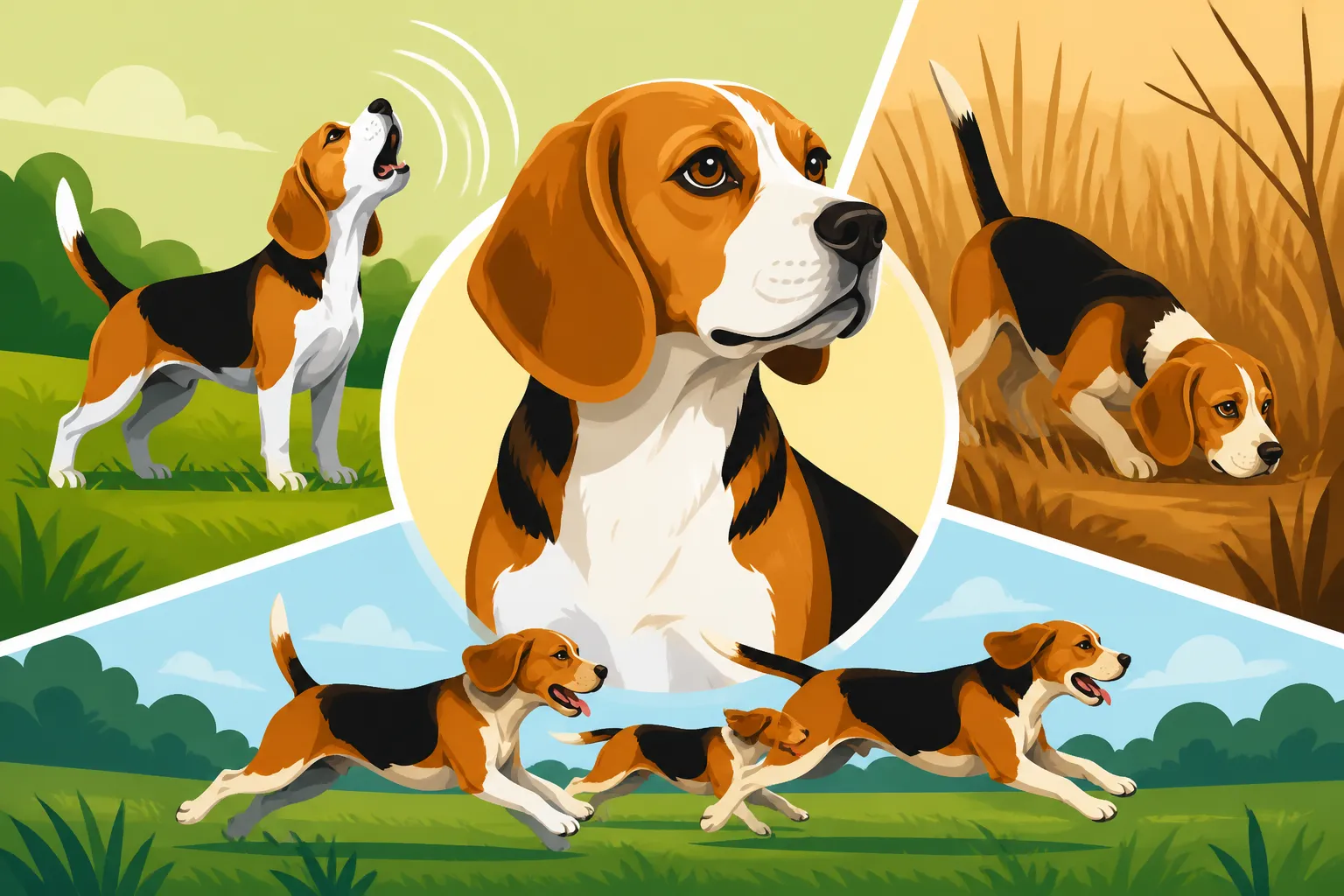
A common frustration for Beagle owners is how easily their dog gets distracted by a scent on a walk, often seeming to ignore commands. In a field trial, this "distraction" becomes their greatest asset. Judges are looking for Beagles that can accurately and persistently follow a scent trail, even when it's faint or challenging. This isn't just about speed; it's about accuracy, determination, and teamwork (with other Beagles, not necessarily the human handler during the actual hunt). It’s a chance to see your Beagle operate at peak performance, doing exactly what their genetics compel them to do. You'll hear terms like "strike" when a Beagle first picks up a scent, "line" referring to the actual trail, and "check" when they temporarily lose the scent and must diligently cast about to regain it. It’s a beautiful, intricate dance between dog and scent.
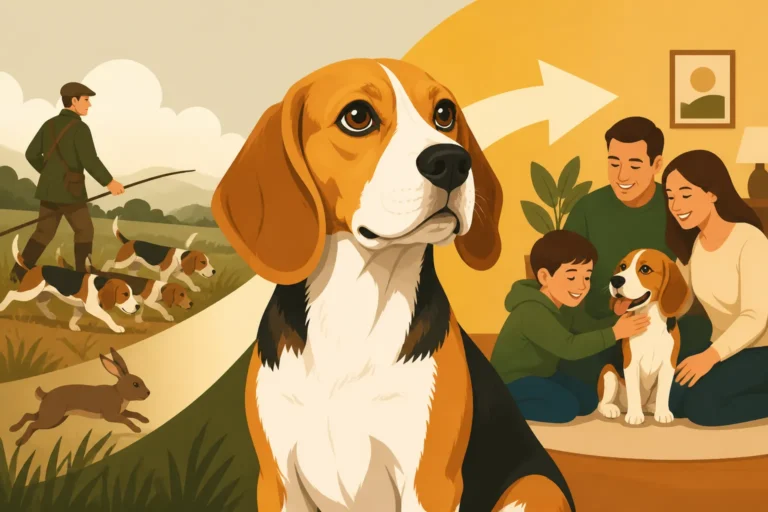
The core principle remains constant across all formats: Beagles are judged on their ability to work as a team (or individually, depending on the format) to track and flush game, primarily rabbits. The environment is typically natural terrain—fields, woods, and brush—much like the historical hunting grounds where Beagles earned their reputation. Handlers are there to release the dogs, sometimes guide them back into an area, but the Beagles themselves do the actual "hunting." This is distinct from many other dog sports where human direction is paramount. Here, the dog’s independent drive and innate ability are showcased. For anyone interested in The Beagle From English Rabbit Packs to American Homes, understanding field trials is key to grasping the breed's historical purpose.
Different Formats of Beagle Field Trials
Beagle field trials are held in several distinct formats, each designed to test slightly different aspects of a Beagle's hunting prowess and pack working ability. These formats reflect the diverse ways Beagles have been hunted over the centuries and continue to be celebrated today. Whether you're a seasoned participant or just curious, understanding these differences is crucial.
Brace Trials
Brace trials are perhaps the most common and accessible format for individual owners, and often where new enthusiasts begin. In a brace trial, two Beagles, usually owned by different handlers, are released together to work a field. The judges evaluate each dog's performance individually, even though they are working in tandem. The focus here is on a dog's personal initiative, its ability to pick up a cold trail, its persistence, and the quality of its "mouth"—the unique baying sound a Beagle makes when actively on a scent.
Imagine two Beagles, say a seasoned veteran named Cooper and a promising youngster named Daisy. They are released into a thicket. Cooper, being experienced, might quickly get his nose down, working the cover until he lets out a characteristic "strike" bark, indicating he's hit a rabbit scent. Daisy, still learning, might initially follow Cooper but then branch off to find her own trail, or she might key into his excitement and join him on the line. Judges are looking at how clearly each dog works the trail, how they navigate obstacles, and how they react when the rabbit jumps or "bolts." A good dog will stay on the line, pushing the rabbit forward. A less experienced dog might get distracted or lose the line more frequently. This format highlights individual skill and drive. It’s often used in introductory events and helps owners gauge their dog's natural talent before moving to larger pack work. If you've ever considered Running a Beagle in a Brace Trial, this is the starting point.
Small Pack Option (SPO) Trials
Small Pack Option (SPO) trials scale things up slightly. Instead of just two Beagles, a small "pack" of four Beagles works together. This format places a greater emphasis on how well the dogs work as a cohesive unit. While individual performance is still noted, the overall teamwork, the way the pack flows across the terrain, and their collective ability to keep a rabbit moving are paramount.
Think about a quartet of Beagles – maybe two from one owner and two from another – all released simultaneously. The judges observe how quickly they can collectively "jump" (find and start pursuing) a rabbit. Once the rabbit is up and running, the judges are looking for a tight, organized pack that drives the rabbit with enthusiasm and a chorus of bays. A pack that strings out too much, where some dogs fall behind or lose interest, would not score as highly as a pack that stays together, communicating through their voices and body language. This demands a higher level of cooperation and shared focus, something that Beagles, as a pack hunting breed, are inherently wired for. It’s not uncommon to see dogs from different kennels, even those that have never hunted together, quickly form a functional unit, a testament to their strong pack instincts.
Large Pack and Gundog Brace Trials
While less common for casual participation, large pack trials are the closest a field trial comes to recreating a traditional hunt. Here, an even larger number of Beagles, sometimes six or more, work as a single pack. The emphasis is almost entirely on the pack's collective ability to find, follow, and drive game. This format is a grand spectacle of Beagle prowess, with a symphony of bays filling the air as a unified pack works a scent.
Gundog Brace trials are a specialized format that focuses on Beagles working with a hunter and gun. Unlike other trials where the objective is merely to track and push the rabbit, in a gundog brace, the Beagles are expected to track the rabbit until it is flushed (sent running), and then potentially retrieved by the hunter after being shot. This format tests the Beagle's ability to work closely with a human hunter, exhibiting control and composure even amidst the excitement of the chase and the sound of a gun. It requires a Beagle that is not only keen on scent but also steady and responsive to its handler in a real hunting scenario. This type of trial requires specific training to ensure the dog is not gun-shy and understands its role alongside the hunter. It truly demonstrates Whether a Pet Beagle Can Learn to Hunt in a more traditional sense.
Here's a quick comparison of the main field trial formats:
| Trial Format | Number of Beagles | Primary Focus | Key Characteristics |
|---|---|---|---|
| Brace Trial | 2 | Individual dog's hunting ability | Persistence, accuracy, quality of "mouth" (baying) |
| Small Pack Option | 4 | Pack cohesion and teamwork | Collective ability to find and drive game, synchronized work |
| Large Pack Trial | 6+ | Pack's collective hunting prowess | Grand display of breed instinct, unified chase |
| Gundog Brace Trial | 2 (with handler) | Working with a hunter, flushing, retrieving | Scenting ability, steadiness, responsiveness to handler |
The Judges' Perspective: What Makes a Winning Beagle?
You might be thinking, "How on earth do judges keep track of all that barking and running?" It's a fair question! Judging a Beagle field trial is an art form, requiring experienced eyes and ears to discern the subtle nuances of a dog's work. Judges are typically mounted on horseback or follow on foot, observing every move, every scent pick-up, every check, and every bay. They’re looking for a combination of natural ability, learned skill, and good temperament.
Nose and Desire
First and foremost, a winning Beagle must have an exceptional nose and an unquenchable desire to use it. This isn't just about sniffing; it's about the ability to decipher faint scents, to distinguish a fresh trail from an old one, and to stick with it even when the scent becomes challenging. A Beagle that diligently works through dense cover, meticulously casting back and forth at a "check" until the line is regained, demonstrates superior "nose." The judges want to see that relentless drive, that pure joy in pursuing the scent. This desire is often what sets Beagles apart, as their Training a Beagle Around 220 Million Scent Receptors gives them an unparalleled ability to immerse themselves in a scent world we can only imagine.
Handlers often use high-value treats from places like Chewy during training to reward strong scenting behavior, even in a home environment, to build this focus. While treats aren't used in a trial itself, the underlying drive needs to be there.
Voice and Drive (The "Mouth")
The Beagle's voice, or "mouth," is another critical component. Judges listen for the characteristic "bay" – a deep, melodious howl that signals the dog is actively on a hot trail. It’s not just about making noise; it’s about the quality, consistency, and enthusiasm of the bay. A dog that bays clearly and confidently, letting the handler and other dogs know it's on the line, scores highly. A silent dog, or one that gives false indications, is not desirable. The bay is a vital communication tool in a pack hunt, letting everyone know where the game is being pushed. This is why Why Hunting Beagles Were Bred to Bay at All is such an important aspect of their historical purpose.
Beyond the bay, judges observe the dog's "drive" – its sustained enthusiasm and persistence. Does the Beagle give up easily when the scent is difficult, or does it keep pushing, circling, and trying until it picks up the line again? That unyielding persistence, especially when running through thick briar or over rough terrain, truly impresses the judges.
Teamwork and Endurance
In pack formats, teamwork is crucial. Judges are observing how the Beagles cooperate, honor each other's finds, and contribute to the overall effort of keeping the rabbit moving. A dog that tries to steal another's line, or one that constantly breaks away from the pack to pursue its own agenda, will be penalized. The ideal pack works as a synchronized unit, flowing together, each member contributing to the chase.
Endurance is also vital. A trial can last for hours, covering significant ground. Beagles must demonstrate the stamina to maintain their focus and drive throughout the competition, regardless of the conditions. This speaks to the physical conditioning of the dog, but also its mental toughness.
Preparing a Beagle for Field Trials
While many Beagles enjoy the sniffy walks and backyard adventures of pet life, a Beagle destined for field trial success requires specific preparation. It's a journey that combines natural talent with dedicated training and careful management. It’s about channeling those powerful instincts into a disciplined, effective hunting dog.
Early Exposure to Scent
The foundation of any successful field trial Beagle is early and consistent exposure to scent. For puppies, this means allowing them ample opportunity to explore scents in safe, natural environments. Supervised walks in fields, woods, or areas known to have rabbit scent can help a puppy develop its nose and curiosity. Acknowledging and encouraging their natural sniffing behavior, rather than always pulling them away, builds their confidence and interest.
As they grow, structured "scent games" can be introduced. This isn't formal hunting yet, but rather exercises that hone their focus on a specific scent. Using rabbit scent lures (available at many sporting goods stores or online at places like Chewy) can be a great way to introduce the concept in a controlled manner. Remember, Why a Beagle Walks With Its Nose to the Ground isn't just a quirk; it's their super-power, and you want to foster it.
Conditioning and Obedience
A Beagle competing in field trials needs to be in peak physical condition. These events are demanding, requiring sustained running, navigating rough terrain, and pushing through dense undergrowth. Regular exercise, beyond casual walks, is essential. This might include longer, more vigorous hikes, controlled running (where safe), and ensuring a healthy diet. An overweight Beagle will tire quickly and be at a disadvantage. You can find guidance on this in articles like Beagle Obesity Treated as a Health Problem.
Basic obedience, particularly reliable recall, is also important, even though Beagles are largely independent in the field. While a Beagle in the heat of the chase might seem to ignore you, you need to be able to call them back during specific phases of the trial or to prevent them from getting into dangerous situations. Handlers use a combination of voice commands, whistles, and sometimes even a "check cord" (a long line) during training to develop this control before the intensity of a live trial. Don't underestimate the challenge of Beagle Recall and Why Your Voice Stops Registering once a strong scent is involved!
Joining a Club and Mentorship
The best way to get involved in Beagle field trials is to connect with local Beagle clubs or hunting organizations. These clubs offer invaluable resources, including organized training days, mentorship from experienced handlers, and information on upcoming trials. Many clubs are welcoming to newcomers and happy to share their knowledge and passion for the sport. They can guide you through the rules, help you understand the specific judging criteria, and even offer opportunities for your Beagle to run with experienced pack members in practice sessions.
Participating in training days or informal "hunts" with a club allows your Beagle to gain experience with live game in a low-pressure environment. It also helps them learn how to work with other dogs, a critical skill for pack formats. These clubs are the backbone of the sport, preserving the working heritage of the Beagle breed and ensuring that this unique connection to their ancestry continues for generations to come. Understanding National Beagle Club Health Recommendations is also important if you plan to breed or acquire a dog specifically for trials.
The Broader Impact of Beagle Field Trials
Beyond the competitive aspect, Beagle field trials play a vital role in the preservation and enhancement of the breed's working characteristics. They are much more than just a sport; they are a living link to the Beagle's origins and a practical tool for responsible breeding.
Preserving Working Instincts
In an age where many dog breeds are primarily kept as companions, their original working purposes can sometimes diminish. Field trials actively work against this trend for Beagles. By continuously evaluating dogs based on their hunting abilities, trials ensure that breeders prioritize strong noses, keen desire, excellent voices, and sound conformation that allows for sustained work in the field. This helps prevent the dilution of these essential traits that define the Beagle breed.
Without field trials, it's possible that the "merry little hound" we know today might lose some of the very instincts that make it so endearing and unique. Trials serve as a crucial benchmark, allowing breeders to identify and select dogs that not only look like Beagles but also think and act like them, particularly when it comes to their unparalleled scenting ability.
Community and Camaraderie
The Beagle field trial community is often a tight-knit group, bound by a shared love for the breed and the sport. Participants often travel together, help each other scout fields, and share insights on training and dog care. It’s a hobby that fosters camaraderie and deep friendships, extending beyond the competitive arena.
Many participants will gather after a trial to discuss the day's events, celebrate successes, and commiserate over challenges. This supportive environment is incredibly valuable for newcomers and seasoned handlers alike. It’s a place where knowledge is freely exchanged, and the passion for Beagles and their unique abilities is truly celebrated. Whether you're a competitor or an enthusiastic spectator, the sense of community is palpable and incredibly rewarding.
Disclaimer
This article is for general informational purposes only and does not constitute professional advice. Laws, prices and regulations vary by location and change over time. Consult a qualified professional for guidance on your specific situation.