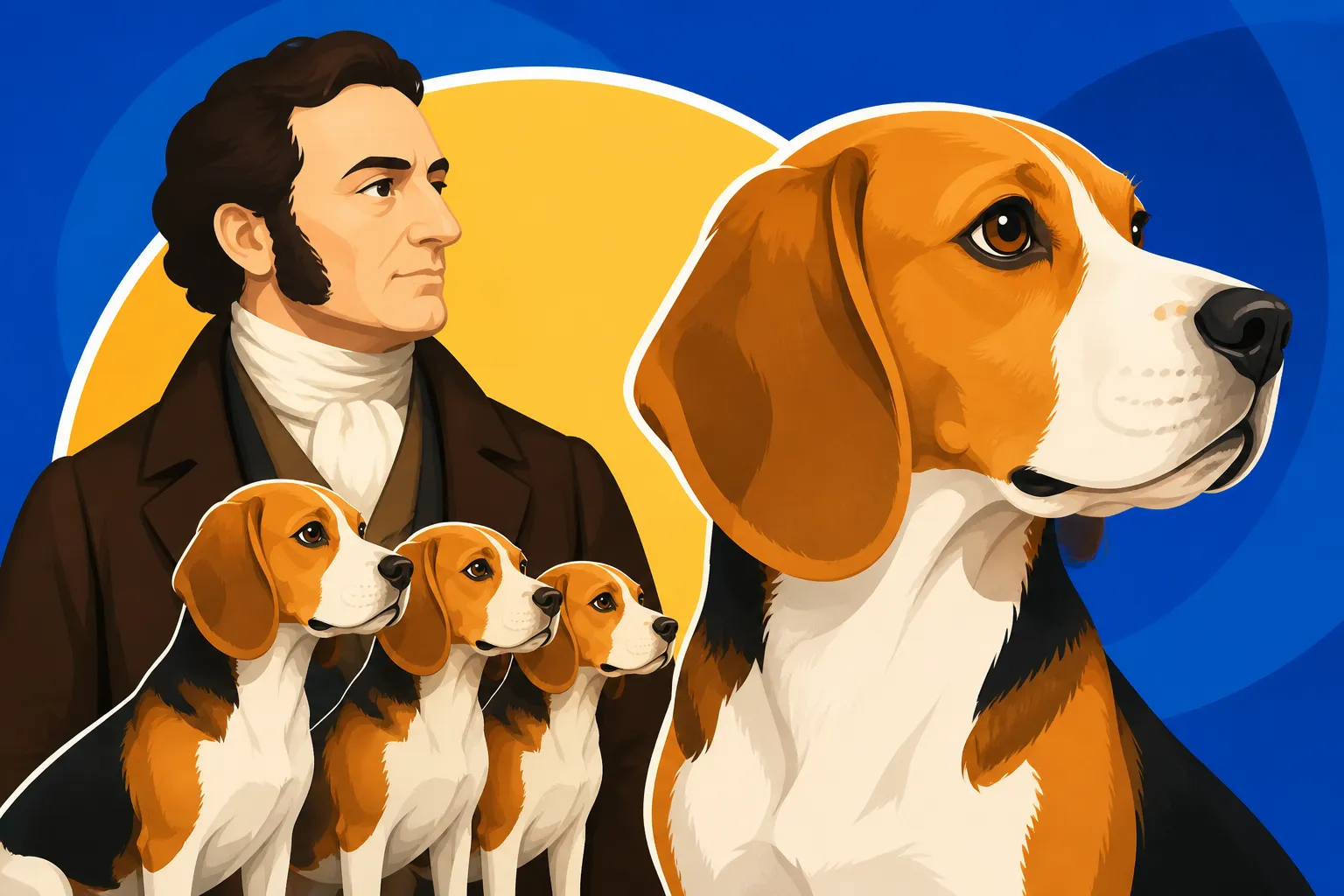
Thomas Johnson and Beagles Bred to Look Right
Have you ever looked at a Beagle and just known, instinctively, that it was a Beagle? That iconic face, those long, floppy ears, the perpetually wagging tail with its white tip? It's a look that's instantly recognizable and deeply beloved, but it wasn't always so unified. For a long time, "Beagle" could mean a lot of different things, from small, scruffy dogs to larger, more rangy hounds. This guide is going to take you back in time to meet one pivotal figure, Thomas Johnson, whose passionate vision quite literally shaped the Beagle into the consistent, beautiful hound we know today, making sure Beagles were "bred to look right."
The Motley Crew of Early Beagle Breeding
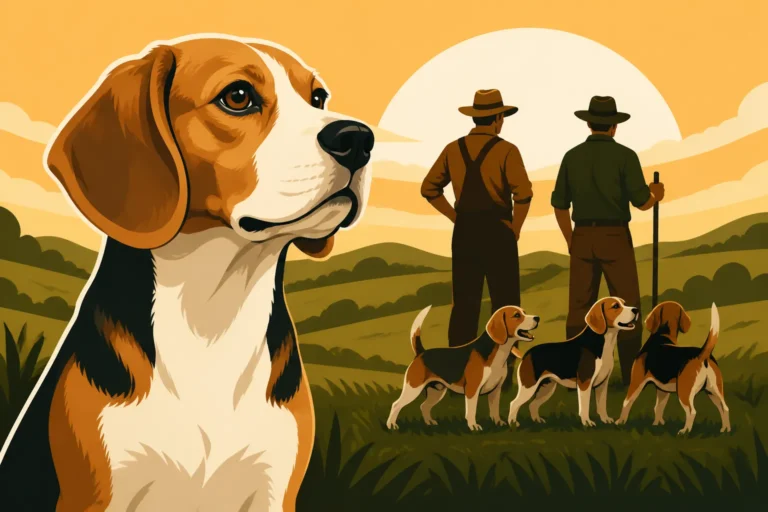
Before individuals like Thomas Johnson stepped onto the scene, the world of Beagle breeding was, well, a bit of a free-for-all. Imagine a time when "Beagle" was more of a job description than a definitive breed standard. These hounds were primarily bred for their incredible scenting ability and their stamina to tirelessly follow a hare or rabbit trail, often over rough terrain. Their appearance was secondary, a happy accident of their working function. This meant that while they all shared that undeniable "hound" quality, the variation in size, coat, and conformation was truly astounding.
Beagles Before the "Look Right" Era
In the centuries leading up to the 1800s, there wasn't really one single, agreed-upon "Beagle look." You had packs that ranged dramatically in size, from the tiny "Pocket Beagles" that were small enough to fit in a hunting saddlebag, to larger, more robust hounds that sometimes blurred the lines with their Harrier cousins. Some had rough coats, others smooth. Ear lengths varied, as did skull shapes and body proportions. The priority was always on their working capabilities – could they pick up a cold scent? Could they follow it for hours? Did they have the lung capacity to bay melodiously while on the chase? The answer to these questions determined a Beagle's worth, far more than whether their ears met a certain length or their head had a specific stop.
Think of it this way: if you were looking for a working dog, you cared about its engine and its tires, not necessarily its paint job. Breeders of the time were often focused on producing dogs that could excel in the field, sometimes prioritizing speed, sometimes endurance, sometimes sheer nose power. This practical approach led to a very diverse population of "Beagle-type" hounds, each suited to slightly different hunting styles or terrains. It was a utilitarian approach to breeding, where form truly followed function, and "form" itself was a broad spectrum. The Beagle From English Rabbit Packs to American Homes touches on this early history and how these hounds transitioned from field to home.
The Emerging Need for a Unified Vision
As the 19th century progressed, the world of dog breeding began to evolve. The concept of "purebred" dogs gained traction, and with it, the idea of breed standards. People weren't just looking for working dogs anymore; they also wanted dogs that were aesthetically pleasing, consistent in appearance, and recognizable as a specific breed. This shift was fueled by the rise of dog shows, where judges would compare dogs against an ideal model, not just against their performance in a field. If you wanted to compete, you needed a dog that not only performed well but looked like a champion.
This is where the need for a unified vision became critical for the Beagle. Without a consistent standard, judging was subjective, and breeding goals were scattered. Enthusiasts and early breed fanciers started to realize that if the Beagle was to gain respect as a distinct and recognizable breed in this new era of dog shows and formalized breeding, it needed a clear identity. They wanted Beagles that, no matter where they came from, shared certain physical characteristics. This push for consistency wasn't just about vanity; it was about preserving desirable traits, ensuring predictable offspring, and elevating the breed's status. It was about moving from a collection of "Beagle-like" dogs to the Beagle.
Thomas Johnson: The Architect of the Modern Beagle Aesthetic
Enter Thomas Johnson of Nottinghamshire, England. While not the only person interested in standardizing the Beagle, he emerged as one of the most influential figures in defining what a "proper" Beagle should look like. He wasn't just breeding dogs; he was curating a vision, meticulously selecting for specific traits that would eventually become synonymous with the breed. Johnson's impact was profound because he moved beyond mere utility to focus on a balanced, attractive, and consistent conformation.
Defining the Ideal Beagle Form
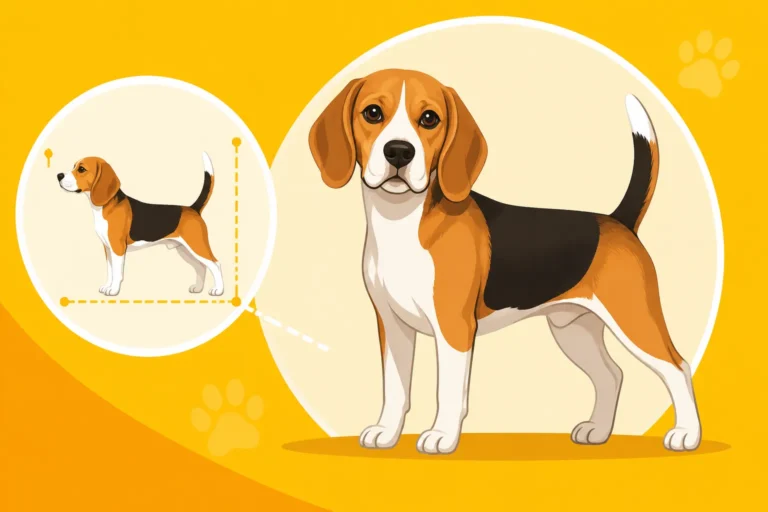
Johnson's genius lay in his ability to visualize and then actively breed for a specific ideal. He championed a Beagle that was robust and compact, yet undeniably graceful. His ideal Beagle was built for endurance in the field, certainly, but also possessed an undeniable charm and elegance. He placed great emphasis on a well-proportioned head with a moderate stop, dark, expressive eyes that conveyed a "merry" disposition, and those wonderfully long, low-set ears that are characteristic of the breed today.
He also paid close attention to body structure: a strong, level back, well-sprung ribs that provided ample lung capacity, and sturdy legs terminating in compact, well-knuckled feet. And, of course, that iconic tail – carried gaily, but not curled over the back, with a distinctive white tip that made it easy for hunters to spot in tall grass. Johnson was essentially writing the blueprint for the modern Beagle, emphasizing both soundness and symmetry. His work contributed significantly to The Beagle Type That Settled in the 1840s and solidified the appearance we cherish.
Breeding for Consistency and Show Ring Success
Johnson wasn't just dreaming up an ideal; he was actively making it a reality through selective breeding. He ran a prominent kennel, the Sutton Coldfield pack, and carefully chose his breeding stock not only for their hunting prowess but also for how closely they conformed to his desired physical traits. This was no small feat, given the variety of "Beagles" available at the time. He likely exchanged dogs and ideas with other like-minded fanciers, slowly but surely refining the breed's appearance.
His focus on consistency meant that the Beagles emerging from his lines were more uniform than many others. This uniformity was crucial for success in the nascent dog show scene. A judge could look at a "Johnson-type" Beagle and recognize the quality and adherence to an emerging standard. By consistently producing dogs that looked right, Johnson helped establish a visual benchmark for the breed. His efforts laid the groundwork for future generations of breeders and for the formal breed standards that would eventually be adopted by kennel clubs. This dedication to specific traits is echoed in modern breeding practices, where careful selection leads to consistency in breeds, and owners often rely on reputable sources like Chewy for breed-specific nutritional needs and supplies that support a healthy life.
The Lasting Impact of Johnson's Work on the Breed Standard
Thomas Johnson's commitment to breeding Beagles "to look right" wasn't just a fleeting trend; it had an enduring effect on the breed. His vision became foundational, influencing subsequent breeders, judges, and ultimately, the official breed standards that govern Beagles worldwide.
Shaping Today's Beagle Standard
When the first breed clubs began to form, like The National Beagle Club founded in 1887 in the United States, they needed a coherent standard to guide their judging and breeding efforts. Much of what was codified in those early standards, and which largely persists today, reflects the aesthetic principles championed by Johnson. The descriptions of the Beagle's head, eyes, ears, body, and tail in modern breed standards echo the balanced, merry, and sturdy hound that Johnson so carefully cultivated.
Consider the detailed descriptions in today's breed standards for The Beagle Skull and Muzzle a Judge Wants or The Beagle Ear Length the Standard Describes. These aren't arbitrary measurements; they reflect a long history of selective breeding aimed at creating a recognizable and functional form. Without the pioneering work of individuals like Johnson, the process of establishing these standards would have been far more chaotic and might have resulted in a very different-looking Beagle. His influence ensures that when you see a Beagle at a dog show, in a park, or even depicted in popular culture, there's a strong chance it carries the visual legacy of Thomas Johnson.
The Legacy of "Looking Right"
The phrase "bred to look right" might sound simple, but its implications for the Beagle breed were immense. It ensured that the Beagle became a distinct and recognizable entity, capable of winning hearts in the home and ribbons in the show ring. It helped solidify the breed's identity, preventing it from fragmenting into countless regional variations. Today, whether you're admiring a show-quality Beagle or cuddling a beloved pet, you're seeing the result of centuries of development, heavily influenced by the careful selection and clear vision of people like Thomas Johnson.
His legacy is evident not just in the conformation of individual dogs but in the very perception of the breed. When people think of a Beagle, they picture a dog that is cheerful, sturdy, and charming – traits that align perfectly with the "look" Johnson promoted. This consistent appearance, alongside their famed temperament, is a huge part of why Beagles have remained so popular over the decades. What the Beagle Standard Asked For a Century Ago clearly illustrates how these ideals have been preserved. Even when owners are seeking out products, whether it's a specific harness size or durable toys, they often choose items from retailers like Chewy that cater to the breed's standardized physical traits, ensuring a good fit for their beloved, "right-looking" Beagle.
| Feature | Pre-Johnson Era Beagle (General) | Thomas Johnson's Ideal Beagle | Modern Breed Standard Beagle (Influence) |
|---|---|---|---|
| Primary Focus | Working ability, field performance | Balanced appearance & function | Consistent appearance, soundness, temperament |
| Size & Build | Highly variable (Pocket to Harrier-like) | Compact, sturdy, well-muscled | Two varieties (13-inch & 15-inch), robust |
| Head Shape | Wide variation | Moderate stop, distinct, refined | Moderately domed, distinct stop |
| Ear Set/Length | Variable | Low-set, long, rounded at tip | Low-set, long, reaching towards nose |
| Eyes | Any color, expression not primary | Dark, intelligent, merry expression | Dark or hazel, gentle, pleading |
| Tail Carriage | Variable | Carried gaily, not curled, white tip | Carried gaily, saber-like, white tip |
| Coat | Varied (smooth, rough) | Smooth, dense, weather-resistant | Smooth, hard, medium length |
| Breeding Goal | Practical hunting efficiency | Aesthetic consistency & utility | Preservation of type, health, temperament |
| Show Ring Relevance | Low | High (established visual standard) | Paramount (defines breed type) |
The efforts of early fanciers like Thomas Johnson truly laid the foundation for the breed we adore today. Their dedication to a specific ideal has ensured that the Beagle's distinctive appearance remains a cherished hallmark, whether they're hunting a rabbit, competing in a show ring, or just curling up on your couch. Understanding this history helps us appreciate the intentionality behind every aspect of this wonderful breed, right down to their very recognizable "look."
Disclaimer
This article is for general informational purposes only and does not constitute professional advice. Laws, prices and regulations vary by location and change over time. Consult a qualified professional for guidance on your specific situation.