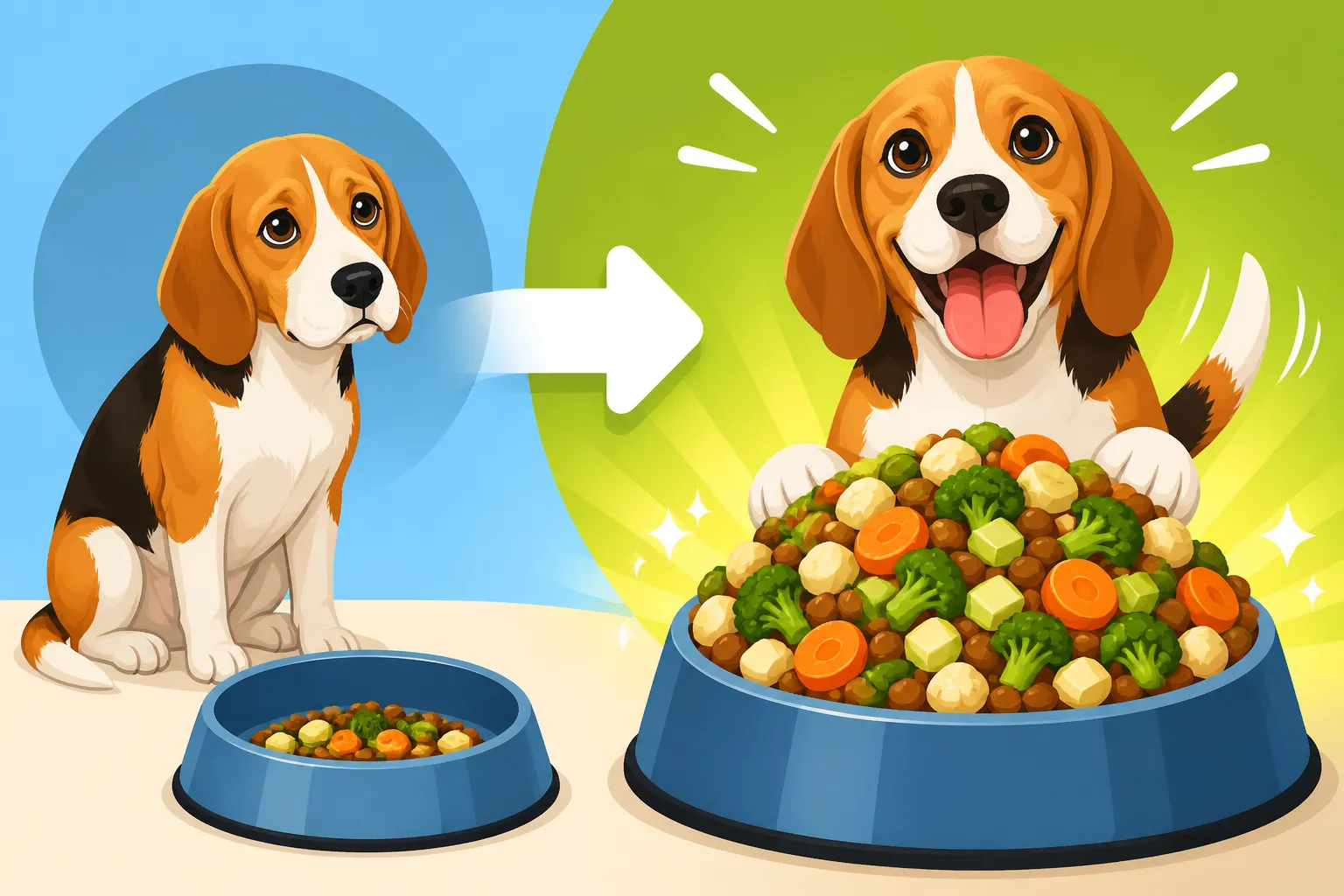
Bulking Out a Beagle Bowl With Low-Calorie Food
It's a familiar scene for any Beagle owner: you've just put down a perfectly portioned meal, and within minutes, the bowl is licked clean, and your furry friend is looking at you with those deep, soulful eyes, acting as if they haven't eaten in days. This constant plea for more food isn't just endearing; it's a genuine challenge, often leading to overfeeding and its associated health problems. This guide is here to help you navigate that relentless Beagle appetite by showing you how to bulk out their meals with low-calorie, healthy additions, helping them feel fuller and more satisfied without packing on the pounds.
The Perpetual Hunger of a Beagle and Why Bulking Up Is Key
Anyone who lives with a Beagle knows their passion for food is unrivaled. They live to eat, and it often feels like they could eat all day long if given the chance. Understanding why they are this way is the first step to managing it effectively.
Understanding the Beagle's Insatiable Appetite
Beagles were originally bred to hunt in packs, following scents for hours on end, often covering vast distances. This active lifestyle meant they needed a robust appetite to sustain their energy levels. They were, in essence, highly efficient foragers, programmed to eat whenever food was available because, in the wild, resources could be scarce. This deep-seated instinct to consume and hoard calories is still very much alive in our modern-day Beagles, even if their "hunting" now consists of sniffing out crumbs under the couch.
Their incredible sense of smell plays a huge role here, too. With an estimated 220 million scent receptors, a Beagle's nose is thousands of times more powerful than ours. Imagine walking into a room and smelling not just your dinner, but every meal ever cooked in that house, every treat ever dropped, and every bit of kibble currently in the bag. That's essentially what your Beagle experiences. Every single aroma is a potential food source, triggering that primal urge to find and eat. It’s no wonder they act like they're starving when they can still smell the ghost of a meal in their bowl long after it's gone. For us, it’s just an empty bowl; for them, it's a tantalizing memory of a feast, beckoning for more. This powerful sensory input makes their perceived hunger incredibly intense, even if their caloric needs have already been met.
The Hidden Dangers of an Overweight Beagle
While a round Beagle might look cute and cuddly, the reality is that carrying extra weight is incredibly detrimental to their health and can significantly shorten their lifespan. It's not just about aesthetics; it's about their quality of life. An overweight Beagle faces a higher risk of developing a whole host of serious health conditions that can lead to discomfort, chronic pain, and expensive veterinary bills.
Think about the strain that extra weight puts on their joints. Beagles are already prone to issues like Beagle Hip Dysplasia and Everyday Joint Wear and, as they age, Beagle Arthritis Arriving in Middle Age. Adding even a few extra pounds dramatically increases the pressure on their hips, elbows, and spine, accelerating the onset and severity of these painful conditions. It's like asking them to carry a backpack full of bricks everywhere they go. Beyond joint issues, obesity is a major contributing factor to metabolic diseases. We see a rise in cases of Beagle Diabetes and Blood Sugar Control in overweight Beagles, requiring daily insulin injections and strict dietary management. Their cardiovascular system also suffers; an enlarged heart has to work harder to pump blood through a larger body mass, increasing the risk of Beagle Heart Disease and Murmurs and ultimately, congestive heart failure. Moreover, chronic inflammation, certain types of cancer, and respiratory problems can all be exacerbated by obesity. Managing your Beagle's weight isn't just a suggestion; it's a critical component of responsible ownership, laying the groundwork for a longer, happier, and healthier life. If you're concerned about your Beagle's current weight, starting with Beagle Obesity Treated as a Health Problem can offer more insights.
Top Low-Calorie, Nutrient-Rich Foods to Add to Your Beagle's Bowl
The good news is that you don't have to leave your Beagle feeling deprived to keep them at a healthy weight. The trick is to add volume and fiber to their meals using safe, low-calorie ingredients. This makes them feel fuller faster and helps that meal last a little longer in their stomach, sending satiety signals to their brain.
The Power of Vegetables: Green Beans, Carrots, and Pumpkin
Vegetables are your best friend when it comes to bulking up your Beagle's bowl. They're packed with essential vitamins, minerals, and most importantly, fiber, all while being remarkably low in calories. Here are some excellent choices:
- Green Beans: These are a fantastic go-to. They're incredibly low in calories and high in fiber, which helps your Beagle feel full. You can offer them raw, steamed, or boiled. Many Beagles love the crunch of raw green beans, which can also help keep their teeth a little cleaner. Just ensure they are plain, without any added salt, butter, or seasonings. Frozen green beans are a super convenient option; you can thaw them or even give them slightly frozen as a refreshing treat on a hot day. You can find large bags of plain frozen green beans at any grocery store, or even in bulk from online retailers like Amazon.
- Carrots: Carrots are another excellent choice. They offer a satisfying crunch, which many Beagles enjoy, and are rich in beta-carotene, an antioxidant. Like green beans, they should be offered raw or lightly steamed, without any added ingredients. You can give them whole, baby carrots, or chopped pieces. Be mindful of their sugar content if given in very large quantities, but a few carrot sticks as part of a meal or treat won't derail their diet.
- Pumpkin: Pureed pumpkin (not pumpkin pie filling!) is a true superhero. It's loaded with fiber and water, making it excellent for digestive health and promoting a feeling of fullness. It can be particularly helpful if your Beagle has a sensitive stomach or experiences occasional loose stools. You can buy canned pumpkin from most grocery stores, and often find good deals on it from online pet supply stores like Chewy. A tablespoon or two mixed into their kibble adds a significant amount of bulk and moisture.
- Broccoli Florets: Small, lightly steamed broccoli florets can also be a good addition. They're crunchy and full of vitamins. However, some Beagles can get gassy from too much broccoli, so introduce it slowly and in small amounts. Always make sure to cut them into bite-sized pieces to prevent choking hazards.
When preparing any vegetables, always ensure they are plain. Avoid onions, garlic, grapes, and raisins, which are toxic to dogs.
Lean Proteins and Hydrating Broths for Satiety
Beyond vegetables, you can also consider lean protein sources and hydrating liquids to add substance to your Beagle's meal without significantly increasing caloric intake. These additions can also make their meal more appealing and satisfying.
- Cooked Chicken Breast or Lean Ground Turkey: A small amount of plain, boiled, or baked chicken breast (skinless and boneless) or very lean ground turkey can be a wonderful addition. These proteins are highly digestible and can make a meal feel much more substantial. Remember, we're talking about a small portion – a tablespoon or two, finely shredded or crumbled, mixed into their regular food. This offers an extra protein boost and can be especially enticing for picky eaters (though Beagles are rarely picky!).
- Plain, Unsweetened Yogurt or Cottage Cheese: A small dollop of plain, unsweetened yogurt (without artificial sweeteners like xylitol, which is toxic) or a spoonful of low-fat cottage cheese can add a creamy texture and some healthy probiotics, along with a bit of protein. These should be given in very small quantities due to their dairy content, and always monitor for any signs of digestive upset, as some dogs can be lactose intolerant.
- Low-Sodium Bone Broth or Plain Water: This is perhaps the easiest and most calorie-efficient way to bulk up a meal. Adding a cup of warm, low-sodium bone broth or simply plain water to their kibble will allow the kibble to soak it up, expanding in the bowl and in their stomach. This not only makes the meal look larger but also adds crucial hydration. Be absolutely certain that any broth you use is genuinely low in sodium and free from onion or garlic powder. Many standard human broths are too high in sodium and contain ingredients harmful to dogs. You can find dog-specific bone broths at many pet stores or online.
These additions make the meal more interesting and can slow down eating, further contributing to a feeling of fullness. When combined, these strategies create a much more satisfying meal for your food-motivated Beagle.
Practical Implementation: Making Bulking a Part of Daily Routine
You've got your low-calorie ingredients ready, now how do you actually get them into your Beagle's bowl without causing an upset stomach or throwing their nutrition off balance? It’s all about a measured approach and careful observation.
How to Introduce New Foods Safely and Effectively
Introducing new foods, even healthy ones, too quickly can lead to digestive upset – think gas, diarrhea, or vomiting. Beagles, with their often sensitive stomachs, require a gradual approach. The key is to go slow and steady.
Here's a simple step-by-step guide:
- Start with One Ingredient at a Time: Don't throw a medley of new veggies into their bowl on day one. Pick just one – say, green beans. This way, if your Beagle has any adverse reaction, you know exactly what caused it.
- Begin with a Tiny Amount: For the first few days, add just a small spoonful or a couple of pieces of the chosen vegetable to one of their meals. Think about a teaspoon for a small Beagle, maybe a tablespoon for a larger one.
- Monitor for 2-3 Days: Watch your Beagle closely for any changes in their stool consistency, increased gas, or signs of discomfort. If everything looks normal, you can gradually increase the amount over the next few days.
- Gradually Increase the Portion: If the initial small amount is well-tolerated, slowly increase the quantity you add to their bowl every 2-3 days. For instance, go from one tablespoon to two, then three, until you reach a desired amount that fills the bowl without causing issues.
- Introduce Another New Food: Once your Beagle is comfortable with the first addition and you're consistently feeding a good portion of it, you can start the process over with a second low-calorie item, repeating steps 1-4.
- Always Opt for Plain: Reinforce the rule: only plain, cooked or raw (where appropriate), unseasoned vegetables or lean proteins. No butter, oil, salt, spices, or sauces. These can be harmful and add unnecessary calories.
By taking your time, you allow your Beagle's digestive system to adjust to the new ingredients, ensuring a smooth transition and a happy, full pup.
Maintaining Nutritional Balance While Adding Volume
While adding low-calorie fillers is fantastic for satiety, it's absolutely crucial that these additions don't replace the essential nutrients your Beagle gets from their primary dog food. Your Beagle's regular kibble or fresh food diet is formulated to be nutritionally complete and balanced, providing all the vitamins, minerals, and macronutrients they need. The goal of bulking is to supplement, not substitute.
Think of these additions as the "salad" to their main course. They add fiber, water, and some extra vitamins, but the bulk of their calories and critical nutrients still need to come from their primary food. A good rule of thumb is that these healthy additions should not make up more than 10-15% of your Beagle's total daily caloric intake. If you start to replace too much of their balanced diet with low-calorie fillers, you risk diluting their overall nutrition, potentially leading to deficiencies over time. For example, if your Beagle requires The Daily Calorie Target for a Twenty Pound Beagle, you need to ensure the majority of those calories come from a balanced source.
If your Beagle has specific health concerns, such as Beagle Hypothyroidism and the Weight It Puts On or other dietary sensitivities, it's even more important to consult with your veterinarian or a board-certified veterinary nutritionist before making significant changes to their diet. They can help you calculate appropriate portions for both the main food and the healthy additions, ensuring your Beagle gets everything they need to thrive. They might suggest specific products like those from Ollie, which offers fresh, pre-portioned meals, though adding low-calorie bulk would still be beneficial.
Here's a quick reference table for some common low-calorie additions and their benefits:
| Food Item | Recommended Preparation | Key Benefits | Notes |
|---|---|---|---|
| Green Beans | Raw, steamed, or boiled, plain | High fiber, low calorie, vitamins A, C, K | Excellent for feeling full; convenient frozen options. |
| Carrots | Raw or lightly steamed, plain | Fiber, beta-carotene (Vitamin A), crunch | Good for dental health; monitor sugar content in very large amounts. |
| Pureed Pumpkin | Canned (100% pumpkin, not pie filling) | High fiber, digestive aid, rich in vitamin A | Great for sensitive stomachs; adds moisture. |
| Broccoli Florets | Lightly steamed, small pieces | Vitamins C, K, fiber | Introduce slowly, may cause gas in some Beagles. |
| Cooked Chicken Breast | Plain, boiled, or baked, shredded | Lean protein, highly digestible | Use very small amounts as a meal topper. |
| Lean Ground Turkey | Plain, cooked, crumbled | Lean protein, palatable | Similar to chicken; ensure no added seasonings. |
| Low-Sodium Broth | Warm, plain, dog-safe | Hydration, adds volume to kibble, flavor | Crucial: check for no onion/garlic or high sodium. |
| Plain Yogurt/Cottage Cheese | Small dollop, unsweetened, low-fat | Protein, probiotics (yogurt) | Monitor for lactose intolerance; avoid xylitol. |
Remember to use a kitchen scale to accurately measure portions of your Beagle's regular food to ensure you're not accidentally overfeeding or underfeeding their core diet.
Beyond the Bowl: Satisfying Your Beagle's Drive for More
Sometimes, the answer to a Beagle's perpetual hunger isn't just what they eat, but how they eat it, and what else they do with their active minds and bodies. Food isn't just about calories; it's about engagement and fulfillment.
The Magic of Slow Feeders and Puzzle Toys
For a Beagle who inhales their food in thirty seconds flat, feeling full can be a fleeting experience. This is where slow feeders and puzzle toys become invaluable tools. These devices are specifically designed to make mealtime last longer, stretching a quick gulp into a ten or fifteen-minute activity.
Slow feeders are bowls with ridges, labyrinths, or obstacles that force your Beagle to eat around them, preventing them from gulping down huge mouthfuls. This not only makes them feel like they're eating for a more extended period but also aids digestion by preventing them from swallowing too much air, which can cause bloat or discomfort. You can find a vast array of slow feeders on online marketplaces like Amazon or through specialty pet retailers such as Chewy. There are plastic ones, ceramic ones, and even silicone inserts you can add to an existing bowl.
Puzzle toys, on the other hand, take it a step further by turning mealtime into a mental challenge. Instead of simply eating from a bowl, your Beagle has to roll, nudge, or manipulate the toy to release small portions of kibble or treats. This taps into their natural problem-solving abilities and satisfies their instinct to work for food. Toys like the Kong Wobbler, various snuffle mats, or treat-dispensing balls are fantastic options. Not only do they extend mealtime, but they also provide mental stimulation, which is just as important as physical exercise for a smart, active breed like the Beagle. When they're engaged, their brain is busy, and they're less likely to immediately start begging for more food. This is an especially useful strategy for managing Why Free Feeding Fails Badly With a Beagle.
Harnessing Scent Work to Burn Energy, Not Calories
Beagles were born to use their noses. It's their superpower, their life's calling. Ignoring this fundamental aspect of their being is like asking a human to never read a book or listen to music. When Beagles don't get to engage their incredible sense of smell, they often channel that untapped energy and drive into other, less desirable behaviors – and often, that includes relentless food-seeking.
Instead of always giving them more food, give them a job for their nose. Scent work, or nose work, is an incredibly fulfilling activity that tires out a Beagle faster than a vigorous walk because it engages their brain so intensely. It's mentally exhausting in the best possible way. You don't need fancy equipment to start; you can begin with simple games at home.
- "Find It" Games: Hide small portions of their regular kibble or a few low-calorie treats (like a few green beans) around a room while they watch, then release them with a "find it!" command. As they get better, make the hiding spots more challenging.
- Snuffle Mats: These fabric mats with many folds and pockets are perfect for scattering kibble, forcing your Beagle to sniff and dig to find each piece. It slows down eating and provides mental enrichment.
- Cardboard Box Foraging: Take a clean cardboard box, toss in some kibble and a few crumpled paper balls, and let your Beagle "destroy" it to get their meal. It's messy but incredibly satisfying.
By incorporating regular scent work into their routine, you're not only giving your Beagle a vital outlet for their instincts, but you're also helping to shift their focus away from constant food demands. A Beagle that has spent 20 minutes intensely sniffing and searching for its dinner or treats is a much more satisfied and content dog than one who simply gulped down a bowl of kibble. This form of mental stimulation directly contributes to their overall well-being and can significantly reduce those persistent "I'm still hungry!" pleas. This is truly Scent Work as the Job a Beagle Was Built For.
Remember, managing a Beagle's appetite is an ongoing journey, but with these strategies – from smart low-calorie fillers to engaging mental challenges – you can help your beloved hound lead a healthy, happy, and satisfied life without constantly battling the urge for more.
Disclaimer
This article is for general informational purposes only and does not constitute professional advice. Laws, prices and regulations vary by location and change over time. Consult a qualified professional for guidance on your specific situation.