The Skull Shape and Slanted Eyes MLS Produces
Finding out your beloved Beagle puppy might have Musladin-Lueke Syndrome (MLS) can be an incredibly unsettling experience, especially when you start noticing physical traits that just don't seem quite right. It’s natural to feel a knot in your stomach as you observe a different head shape or eyes that seem to slant, wondering what it all means for their health and future. This guide is here to walk you through the specific skull shape and slanted eye appearance associated with MLS, helping you understand these indicators and what they signify for your furry family member.
What is Musladin-Lueke Syndrome (MLS) in Beagles?
Musladin-Lueke Syndrome, often simply called MLS, is a genetic disorder unique to Beagles that impacts the development of connective tissue throughout their body. This isn't just about a subtle difference; it's a condition that can manifest in various ways, from internal organ issues to very distinctive external physical traits. When you're looking at a Beagle with MLS, you're observing the visible signs of a complex genetic puzzle that affects how their body builds and maintains its structure. It’s a bit like a building having faulty blueprints – the foundation and framework just don’t come together as they should, leading to observable quirks and sometimes significant health challenges.
The Genetic Roots of MLS
At its heart, MLS is caused by a specific genetic mutation. This isn't something a breeder did wrong; it's an inherited condition that can be passed down through generations if breeders aren't vigilant about testing. Dogs carrying even one copy of the affected gene can pass it on, and if a puppy inherits two copies, one from each parent, they will develop the syndrome. This makes genetic screening absolutely critical for breeders to ensure they aren't inadvertently contributing to its spread. Learning about The MLS DNA Test Required for Beagle CHIC is a good step for any prospective owner or responsible breeder. Understanding How Musladin-Lueke Syndrome Passes Through Beagle Lines helps paint a clearer picture of its inheritance pattern.
How MLS Affects Connective Tissue
The real core of MLS lies in its impact on connective tissue. Think of connective tissue as the "glue" and "framework" that holds everything together in the body – from bones and cartilage to skin and organs. In Beagles with MLS, this connective tissue develops abnormally. This can lead to stiffness, restricted movement, and sometimes changes in the size and shape of various body parts. It's why you might see symptoms like a stiff, tip-toe gait, or certain facial characteristics that diverge from the typical Beagle look. While some Beagles might have milder expressions of the syndrome, others can face more significant challenges, impacting their overall Beagle Lifespan and the Twelve to Fifteen Year Range.
The Distinctive Skull Shape Associated with MLS
One of the most telling external signs of Musladin-Lueke Syndrome in Beagles is a characteristic alteration in their skull shape. It’s not just a minor variation; it’s a distinct look that, once you know what to spot, becomes quite recognizable. This isn't about judging aesthetics, but about identifying a potential health concern that warrants further investigation.
Flattened Forehead and Broader Skull
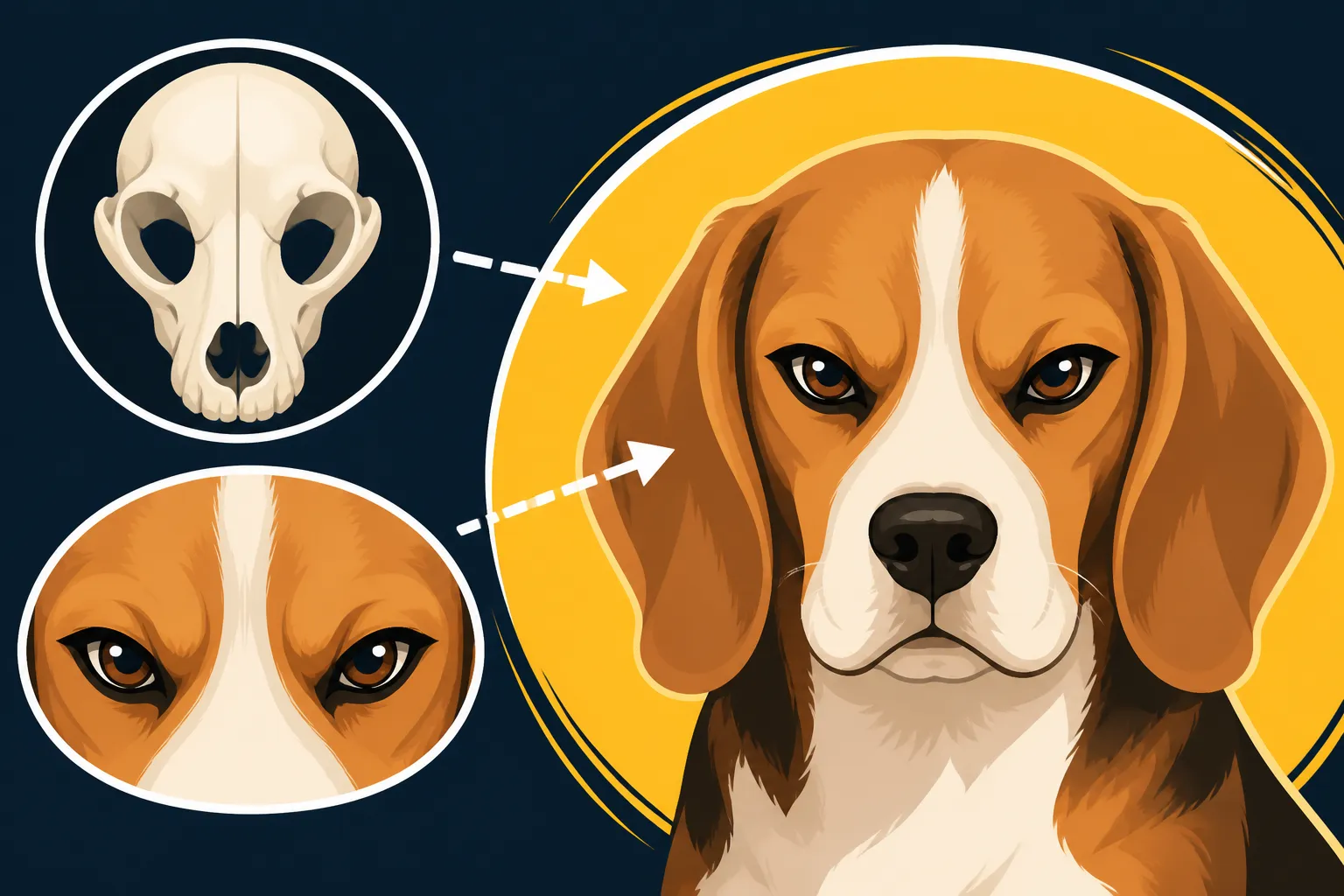
A Beagle with MLS often presents with a noticeably flatter forehead than a typical Beagle. Instead of that gentle, rounded curve leading to the muzzle, the top of the head can appear somewhat compressed or less domed. This is usually accompanied by a skull that seems broader, especially across the back of the head. Imagine the skull bones developing with slightly less upward curvature and a bit more lateral expansion. This combination gives the head a more "squared-off" or "blocky" appearance than the standard Beagle. It's subtle enough that casual observers might not notice, but once you're familiar with the breed standard, the difference can be quite striking.
This altered bone development is a direct consequence of the faulty connective tissue. The cartilage and bone that form the skull don't grow or fuse in the typical fashion, leading to these structural differences. It's one of the primary reasons why early identification of Musladin-Lueke Syndrome Signs in a Beagle Puppy is so crucial.
Shorter Muzzle and Undershot Jaw
In conjunction with the flattened and broader skull, Beagles with MLS frequently exhibit a shorter muzzle. The area from the stop (the indentation between the eyes) to the nose can appear compressed, making the muzzle seem less elongated than a classic Beagle's. This shortened muzzle often contributes to an overall "smooshed" or "pushed-in" facial appearance. Furthermore, some Beagles with MLS might also have an undershot jaw, where the lower jaw protrudes beyond the upper jaw. This can sometimes lead to dental misalignment, though the primary concern here is usually the structural indicator of MLS rather than severe dental issues alone.
These specific facial and skull changes are strong indicators of the connective tissue anomalies at play. It's important for breeders and owners to be aware of these physical markers, not just for aesthetic reasons, but because they point to an underlying genetic condition that can have broader implications for the dog's health.
Understanding the Slanted Eye Appearance in MLS Beagles
Beyond the skull shape, another highly characteristic feature of Musladin-Lueke Syndrome in Beagles is the distinctive appearance of their eyes. They often present as noticeably slanted or "Oriental-looking," an unusual trait for the breed, whose standard calls for soft, pleading, and typically forward-facing eyes. This appearance isn't just a quirk; it's another direct manifestation of the syndrome's impact on facial structure and connective tissue.
The Role of Facial Structure in Eye Slant
The slanted eye appearance in MLS Beagles isn't due to the eyeball itself being misshapen or misplaced. Instead, it's primarily a result of the altered facial and cranial structure. Because the skull, particularly around the eye sockets and cheekbones, develops differently due to abnormal connective tissue, the skin and muscle tension around the eyes are also affected. This altered tension can pull the corners of the eyes, creating an upward and outward slant that is highly atypical for the breed. Think of it as the surrounding "frame" of the eye socket dictating the perceived angle of the eye within it.
This structural influence is a key point to understand, as it highlights how pervasive the connective tissue disorder is. It's not just the bones, but the soft tissues, muscles, and skin that are all subtly, or sometimes dramatically, rearranged.
Associated Eye Issues and Challenges
While the slanted appearance is often cosmetic, it's worth noting if there are any associated challenges. Thankfully, severe vision problems directly stemming from the eye slant itself are not commonly reported as a primary issue in MLS Beagles. However, the altered facial structure can sometimes lead to secondary concerns. For example, if the eyelids are pulled too taut or sit unusually, it might affect tear distribution or even leave the eyes slightly more exposed to irritants, potentially increasing the risk of dry eye or mild irritation.
It's crucial for any Beagle exhibiting these signs to have a thorough veterinary examination, including an eye check-up, to rule out any functional issues. While MLS is about connective tissue, the overall health of an MLS Beagle still needs comprehensive care, and sometimes pet insurance providers like Healthy Paws can help manage unforeseen vet costs.
Other Physical Markers and How MLS Affects Beagles Beyond Appearance
While the skull shape and slanted eyes are prominent external markers of Musladin-Lueke Syndrome, it’s important to remember that MLS is a systemic disorder. This means it affects various parts of the body, and often, these other signs can be even more impactful on a Beagle's quality of life. Understanding the full spectrum of symptoms helps owners provide the best possible care.
Thick, Taut Skin and Stiff Gait
One of the most consistently reported non-facial signs of MLS is the presence of thick, taut skin. This isn't just a bit of extra skin; it can feel unusually tight, particularly over the head and limbs. This thickening and tension of the skin, again due to abnormal connective tissue development, can restrict movement. This leads to a characteristic stiff, "tip-toe" gait, where the dog appears to walk on the very tips of its toes, almost like a ballet dancer. This gait is often accompanied by short, wide-set outer toes, and sometimes the dogs may appear to "dance" as they walk.
This stiffness isn't just cosmetic; it can impact their mobility and comfort over time. Imagine trying to walk or run when your skin feels too tight and your joints are less flexible. It’s a very real discomfort for these Beagles, and regular veterinary check-ups are essential to monitor their comfort and mobility. Managing the long-term care for a dog with a chronic condition like MLS can be a significant financial undertaking, so exploring options like Healthy Paws pet insurance early on might be a good idea for some families.
Restricted Joint Mobility and Muscle Mass
Because MLS affects connective tissue, it naturally has an impact on joints. Beagles with MLS often exhibit restricted joint mobility, meaning their joints don't have the full range of motion that a typical Beagle would. This can be seen in their elbows, hocks, and other limb joints, contributing to their stiff gait and reduced agility. Along with this, they might have reduced muscle mass, especially in their hindquarters, making them appear less athletic or robust than other Beagles.
These issues can lead to secondary problems, such as early onset arthritis or discomfort with activities that involve jumping or running. Owners often notice that their MLS Beagle tires more easily or is simply less enthusiastic about certain physical activities. Creating a comfortable living environment, perhaps with ramps and soft bedding, becomes paramount for these dogs.
Internal Organ Impacts and Overall Health
While less visible, MLS can also affect internal organs, as connective tissue is present throughout the body. There have been reports of cardiac issues, particularly heart murmurs, in some affected Beagles, though this is not universally observed. Renal (kidney) issues have also been noted in some cases. The overall prognosis and quality of life for an MLS Beagle depend heavily on the severity of these internal impacts, alongside the more visible musculoskeletal and dermatological signs.
This is why a comprehensive veterinary assessment is so important for any Beagle diagnosed with MLS or suspected of having it. Early diagnosis through DNA testing, such as The MLS DNA Test Required for Beagle CHIC, can help owners and breeders prepare for potential health challenges and provide proactive care. Regular monitoring by a veterinarian familiar with the condition is key to managing an MLS Beagle's health over their lifespan.
Here's a quick overview of some key differences:
| Feature | Typical Beagle Characteristics | MLS-Affected Beagle Characteristics |
|---|---|---|
| Skull Shape | Gently rounded dome, defined stop, proportionate muzzle. | Flatter forehead, broader skull, shorter muzzle, sometimes undershot jaw. |
| Eye Appearance | Soft, pleading, forward-facing, almond-shaped. | Noticeably slanted, "Oriental-looking" appearance. |
| Skin Texture | Supple, smooth, fits well over the body. | Thick, taut, especially over head and limbs. |
| Gait | Merry, active, free-moving, good reach and drive. | Stiff, "tip-toe" gait, restricted movement, sometimes "dancing" walk. |
| Toes | Well-knuckled, compact, proportionate. | Short, wide-set outer toes. |
| Muscle Mass | Well-developed, athletic for their size. | Often reduced, especially in hindquarters. |
Living with an MLS Beagle: Care and Support
Discovering your Beagle has MLS can be overwhelming, but it's important to remember that many MLS Beagles can live full, happy lives with proper care and attention. Understanding the nuances of their condition allows you to tailor their environment and routine to maximize their comfort and well-being. It becomes less about managing a disability and more about embracing their unique needs.
Regular Veterinary Care and Monitoring
The cornerstone of care for an MLS Beagle is consistent and thorough veterinary oversight. Because MLS is a systemic condition, regular check-ups are essential to monitor not just their visible physical symptoms but also their internal health. Your vet will want to pay close attention to their heart, kidneys, and joint health, as these can be areas of concern. They might recommend specific diagnostic tests, like blood work or imaging, to get a clear picture of any internal impacts. This proactive approach helps catch potential issues early, allowing for timely intervention. Remember, good pet insurance like Healthy Paws can be incredibly beneficial for managing the costs associated with ongoing specialized care and diagnostic tests throughout your Beagle’s life. Knowing What an MLS Carrier Result Means for a Beagle can also inform future health monitoring.
Adapting Their Environment for Comfort
Creating a supportive home environment is crucial for an MLS Beagle, especially one with a stiff gait or restricted joint mobility. Consider simple adaptations that can make a big difference:
- Ramps and Steps: To prevent jumping on and off furniture or into cars, which can put strain on compromised joints. Even small jumps can be difficult and potentially harmful.
- Soft Bedding: Orthopedic beds can provide extra cushioning and support for their joints, especially during rest.
- Non-Slip Flooring: If you have hard floors, consider rugs or runners in high-traffic areas to give them better traction and prevent slips that could lead to injury.
- Controlled Exercise: While exercise is important, it needs to be tailored. Short, frequent walks on soft surfaces are usually better than long, strenuous hikes. Avoid activities that involve excessive jumping or twisting. Gentle swimming can sometimes be a good low-impact exercise option.
These adjustments help an MLS Beagle navigate their world more comfortably and reduce the risk of injury.
Emotional Support and Quality of Life
Beyond the physical aspects, the emotional well-being of an MLS Beagle is paramount. These dogs are still Beagles at heart – intelligent, loving, and eager to be part of the family. They thrive on companionship and mental stimulation. Engaging them in gentle play, puzzle toys, and short, sniff-filled walks can provide mental enrichment without overtaxing their bodies. It’s vital to celebrate their individuality and focus on their strengths, ensuring they feel loved and secure. Keep a close eye on their overall demeanor, appetite, and energy levels, as these are excellent indicators of their quality of life. As they age, understanding Senior Beagle Care After the Age of Ten will become increasingly important, encompassing their MLS challenges. While MLS is a serious condition, with dedication and a well-informed approach, you can ensure your MLS Beagle enjoys a life filled with joy and comfort.
Disclaimer
This article is for general informational purposes only and does not constitute professional advice. Laws, prices and regulations vary by location and change over time. Consult a qualified professional for guidance on your specific situation.