Why Hunting Beagles Were Bred to Bay at All
There’s a particular sound that can send a chill down your spine, or perhaps a frustrated groan, when you own a Beagle: the bay. It’s not just a bark; it’s a deep, resonant, almost mournful vocalization that echoes their ancient heritage. Many Beagle parents wonder why their otherwise sweet and cuddly companion feels the need to unleash such a powerful cry, often at seemingly nothing at all. This guide will take a deep dive into the historical roots and biological reasons behind the Beagle's signature bay, helping you understand this fundamental aspect of their being.
The Historical Imperative: Why Hunters Relied on the Beagle's Voice
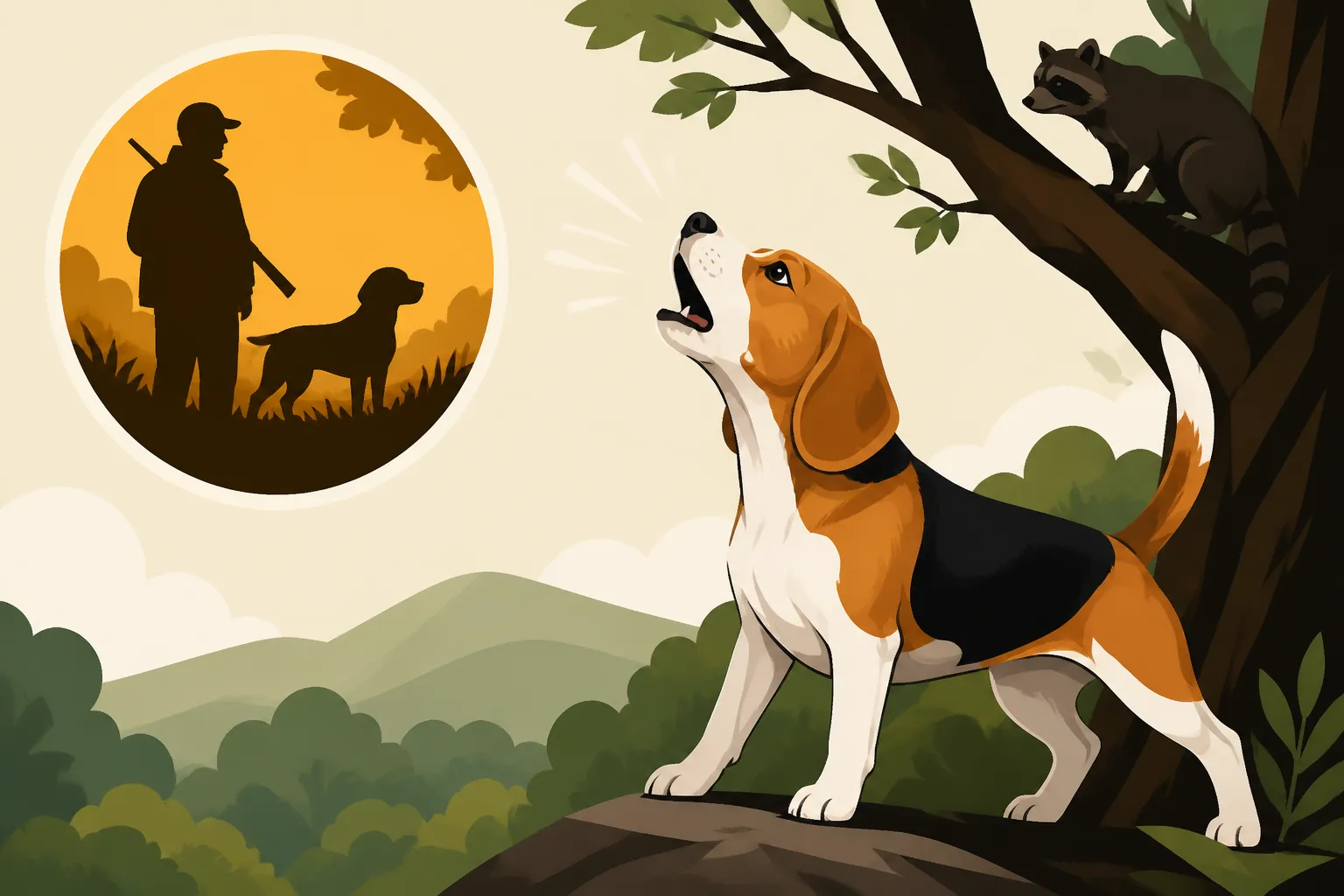
To truly grasp why Beagles bay, we have to journey back in time, long before they became cherished family pets. Beagles were specifically developed over centuries in England as scent hounds, primarily for hunting hare and rabbit. This wasn't a solitary pursuit; it was a cooperative effort between a pack of dogs and their human hunters, who often followed on foot. In this context, the Beagle's voice wasn't an annoyance; it was an indispensable tool, a vital part of the hunt itself.
Tracking the Trail: A Sonic GPS for the Hunter
Imagine being a hunter trying to follow a fast-moving hare through dense undergrowth, over rolling hills, or even in thick fog. You can’t always see your dogs, especially a small hound like a Beagle, which might be deep in the bushes, nose to the ground. This is where the bay became the hunter’s "sonic GPS." As soon as a Beagle picked up a fresh scent trail, it would emit that distinctive bay, signaling to the hunter, "Hey, I'm on it! Follow my voice!" This allowed the human to keep track of the pack’s progress, even when they were out of sight. Without this audible communication, the hunt would have been far less effective, with dogs easily getting lost or separated, and the hunter unable to anticipate where the game might break. The bay served as a constant update, a reassurance that the hunt was still on.
It's fascinating to consider that this ancient purpose still echoes in the way your Beagle might bay when it's just following a fascinating scent around your backyard or through a park. That intense focus, nose glued to the ground, is often accompanied by those familiar vocalizations, almost as if they're calling out to their invisible pack, "Got a hot one here!" The frustration for owners comes when they hear A Beagle Howl Measured in Decibels and realize that what was once a tool is now just a loud expression of joy over a squirrel's path.
The Pack Dynamic: Communication in Concert
Beagles are, by nature, pack animals. They were bred to work together, not as individual hunters, but as a cohesive unit. In a pack of several Beagles, each dog needed to know what the others were doing. If one Beagle found a particularly strong scent, its bay would alert the rest of the pack, drawing them in to help confirm and drive the chase. This collective intelligence, guided by sound, made the pack much more efficient at flushing out and pursuing game. The bay wasn’t just a signal to the humans; it was a chorus of cooperation among the dogs themselves.
This instinct for pack communication still plays out in homes where Beagles live with other dogs. You might notice one Beagle starting to bay, and another joining in, creating a symphony of sound. This isn't always agitation; sometimes it's simply a natural response to a perceived "alert" from their companion, even if that alert is just about a leaf blowing across the lawn. The concept of Whether a Second Beagle Doubles the Baying is a real concern for many prospective owners, precisely because of this innate pack communication.
Signaling the Quarry: "Found!" and "Running!"
Beyond just tracking, the bay also served to communicate critical stages of the hunt. A distinct change in the bay's intensity or pattern could signal that the hare had been "roused" or "found" – meaning it had been flushed out of its hiding place and was now actively running. This escalated baying would spur the pack on and inform the hunter that the chase was entering its final, most exciting phase. Imagine the thrill for the hunter when the normally rhythmic tracking bay shifted to a frenetic, excited chorus, indicating the game was in motion.
This specific, intentional vocalization is what makes the Beagle's bay different from a simple bark. A bark is often a warning or an attention-getter. A bay, particularly one rooted in hunting, is a sustained, melodic (to some ears!) expression directly linked to following a scent. It tells a story. When you hear What a Beagle Bay Actually Sounds Like, you'll notice it has a distinct quality that communicates persistence and discovery. This is why trying to Why You Cannot Train the Bay Out of a Beagle entirely is often an uphill battle; it's so deeply embedded.
More Than Just Noise: The Anatomy and Instinct Behind the Bay
The Beagle's bay isn't just a learned behavior; it's deeply ingrained in their physiology and genetics. Their bodies are literally built to produce this specific, far-carrying sound, and their brains are wired to associate certain stimuli with the urge to vocalize. It's a testament to centuries of selective breeding that has amplified this particular trait to such an extent.
Vocal Cords Built for Amplification
Unlike many other breeds whose barks are sharp and staccato, the Beagle's vocal apparatus is designed for sustained, resonant sound production. Their larynx and vocal cords are structured in a way that allows for that deep, drawn-out bay to carry over long distances, cutting through ambient noise in the field. Think of it like a natural megaphone built right into their throats. This anatomical predisposition means that when a Beagle decides to vocalize, it's not just a little yap; it's a full-throated declaration.
This physical capability is why A Beagle Howl Measured in Decibels can be quite impressive, especially indoors! The sound can literally travel Why a Beagle Bay Carries Three Houses Down, which is both a blessing for a hunter in a wide-open field and a challenge for a pet owner in a quiet neighborhood. Understanding that their physical structure contributes to the volume can help owners grasp that it's not always about defiance; it's simply how their bodies are made to express themselves.
The Olfactory Connection: Scent as the Siren Call
The Beagle's most famous attribute is arguably its incredible nose. With The 220 Million Receptors Behind a Beagle's Nose, it's no surprise that their world is primarily experienced through scent. This powerful olfactory sense is directly linked to their vocalization. When a Beagle hits a particularly strong or exciting scent, it's not just their nose that gets activated; it's their entire hunting drive, including the urge to bay. The scent acts as a powerful trigger, a siren call that ignites their deeply ingrained instinct to follow, communicate, and pursue.
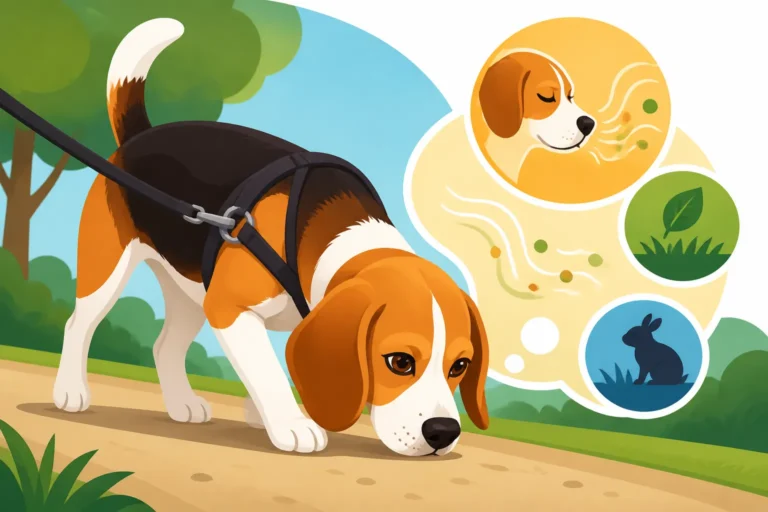
This explains why your Beagle might be quietly napping one moment, and then suddenly erupt into a bay if a particularly intriguing smell wafts through an open window, or if they catch a whiff of something interesting on a walk. Their brain quickly processes the scent, and the natural response, honed over generations, is to vocalize. For them, it’s not just a smell; it’s a story, a mystery to be solved, and they feel compelled to announce their findings. This is also Why a Beagle Walks With Its Nose to the Ground so often – they are constantly engaging with this scent-rich world around them, and sometimes, the only appropriate response is a bay.
Genetic Hardwiring for the Hunt
Centuries of selective breeding by hunters have essentially hardwired the baying instinct into the Beagle's genetic code. Breeders specifically chose Beagles that were vocal on the trail, understanding that a silent hound was a useless hound in the field. This consistent selection process over many generations meant that the trait for baying became deeply embedded. It's not something a Beagle consciously decides to do; it's an automatic, instinctual response to specific stimuli that harks back to its ancestral job.
This genetic predisposition means that while training can certainly help manage the frequency and context of baying, it's virtually impossible to eliminate it entirely without suppressing a fundamental part of what makes a Beagle a Beagle. It's part of their very identity. Recognizing this can help owners shift their perspective from viewing the bay as a 'problem' to understanding it as a manifestation of their dog's rich history and natural instincts. It’s akin to asking a bird not to sing. This deeply embedded trait is why Scent Work as the Job a Beagle Was Built For can be so fulfilling for them, as it taps directly into these core instincts, sometimes with less baying than an actual hunt might produce.
Living with the Legacy: Managing the Modern Beagle's Bay
So, you understand why your Beagle bays. But how do you, as a modern pet owner, live harmoniously with this deeply ingrained trait, especially when you don't have a pack of hunters relying on your dog's every vocalization? It comes down to understanding triggers, consistent training, and providing appropriate outlets for their natural instincts.
Understanding Triggers Beyond the Hunt
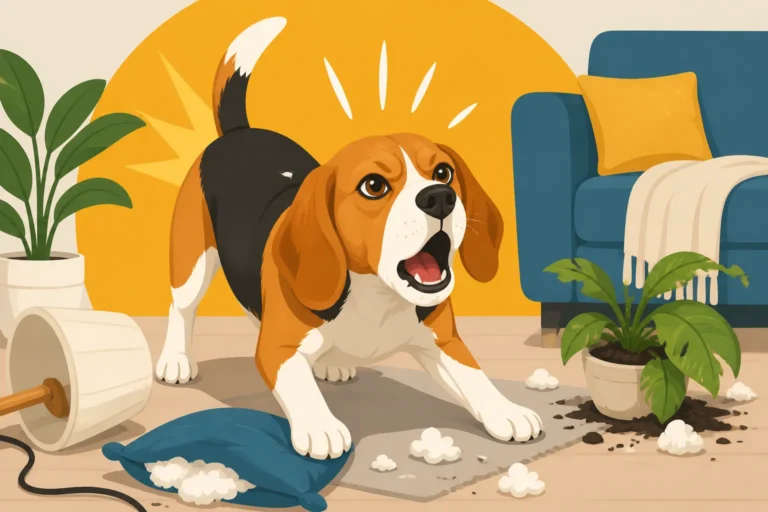
While the original trigger was the scent of game, modern Beagles will bay for a variety of reasons that mirror their historical purpose. They might bay out of excitement when a favorite person comes home, as if announcing the "find" to the rest of the "pack." They might bay at strange noises or perceived intruders, acting as a warning system. They can also bay out of boredom, loneliness, or frustration, especially if they are not getting enough physical or mental stimulation.
A common scenario is a Beagle baying due to separation anxiety. As pack animals, Beagles thrive on companionship. When left alone, particularly for long periods, their inherent need to communicate with their pack can manifest as prolonged baying and howling, a desperate call for their missing companions. This is a clear example of how their natural pack instinct translates into a challenging behavior in a home environment. Understanding Beagle Howling the Moment You Leave is crucial for addressing this specific type of vocalization effectively. Providing a stimulating environment and ensuring they aren't isolated for too long can help mitigate this.
Training for Context, Not Silence
Instead of trying to eliminate the bay entirely – which, as we've discussed, is fighting against their very nature – focus on teaching your Beagle when and when not to vocalize. This is about impulse control and contextual understanding, rather than silence.
Here are some strategies:
- "Quiet" Cue: Teach a "quiet" cue. When your Beagle bays, let them get a few barks or bays out, then gently interrupt them and reward silence. This teaches them to respond to your cue, not to suppress their instinct completely. Start in low-distraction environments and gradually increase the challenge.
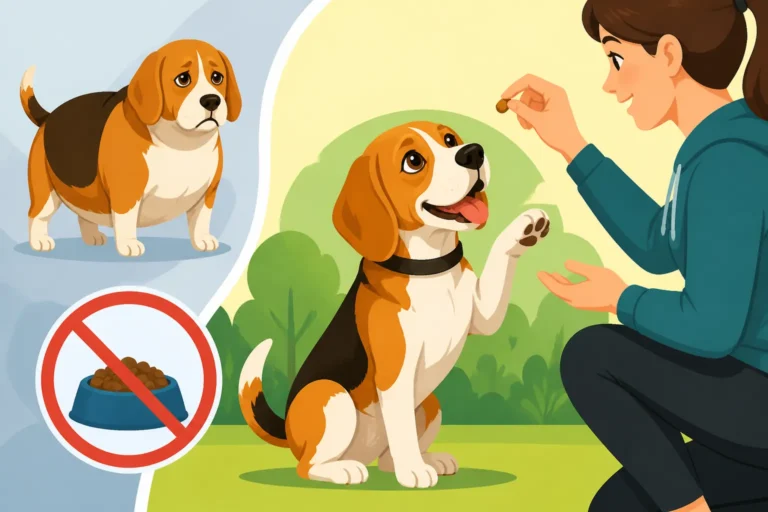
- Redirect and Reinforce: If they're baying at something outside, redirect their attention with a high-value treat or a favorite toy. Reward them for focusing on you instead of the external stimulus. You can find excellent training tools and high-value treats on platforms like Amazon. Many positive reinforcement training programs, such as BAXTER & Bella, emphasize redirecting unwanted behaviors and rewarding desired ones, which is perfect for managing a Beagle’s bay.
- Environmental Management: Close curtains if your Beagle bays at passersby. Use white noise machines or classical music to mask external sounds that might trigger a baying spree.
- Increase Mental Stimulation: A tired Beagle is a quieter Beagle, but 'tired' for a Beagle isn't just physical. Their noses need a workout! Engage them in scent work games, puzzle toys, or even just long sniffy walks. Letting them explore the world with their nose on a The Long Line Length a Beagle Actually Needs can provide immense satisfaction and reduce the urge to bay out of sheer boredom.
| Beagle Vocalization | Original Hunting Purpose | Common Modern Trigger | Management Strategy |
|---|---|---|---|
| Baying | Announcing a scent trail, calling the pack, signaling game | Strong outdoor scent, excitement, loneliness, attention-seeking | Scent work, "quiet" cue, environmental management, enrichment |
| Howling | Pack communication over distance, distress | Separation anxiety, sirens, music, loneliness, seeking companionship | Gradual desensitization, companion dog, increased human interaction, puzzle toys |
| Barking | Alerting to immediate threat, warning | Doorbell, strangers, perceived intruders, frustration | "Speak/Quiet" training, counter-conditioning, management of triggers |
| Whining | Soliciting attention, expressing need or discomfort | Hunger, needing to go out, wanting affection | Addressing needs promptly, ignoring attention-seeking whining |
Embracing Their Nature: Channeling the Instinct
Ultimately, the most effective long-term solution isn't to fight against the Beagle's nature, but to embrace it and channel it appropriately. This breed thrives when given a "job" that utilizes their incredible scenting abilities.
Consider activities like:
- Nose Work/Scent Work Classes: These classes are specifically designed to teach dogs to find hidden odors, replicating the thrill of the hunt in a controlled, fun environment. It's a fantastic mental workout for a Beagle and can greatly reduce their need to constantly vocalize out of under-stimulation. Many local dog training facilities offer these, and resources from platforms like BAXTER & Bella can help you get started at home.
- Tracking: This takes scent work to the next level, teaching your Beagle to follow a human scent trail. It’s challenging, rewarding, and deeply satisfying for a hound.
- Long, Structured Sniff Walks: Don't rush your Beagle on walks. Let them put their nose to the ground and explore. These "sniffaris" are incredibly enriching and tiring, more so than a brisk jog might be. Letting a Beagle Sniff on Every Single Walk allows them to engage their primary sense.
- Puzzle Toys and Snuffle Mats: These tools make your Beagle "work" for their food, engaging their brain and nose. This can be a great way to occupy them indoors, especially when you can't be actively engaged in training.
By understanding the deep historical and biological reasons why hunting Beagles were bred to bay, you can move past frustration and adopt strategies that work with your Beagle's instincts, rather than against them. This approach leads to a happier, more fulfilled Beagle, and a much more peaceful home for you.
Disclaimer
This article is for general informational purposes only and does not constitute professional advice. Laws, prices and regulations vary by location and change over time. Consult a qualified professional for guidance on your specific situation.