Beagle Field Trials in the Nineteenth Century
For many Beagle enthusiasts today, the image of their beloved hound is often one curled up on the couch, or perhaps nose-down in the backyard. It's easy to forget the rich history of these incredible scent hounds and the pivotal role they played in organized field sports. If you've ever wondered how the Beagle came to be the tenacious, scent-driven dog we know and love, understanding their early field trials in the nineteenth century offers a fascinating glimpse into their heritage and how their unique abilities were honed and celebrated. This guide will take you back in time to explore the origins and evolution of these trials and what they meant for the breed.
The Genesis of Organized Beagle Field Trials
The nineteenth century marked a significant period for the Beagle breed, transitioning from largely informal local hunting packs to a more recognized and standardized entity. Before this time, Beagles had been used for centuries, primarily in Great Britain, to hunt small game like rabbits and hares. They were prized for their exceptional noses and their ability to work in a pack, driving game out of dense cover for hunters following on foot. However, the exact characteristics of these dogs varied widely from one region to another, and there wasn't a universal "Beagle" as we understand it today.
The Need for Standardization and Recognition
As the Victorian era progressed, there was a growing interest in dog breeding and exhibition. Dog shows and field trials emerged as ways to evaluate and refine breeds, moving them beyond purely utilitarian purposes toward established standards. For Beagles, this meant a push to define what a "good" Beagle truly was, not just in terms of its ability to hunt, but also its physical conformation and temperament. Enthusiasts wanted a way to compare their dogs, not just against local rivals, but on a broader, national stage. This was particularly important as people started to formalize breed clubs and registers.
Early Efforts to Organize
The earliest organized field trials for Beagles in the nineteenth century weren't quite the structured events we might imagine today. They often grew out of local hunting meets where owners informally competed to see whose hounds performed best. These gatherings would assess things like nose work, drive, stamina, and voice. As interest grew, these informal competitions gradually became more structured, with specific rules and judging criteria. This period was crucial because it started to lay the groundwork for what would eventually become the formal breed standard and the modern sport of Beagling. Without these early efforts, the Beagle might have remained a varied, regional type rather than the globally recognized breed it is today. The National Beagle Club Founded in 1887 was a huge step in this direction, bringing together these disparate interests under one banner.
What a Nineteenth-Century Beagle Field Trial Looked Like
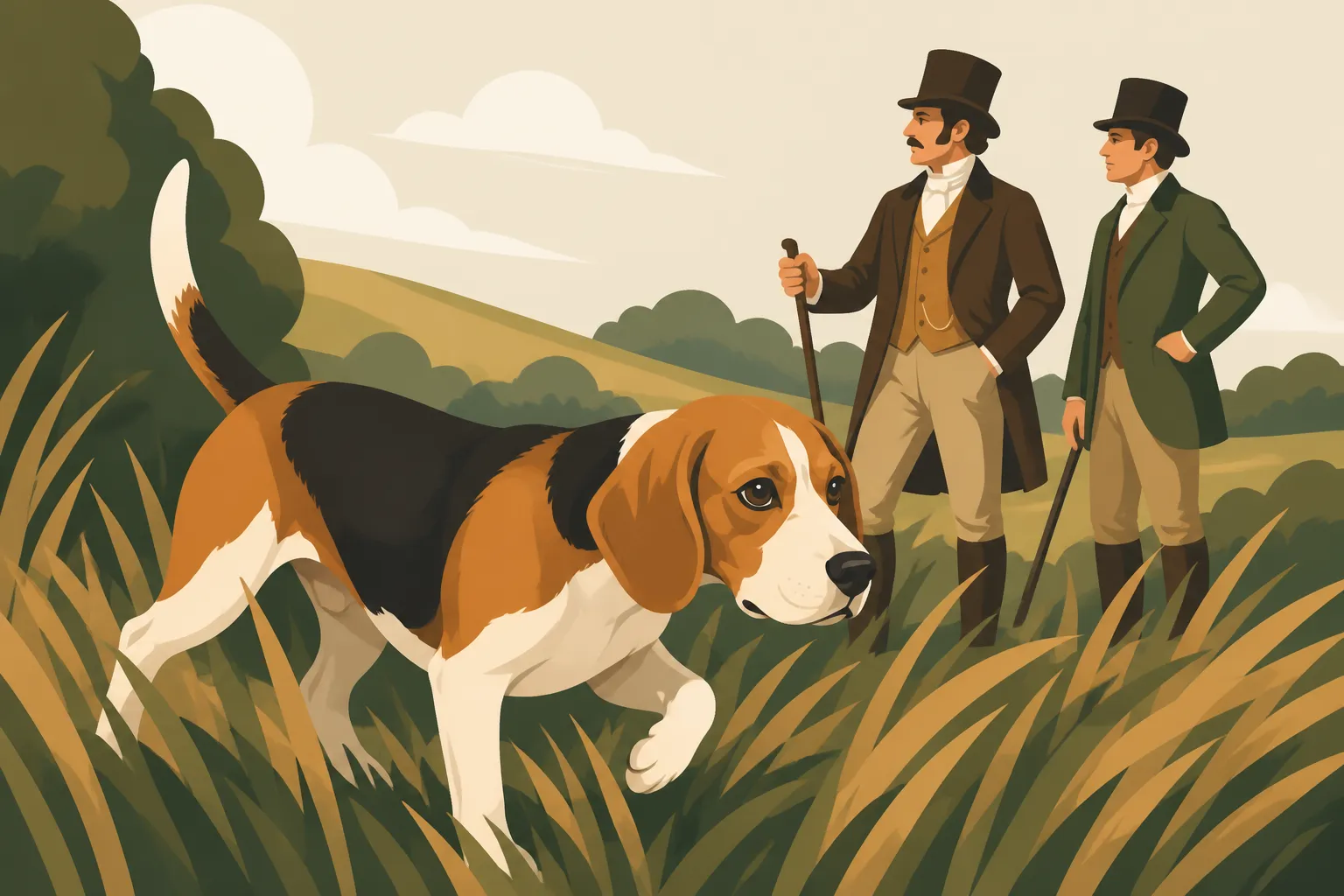
Imagine a crisp autumn morning in the English countryside, or perhaps the rolling hills of America. That's often where nineteenth-century Beagle field trials would unfold, deeply rooted in the practicalities of hunting. These weren't fancy indoor events; they were gritty, outdoor tests of a Beagle's fundamental instincts and abilities. The focus was entirely on how well a Beagle could perform its ancestral job: finding, tracking, and flushing game.
The Course and the Quarry
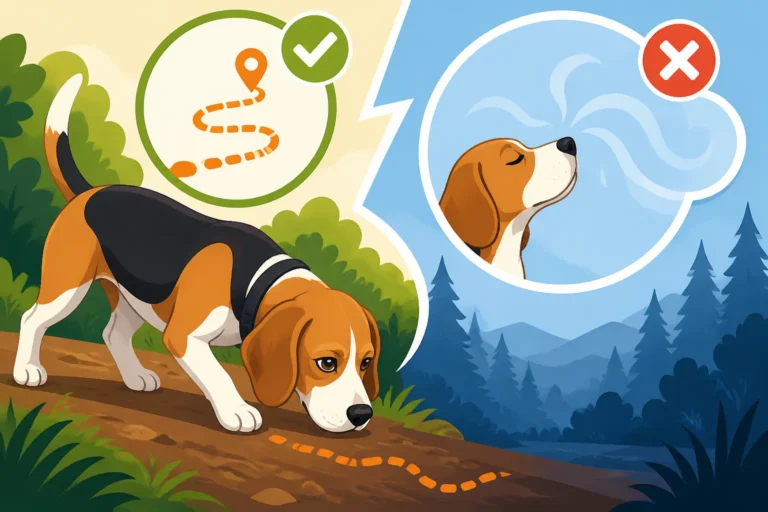
Unlike modern field trials for some breeds that use artificial scenarios or released birds, early Beagle trials were typically run "on game," meaning they used wild rabbits or hares. The terrain would vary from open fields to dense woodlands, hedgerows, and scrub, mirroring the natural hunting grounds. Packs of Beagles, often numbering anywhere from a few dogs to a dozen or more, would be released to pick up a scent. Judges, usually seasoned hunters themselves, would follow on foot or horseback, observing every move. The goal was for the pack to locate a scent, work together to follow the trail with enthusiasm and accuracy, and eventually "put up" (flush out) the rabbit or hare. The ability to persevere on a cold trail and maintain a strong voice was highly prized.
Judging Criteria and Valued Traits
In these early trials, judges weren't looking for obedience in the ring, but rather the intrinsic qualities that made a Beagle a superior hunting dog. Key traits included:
- Nose Work: How quickly and accurately a Beagle picked up and followed a scent trail, especially a faint or "cold" one. This was paramount.
- Voice/Cry: The distinctive "baying" that Beagles are famous for. A clear, strong, and consistent voice was essential for hunters to follow the pack's progress through thick cover. What a Beagle Bay Actually Sounds Like was a critical indicator for judges.
- Drive and Stamina: The willingness to work tirelessly, often for hours, over challenging terrain. A Beagle that quit or lost interest quickly was not a valuable hunting companion.
- Pack Work: The ability of individual dogs to cooperate within a pack, sharing the trail, and not getting distracted or breaking away independently. Beagles were historically pack animals, and this was vital.
- Independence (but not too much!): A Beagle needed to be bold enough to work a trail, but still responsive enough to its human handler when necessary, particularly for subtle cues during the hunt.
Judges would closely watch how the hounds reacted when a scent was lost (a "fault") and how they recovered it (a "lift"). Speed was less important than persistence and accuracy. It wasn't about catching the game, but demonstrating the classic hunting sequence.
A Typical Event Scenario
Imagine a group of owners gathered early, their Beagles eagerly straining on their leads. After a briefing, the first brace or pack might be led to a promising area. The hounds would be cast off, their noses immediately dropping to the ground. Soon, one might let out a tentative "whimper," then a more confident "bay" as a scent was found. The other dogs would join in, their collective voices echoing through the trees—a sound that was pure music to the ears of a hunter. The pack would weave through the undergrowth, a symphony of bays guiding the judges. If the rabbit went to ground, the trial might pause, and a new scent would be sought. If it flushed, the judges would note the efficiency and teamwork. The emphasis was always on the "run" and the demonstration of classic Beagling ability, rather than the kill. For insights into the historical development of the breed, consider The Beagle From English Rabbit Packs to American Homes.
The Impact of Field Trials on Beagle Breeding
These early field trials weren't just sporting events; they were critical tools for shaping the future of the Beagle breed. They provided a practical, real-world assessment of a dog's genetic potential and helped breeders make informed decisions about which Beagles to continue in their lines. This practical application meant that the traits most valuable for hunting were actively selected for, reinforcing the Beagle's natural abilities.
Selection for Working Ability
Before the formalization of field trials, breeders might rely on reputation or anecdotal evidence of a dog's hunting prowess. Field trials changed that by providing a measurable, public demonstration. A Beagle that consistently performed well in trials, showcasing superior nose, voice, and stamina, naturally became a highly sought-after sire or dam. This intense focus on working ability directly influenced breeding choices, ensuring that the hunting instinct remained paramount. Breeders weren't just looking for a pretty face; they needed a dog that could do the job. This also meant that Field-Bred Versus Show-Bred Beagle Prices began to emerge as different lines focused on different aspects of the breed.
Documenting and Pedigree Building
As trials became more organized, so did the keeping of records. Performance at trials often led to dogs receiving titles or recognition, which were then noted in pedigrees. This documentation was invaluable for tracking successful lines and understanding which pairings produced the best working dogs. Over time, these records helped to solidify the genetic foundation of the breed, allowing breeders to make more predictable choices and consistently produce Beagles with strong working characteristics. It was a clear way to see who was actually producing dogs capable of doing What a Beagle Was Originally Bred to Hunt.
Solidifying Breed Standards
While conformation shows focused on physical appearance, field trials were instrumental in defining the "function" part of the breed standard. Judges and enthusiasts observed common traits among the most successful working Beagles, which in turn informed the written standards for the breed. For instance, the length of ear, the strength of bone, and the overall compact, hardy build were all considered important for a dog that needed to navigate rough terrain for hours. These observations helped create a holistic understanding of the ideal Beagle, where form and function were inextricably linked.
| Aspect | Early 19th Century Field Trials | Late 19th Century / Emerging Formal Trials |
|---|---|---|
| Origin | Informal hunts, local competitions, casual gatherings | Organized by emerging breed clubs (e.g., National Beagle Club) |
| Quarry | Wild rabbits/hares (always "on game") | Predominantly wild game; some experimental released game |
| Judging Focus | Pure hunting ability: nose, voice, stamina, pack work | Hunting ability, but with increasing emphasis on consistency |
| Rules & Structure | Loose, often unwritten, varied by locality | Developing formal rules, written standards, titles |
| Documentation | Mostly anecdotal, local records, breeder notes | Pedigree tracking, trial wins noted in formal registers |
| Impact on Breeding | Direct selection for proven working dogs | Refinement of lines, identification of top sires/dams |
| Participant Scope | Local hunters and dog owners | Enthusiasts, serious breeders, club members across regions |
Challenges and Evolution of Early Field Trials
The path from informal hunting excursions to structured field trials wasn't always smooth. Early enthusiasts faced numerous challenges in standardizing and popularizing the sport, and these hurdles ultimately shaped how Beagle trials evolved into the events we see today. It was a period of passionate debate, experimentation, and a slow, steady refinement of what it meant to hold a "proper" Beagle field trial.
Inconsistency and Regional Variations
One of the biggest challenges in the early days was the sheer inconsistency across different regions. What counted as a "good run" in one county might be judged differently in another. Without a national governing body initially, there were no uniform rules for scoring, duration, or even the type of terrain used. This meant that comparing trial results from different areas was difficult, and it hindered the ability to establish widely recognized champions. It wasn't until organizations like the National Beagle Club started to gain traction that a more cohesive approach began to emerge, allowing for more consistent evaluations. Many Beagling groups today still enjoy their local traditions, but now they do so under a national framework that allows for broader recognition.
Accessibility and Practicalities
Participating in field trials in the nineteenth century wasn't always easy. Travel was more challenging, and finding suitable land with ample game for trials could be an undertaking. Moreover, owning and maintaining a pack of Beagles, even a small one, required significant resources, time, and dedication. This meant that participation was often limited to those with the means and leisure to pursue the sport. The practicalities of managing multiple dogs in the field, ensuring their health, and transporting them to events were significant hurdles that early Beaglers had to overcome. It was a far cry from simply taking a single pet Beagle for a walk on a Long Line Length a Beagle Actually Needs.
Shifting Focus Towards Conformation
As the nineteenth century drew to a close and moved into the twentieth, there was a gradual shift in the broader dog world. While working ability remained important for many, the growing popularity of conformation shows began to draw attention. These events, which judged dogs purely on their physical adherence to a written standard, appealed to a wider audience and were often easier to organize and attend. This created a dual focus for the Beagle breed: some enthusiasts continued to prioritize field performance, while others leaned into breeding for the show ring. This split, though not necessarily a conflict, led to the development of different breeding lines and sometimes different ideals for the "perfect" Beagle. However, the foundational work done in the field trials meant that even show Beagles retained a strong underlying instinct for scent work. Thomas Johnson and Beagles Bred to Look Right had already started this trend of valuing appearance alongside working ability.
Despite these challenges, the legacy of nineteenth-century Beagle field trials is profound. They were instrumental in preserving and refining the core characteristics of the breed, ensuring that the Beagle's incredible scenting ability and tenacious drive were celebrated and passed down through generations.
Disclaimer
This article is for general informational purposes only and does not constitute professional advice. Laws, prices and regulations vary by location and change over time. Consult a qualified professional for guidance on your specific situation.