Whether the Harrier Sits in the Beagle’s Line
Many Beagle enthusiasts, myself included, have often paused at the sight of a Harrier, noting the striking similarities and wondering aloud if they're simply a larger version of our beloved Beagles. This common question isn't just about curiosity; it delves into the rich, intertwined history of scent hounds and how breeds diverge. This guide will explore the deep historical connections and the subtle yet significant distinctions between the Beagle and the Harrier, helping you understand their shared ancestry and their unique paths.
Unraveling the Hound Family Tree: Are Harriers Just Bigger Beagles?
It's completely understandable why someone might mistake a Harrier for a larger Beagle. They share so many classic hound characteristics: the long, drooping ears, the pleading eyes, the robust build, and, of course, that incredible nose. However, to simplify a Harrier as merely a "bigger Beagle" misses a fascinating story of selective breeding and specific hunting purposes that ultimately led to two distinct, albeit related, breeds.
The Shared Ancestry of Scent Hounds: A Common Root
Both Beagles and Harriers belong to the ancient family of scent hounds, a lineage that traces back centuries, if not millennia. These dogs were developed across Europe, primarily in England and France, to follow game by scent rather than sight. Think of it like a sprawling family tree where many branches stem from the same ancient rootstock. Early hound types weren't as rigidly defined by breed standards as they are today. Instead, they were often categorized by their size and the type of game they hunted. You had larger hounds for bigger prey and smaller ones for rabbits and hares.
The ancestors of both the modern Beagle and Harrier were likely medium-sized hounds that were common in medieval Europe. Over generations, breeders, who were often landowners or noblemen keen on their hunting pursuits, would select dogs with specific traits that best suited their local terrain and quarry. This is where the divergence truly began. These early hounds, including those that would eventually become Beagles and Harriers, all had that innate, powerful drive to follow a scent trail, a trait that remains their defining characteristic today. You can read more about how these dogs came to be in How Long Beagle-Type Hounds Have Existed.
Divergence for Different Quarry: Size and Purpose
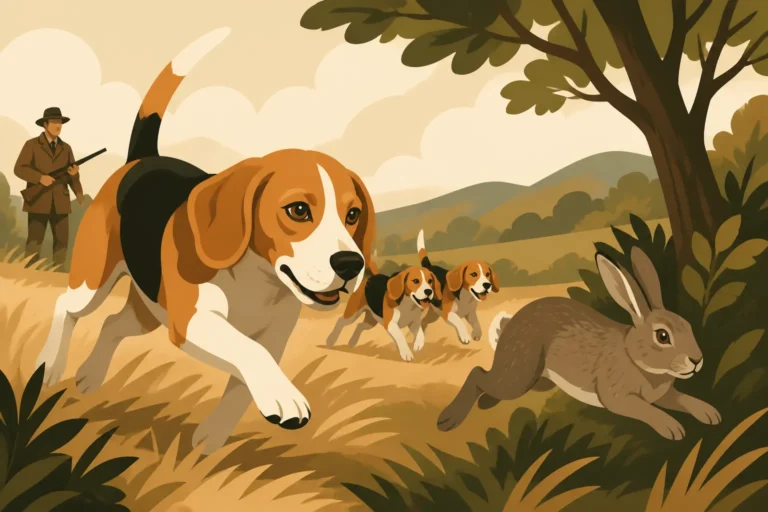
The most significant factor in the split between Beagles and Harriers was the specific game they were bred to hunt. Beagles, as we know them, were primarily developed for hunting rabbits and hare. This required a hound that could work relatively slowly, meticulously following a ground scent without outrunning the hunters who often followed on foot. A smaller, more compact dog was ideal for navigating dense undergrowth and hedgerows, and for staying within earshot of the human hunting party. Their shorter legs kept them at a pace that hunters could match, making the sport accessible to a wider range of people.
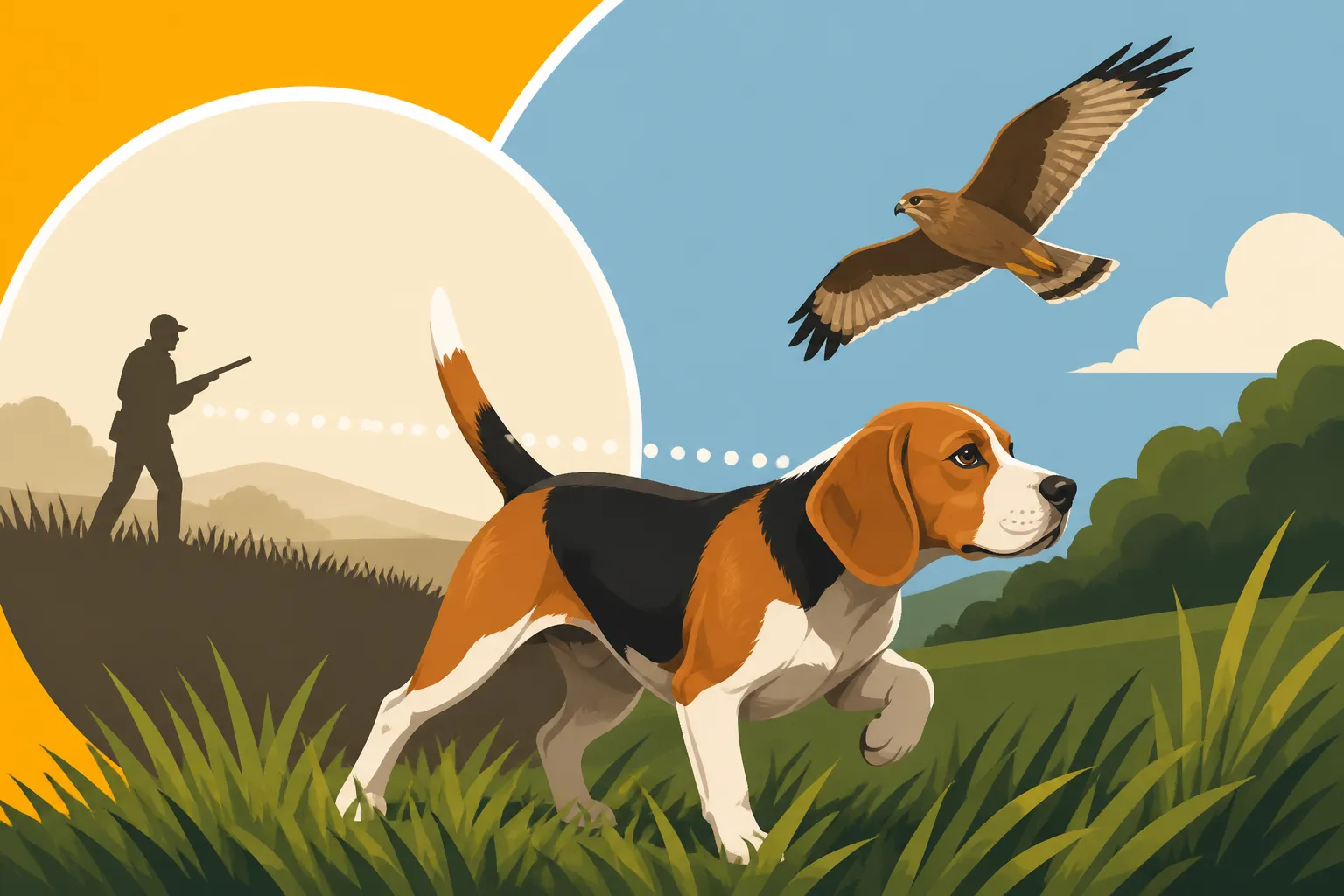
Harriers, on the other hand, were generally bred for larger game like fox or larger, swifter hares, often over more open country. This necessitated a dog with longer legs, greater stamina, and more speed to cover expansive distances and keep up with a faster pursuit, sometimes involving horses. Their increased size gave them an advantage in power and endurance, allowing them to push through tougher terrain and maintain a faster chase. While both chase by scent, the type of chase and the speed of the quarry dictated their physical evolution. This clear difference in purpose is what truly defined their separate paths. If you're wondering what kind of game a Beagle was originally bred for, check out What a Beagle Was Originally Bred to Hunt.
Historical Development and British Hunting Traditions
The history of both breeds is deeply intertwined with the British hunting traditions that shaped them. Understanding this context helps clarify why they developed into distinct entities rather than just size variations of the same dog.
The Early Days of English Hunting Packs
Hunting with packs of hounds has a long and storied history in England. From medieval times through the Victorian era, various types of hounds were employed, each with its own niche. There were the larger hounds, like the Foxhound, designed for powerful, fast chases, and then there were smaller hounds, often generically referred to as "beagles." These smaller hounds, known for their "be'geule" (open throat) cry while on the scent, were particularly cherished for rabbit and hare hunting. This form of hunting, often called "beagling," was a pedestrian sport, meaning hunters followed on foot, and thus required hounds that could be kept pace with.
During these formative years, breed types were more fluid than today's rigid standards. Dogs were bred for function above all else. A good nose, sturdy build, and a melodious cry were paramount. The particular environmental conditions and the type of hunting practiced in different estates and regions further influenced their development. This is the era when the groundwork was laid for what would eventually become the distinct Beagle we know and love today, a development detailed in The Beagle From English Rabbit Packs to American Homes.
Formalizing the Breeds: From Type to Standard
As dog breeding became more organized in the 19th century, with the establishment of kennel clubs and written breed standards, these distinct "types" began to solidify into formal breeds. Breeders started to intentionally select for consistent physical and temperamental traits, moving away from purely functional definitions to include specific appearances.
The Harrier became recognized as its own breed, distinct from both the larger Foxhound and the smaller Beagle. Its standard outlined a dog of specific height, build, and temperament suitable for its traditional role. Similarly, Beagle breeders, notably figures like Reverend Phillip Honeywood and Thomas Johnson, worked to standardize the Beagle's appearance and ensure its suitability for hare hunting on foot. These efforts, particularly during the 1830s, defined the Beagle's compact form and merry disposition. You can learn more about this process in How the Modern Beagle Was Built in the 1830s. So, while they might have shared a distant ancestor, the formalization process carved out unique identities for each. Modern breeders continue to adhere to these standards, ensuring the genetic purity of each breed.
Distinguishing Traits: Beyond Just Size
While the most obvious difference between a Beagle and a Harrier might be their size, there are several other key distinctions in their physical characteristics, temperament, and vocalizations that set them apart. It’s like comparing two cousins—they might look similar, but they have their own unique personalities and physical attributes.
Physical Differences: Build, Gait, and Expression
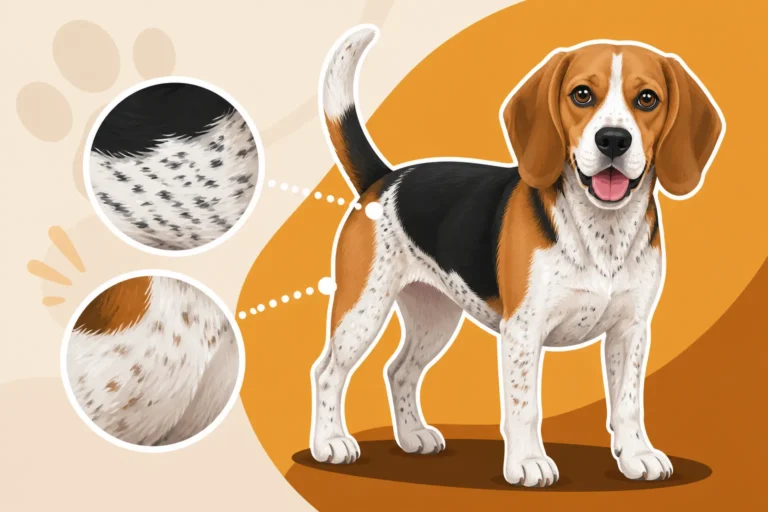
Let’s talk about the practical differences you'd notice if you stood a Beagle next to a Harrier. A Beagle, as many of us know, typically stands between 13 and 15 inches at the shoulder. The two recognized varieties are the 13-inch and the 15-inch. You can find more details about these specific height requirements in The Thirteen Inch Beagle Variety and The Fifteen Inch Beagle Variety. They are compact, sturdy dogs built for endurance, with a slightly longer back than some other breeds, allowing for flexibility in navigating dense undergrowth. Their gait is usually purposeful and ground-covering, but not necessarily swift.
A Harrier, by contrast, is a significantly larger and more athletic hound. Harriers typically stand between 19 and 21 inches at the shoulder, making them considerably taller and heavier than even the largest Beagles. Their build is more powerful and lean, designed for greater speed and stamina over open country. Their legs are longer, their stride is more expansive, and they often carry a more athletic, somewhat less chunky appearance than a Beagle. While both have expressive, soulful eyes, a Harrier's overall head and muzzle might appear a bit more refined and less broad than a Beagle's, proportionate to its larger frame. Their ears are long and pendulous, similar to a Beagle's, but again, scaled up for their larger size.
Temperamental Nuances: Pack Drive and Independent Spirit
Both breeds are quintessential pack hounds, meaning they thrive in social settings and possess a strong instinct to work cooperatively with others. This strong pack drive is what makes them often so good with families and other dogs. However, their specific historical roles have instilled some subtle temperamental nuances.
Beagles are renowned for their "merry" disposition. They are curious, amiable, and often quite comical, but they also possess a stubborn streak, particularly when their nose is engaged. Once a Beagle locks onto a scent, the rest of the world, including your voice, can become irrelevant. This intense focus on scent is a defining characteristic and a testament to their breeding as dedicated rabbit hunters. They are generally eager to please when not on a scent, making them a popular choice for families who understand their needs. Beagle Temperament and Why the Breed Suits Families delves deeper into what makes them such unique companions.
Harriers share the Beagle’s amiable nature and strong pack instinct but often present with a slightly more intense, driven demeanor, reflecting their role in hunting larger, faster game. While equally scent-driven, their hunting style required more endurance and a greater ability to cover ground quickly, which can translate into a higher energy level and a need for more extensive physical exercise. They might be perceived as a bit more serious or persistent in their pursuit compared to a Beagle's sometimes meandering, nose-to-the-ground exploration. They require an owner who can channel that boundless energy into appropriate activities.
Bark vs. Bay: The Vocal Distinctions
Ah, the hound voice! Both Beagles and Harriers are vocal breeds, famous for their distinctive "bay." This isn't just a bark; it's a deep, mournful, and incredibly resonant vocalization that carries far and wide, serving to alert hunters to the progress of the chase.
A Beagle's bay is unmistakable. It's often described as a melodious "how-oo-ooo" or a resonant "aroo." While charming to their owners, it can be quite loud and persistent, especially when they're excited, lonely, or on a scent. The Beagle's vocalizations are a fundamental part of their heritage; they were bred to bay so hunters could track them in thick cover. You can hear descriptions of this unique sound in What a Beagle Bay Actually Sounds Like.
A Harrier also bays, but due to their larger size and deeper chest, their bay tends to be even deeper, more resonant, and carries with greater power. It's a truly impressive sound, reflecting their robust build. While both can be quite noisy, the Harrier's larger lung capacity often translates into a more commanding and far-reaching vocalization. This can be an important consideration for potential owners, especially those with close neighbors. Just like with Beagles, their bay is an intrinsic part of their identity as a working scent hound, a vital communication tool during the hunt.
The Breeder's Perspective: Maintaining Separate Lines
From a breeder's standpoint, Beagles and Harriers are distinctly separate breeds, with established standards and breeding practices designed to maintain their unique characteristics. There's no deliberate mixing of these lines in responsible breeding programs today.
Dedicated Breeding Programs
Modern breeders of Beagles and Harriers operate with dedicated, distinct breeding programs. A reputable Beagle breeder focuses on producing Beagles that conform to the breed standard, whether it's the 13-inch or 15-inch variety, and possess the quintessential Beagle temperament and health clearances. They are not attempting to create a "bigger Beagle" or a "smaller Harrier." Their breeding goals are specifically tied to improving and preserving the Beagle breed.
Similarly, Harrier breeders are committed to advancing the Harrier breed, focusing on characteristics unique to their standard, such as their specific size, athletic build, and working temperament. These breeders carefully select breeding pairs based on lineage, conformation, and health to ensure they are producing purebred Harriers. The idea of crossing these two breeds intentionally within a purebred breeding context is simply not done by responsible breeders who adhere to breed club standards.
Genetic Purity and Health Testing
For both breeds, maintaining genetic purity is paramount, alongside ensuring the health and welfare of their dogs. Responsible breeders conduct extensive health testing to screen for genetic conditions common to their specific breed. For Beagles, this might include tests for conditions like Musladin-Lueke Syndrome, Factor VII deficiency, and certain eye conditions. You can learn more about these comprehensive health screenings in Beagle Health Testing Under CHIC, which emphasizes the importance of understanding a breed's genetic predispositions.
While Beagles and Harriers might share some distant ancestors, their centuries of selective breeding for specific traits have resulted in distinct genetic profiles. Health testing protocols, therefore, are tailored to the known issues within each breed. Owners interested in obtaining a purebred Beagle or Harrier should always seek out breeders who are transparent about their health testing practices and eager to discuss the lineage of their puppies.
In conclusion, while the Harrier might visually strike you as a "bigger Beagle," they are, in fact, two distinct breeds with their own unique histories, standards, and purposes. Their shared scent hound heritage is undeniable, but their paths diverged long ago, shaped by the demands of different hunting traditions and the careful selections of dedicated breeders. Both are magnificent hounds, each bringing their own incredible qualities to the world of canine companions. Whether you're researching their ancestry or just admiring their similar, yet distinct, looks, understanding these differences enriches our appreciation for both the Beagle and the Harrier. And remember, for all your hound's needs, from durable toys to specialized diets, online retailers like Chewy offer a vast array of products to keep them happy and healthy.
Disclaimer
This article is for general informational purposes only and does not constitute professional advice. Laws, prices and regulations vary by location and change over time. Consult a qualified professional for guidance on your specific situation.