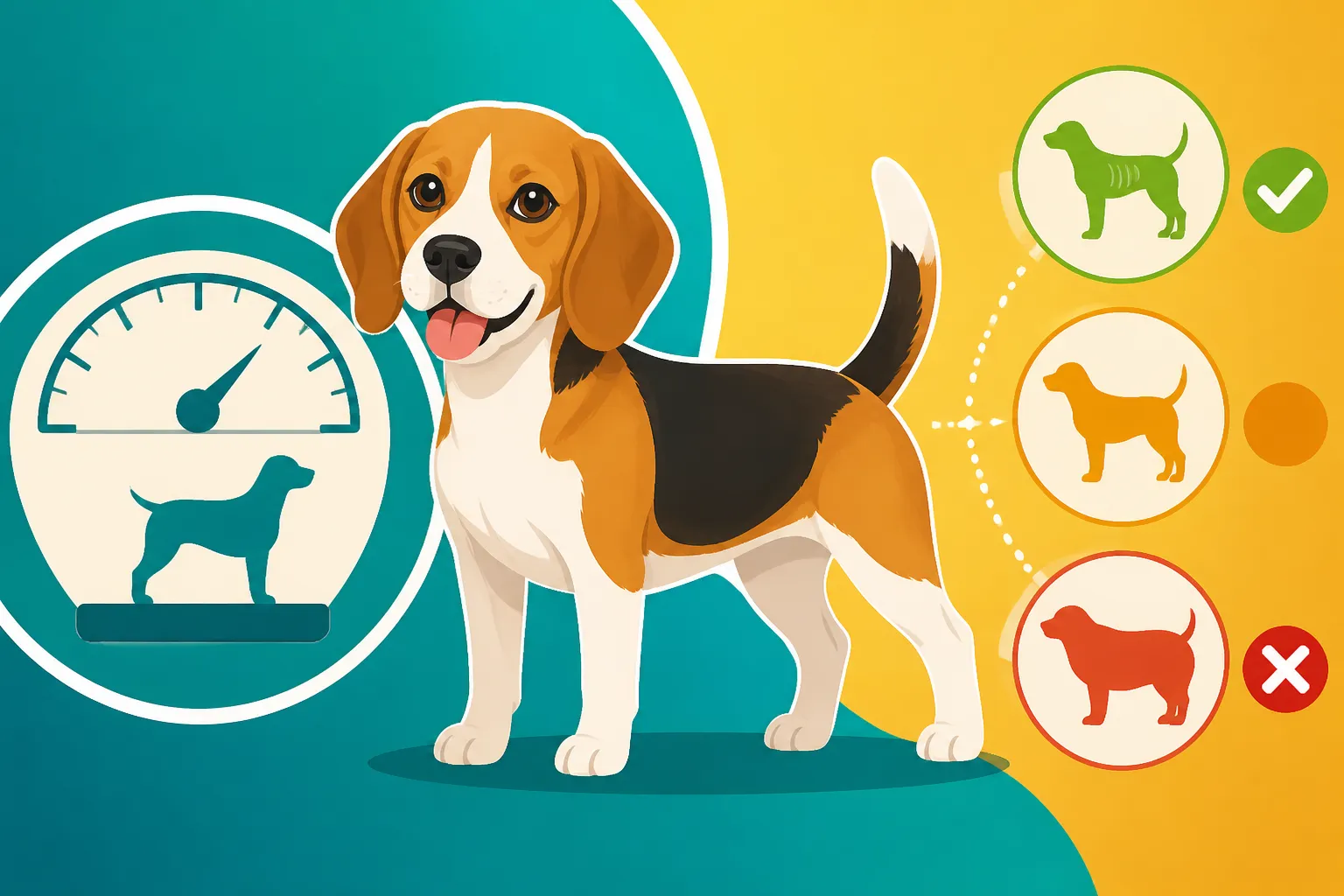
Setting a Goal Weight for Your Beagle’s Frame
It’s a common scenario: you look at your beloved Beagle, a breed famous for its adorable, perpetually hungry gaze, and you wonder if they’re carrying a little too much weight. It’s easy to dismiss a few extra pounds as "more to love," especially when those big, brown eyes are staring up at you expectantly. But for Beagles, who are notorious for their boundless appetites and impressive scent-driven pursuit of snacks, maintaining a healthy weight is crucial for their long-term health and happiness. This guide will walk you through how to objectively assess your Beagle's current condition and, with your vet's help, set a realistic, achievable goal weight tailored specifically to their unique frame.
Understanding Your Beagle's Ideal Body Condition
When we talk about an "ideal weight" for a Beagle, it’s not just a number on a scale. It’s about their overall body condition – how much fat they're carrying and how well you can feel their bones. Because Beagles come in different sizes, typically the 13-inch and 15-inch varieties, a fixed weight number can be misleading. What might be perfectly healthy for a taller, longer-bodied Beagle could be significantly overweight for a smaller, more compact one.
Why "Healthy Weight" Isn't One-Size-Fits-All
Imagine you have two Beagles: one is a sturdy, 15-inch male from field lines, often built a bit more athletically, and the other is a petite, 13-inch female from show lines, which can sometimes be a bit heavier-boned. If both weighed 28 pounds, one might be lean and agile, while the other could be struggling to get up the stairs. Their individual bone structure, muscle mass, and even gender play a huge role in what constitutes their "ideal" weight. This is why relying solely on breed standards or averages can be frustrating for owners trying to do right by their specific dog. You want to understand your Beagle's frame, not just a generic Beagle's frame.
Furthermore, a Beagle's ideal weight can fluctuate slightly throughout their life. A younger, more active Beagle might naturally be leaner than a senior Beagle who has slowed down. Hormonal changes after spaying or neutering can also impact metabolism, making it easier for them to pack on pounds. It’s a dynamic target, not a static one, and it requires ongoing attention to keep them in peak condition.
Learning to Body Condition Score Your Beagle
This is where the Body Condition Score (BCS) comes in, and it's a tool every Beagle owner should master. It's a visual and tactile assessment that helps you gauge your dog's fat reserves, typically on a 5-point or 9-point scale. Your vet will often use this during check-ups, but you can certainly learn to do it at home. It empowers you to objectively look at your dog, not just with loving eyes, but with a critical eye for their health.
A common system is the 5-point scale, where 1 is emaciated, 3 is ideal, and 5 is obese. The goal is to aim for that middle ground where your Beagle is lean but not bony, with a healthy covering of muscle. This hands-on approach removes the guesswork that a scale alone can create, especially if you have a Beagle with a particularly dense double coat that can hide a lot.
Here's a simplified version of a 5-point Body Condition Score:
| Score | Description | What You Feel/See |
|---|---|---|
| 1 | Severely Underweight | Ribs, lumbar vertebrae, pelvic bones, and all bony prominences easily visible from a distance. No discernible body fat. Obvious loss of muscle mass. |
| 2 | Underweight | Ribs, lumbar vertebrae, and pelvic bones easily visible. No palpable fat. Some evidence of other bony prominences. Minimal muscle mass. |
| 3 | Ideal Weight | Ribs easily palpable without excess fat covering. Waist easily noted when viewed from above. Abdominal tuck evident when viewed from the side. |
| 4 | Overweight | Ribs palpable with slight excess fat covering. Waist discernible but not prominent. Abdominal tuck may be absent. |
| 5 | Obese | Ribs difficult to palpate due to heavy fat covering. No waist. Abdominal tuck absent. Obvious abdominal distention or sagging. Heavy fat deposits on neck and tail base. |
The Visual and Tactile Cues of a Healthy Beagle
So, what does a "perfect" Beagle feel and look like? When you stand above your Beagle and look down, you should see a clear waistline, like an hourglass figure, behind their ribs. It shouldn't be a straight line from chest to tail. When you view them from the side, you should see an "abdominal tuck" – their belly should slope upwards from their chest to their hind legs, not hang low or parallel to the ground. This indicates good muscle tone and a lack of excess belly fat.
Now, for the hands-on part. Gently run your hands along their sides, specifically over their rib cage. You should be able to easily feel each individual rib, much like feeling the knuckles on your hand. There should be a thin layer of fat covering them, but no thick padding. If you have to press hard to feel the ribs, or if you can't feel them at all, your Beagle is likely carrying too much weight. Similarly, you should be able to feel their hip bones with gentle pressure, again, with a light fat covering. Learning Feeling for a Beagle's Ribs and Waistline is a crucial skill for every owner. Don't be shy about getting hands-on; your Beagle won't mind the extra petting, and you'll be gathering vital health information.
The Dangers of Carrying Extra Pounds on a Beagle's Frame
It’s tempting to indulge a Beagle – their pleading eyes and constant sniffing for crumbs are legendary. But those extra pounds aren't just cosmetic; they carry significant health risks, many of which can severely impact a Beagle's quality of life and even shorten their lifespan. It's a hard truth, but an overweight Beagle is simply not as healthy as a lean one.
How Excess Weight Stresses a Beagle's Joints and Spine
Beagles are an active breed, built for endurance and scent work. Their structure, particularly their slightly longer back, makes them susceptible to certain orthopedic issues. When a Beagle carries extra weight, every step, jump, and run puts undue stress on their joints – hips, knees, and especially their spine. This constant strain can accelerate the onset and severity of conditions like arthritis, making simple activities painful. Imagine trying to walk around all day with a heavy backpack that you can never take off; that’s what it can feel like for an overweight dog.
We often see this manifesting as a reluctance to jump onto the couch, struggling with stairs, or a general stiffness after resting. Beagle Arthritis Arriving in Middle Age is a common problem, and obesity can bring it on sooner and make it much worse. The intervertebral discs in their spine are also under increased pressure, raising the risk of Beagle Disc Disease and That Slightly Long Back. A healthy weight helps preserve the integrity of these crucial structures, allowing your Beagle to stay agile and comfortable for longer.
The Connection Between Obesity and Common Beagle Health Issues
Beyond joint stress, excess weight significantly increases a Beagle's risk for a host of other serious health problems. Just like in humans, obesity is a gateway to chronic disease in dogs. Overweight Beagles are more prone to developing Beagle Diabetes and Blood Sugar Control because their bodies become less responsive to insulin. Heart disease, including certain types of Beagle Heart Disease and Murmurs, can be exacerbated by the added workload on the cardiovascular system.
Furthermore, a thicker layer of fat makes it harder for veterinarians to perform thorough physical exams, potentially delaying the diagnosis of other conditions. Anesthesia risks during necessary surgeries can also increase for obese dogs. Even seemingly minor issues like skin folds can become breeding grounds for infections if they aren't kept clean and dry. It's a cascading effect where one problem leads to another, making their lives less enjoyable and more prone to vet visits.
Overweight Beagles and Their Impact on Energy and Enthusiasm
One of the most heart-breaking consequences of obesity in Beagles is the loss of their signature "merry" temperament and boundless energy. A lean Beagle is a happy Beagle, eager to explore, chase scents, and play. An overweight Beagle, however, might become lethargic, less interested in walks, and simply not enjoy life as much. Their stamina decreases, making those long, satisfying sniff walks shorter and less frequent. This creates a vicious cycle: less activity leads to more weight gain, which further reduces activity.
Their ability to self-regulate body temperature can also be compromised, making them more susceptible to heat stroke, especially given their dense double coats. The pure joy of a Beagle running and playing freely is diminished when their body is weighed down. By helping them achieve and maintain a healthy weight, you're not just preventing disease; you're preserving their zest for life and ensuring they can enjoy all the adventures a Beagle was born for.
Crafting a Realistic Weight Loss Plan for Your Beagle
So, you’ve assessed your Beagle, and you realize they might be carrying a bit more cushion than is ideal. Don't panic! This is a common challenge, and with a structured, patient approach, you can help them shed those pounds. The key is to make gradual, sustainable changes, not drastic overhauls that might stress your dog or lead to rebound weight gain.
Consulting Your Veterinarian for a Personalized Goal Weight
The absolute first step in any weight loss journey for your Beagle should be a visit to your veterinarian. They are your best resource for determining a precise, healthy goal weight for your individual dog. Your vet will perform a thorough physical examination, confirm their current Body Condition Score, and rule out any underlying medical conditions like Beagle Hypothyroidism and Sudden Weight Gain that might be contributing to the weight gain. This is crucial because a health issue could make weight loss difficult or even dangerous without proper management.
Your vet can also help you calculate the correct daily calorie intake for your Beagle to achieve a healthy, safe rate of weight loss. They might recommend specific therapeutic diets designed for weight management. Don't be afraid to ask questions about The Daily Calorie Target for a Twenty Pound Beagle or other specific targets. This isn't a one-size-fits-all problem, and your vet's expertise is invaluable. They can offer guidance on prescription weight loss foods available through clinics or advise on the nutrient balance of popular commercial diets you might find at stores like Chewy.
Adjusting Food Portions and Choosing the Right Diet
Once you have your vet's recommendations, the real work begins with managing what goes into their bowl. This is often the hardest part, because Beagles are masters of making you feel guilty. It's not about starving them; it's about feeding them appropriately. Start by accurately Measuring Beagle Food by Weight Rather Than Cups. A kitchen scale is far more precise than a measuring cup, as different kibble densities can mean huge calorie differences even in the same volume.
Consider switching to a diet formulated for weight management, which typically has fewer calories and higher fiber to help your Beagle feel full. There are many reputable brands available at pet stores or online through retailers like Amazon that offer "light" or "healthy weight" formulas. Some owners also find success with fresh food delivery services, like Ollie, which provide pre-portioned, human-grade meals that can be easier to control for calorie intake, especially when working towards a specific weight goal. Bulking Out a Beagle Bowl With Low-Calorie Food by adding green beans or pumpkin can help them feel satisfied without adding many calories. Remember, consistency is key, and every family member needs to be on board with the new feeding regimen.
Incorporating Activity Without Overdoing It
Exercise is the other crucial pillar of weight loss, but it needs to be introduced gradually, especially if your Beagle is significantly overweight or older. Overdoing it too soon can lead to injury or undue strain on their already compromised joints. Start with longer, more frequent, but gentle walks. Instead of a single 30-minute walk, try two 20-minute walks per day. Focus on enjoyable activities that get their nose working, like slower sniff-walks in a park, which can be surprisingly tiring for a Beagle. Exercise That Actually Burns Beagle Calories doesn't always mean intense running; mental stimulation is key too.
As their fitness improves and they start to shed a few pounds, you can gradually increase the intensity and duration. Maybe a gentle jog on soft ground, or some extra playtime in the yard with a flirt pole. Keep an eye out for signs of fatigue or discomfort, especially if they have joint issues. Swimming can be an excellent low-impact exercise for Beagles who enjoy the water, taking the strain off their joints while building muscle. Remember to consult your vet on appropriate exercise levels as part of their personalized plan.
Maintaining Your Beagle's Ideal Weight for Life
Achieving a healthy weight is a fantastic accomplishment, but the journey doesn't end there. Maintaining that ideal weight is an ongoing commitment, especially with a breed as food-motivated as the Beagle. It requires vigilance, consistency, and a proactive approach to their daily care.
Regular Weigh-Ins and Monitoring for Subtle Changes
Once your Beagle reaches their goal weight, you can't just throw out the scale. Regular monitoring is essential to catch any creeping weight gain before it becomes a significant problem. Weighing a Beagle at Home Between Vet Visits is a simple habit that can make a huge difference. Aim for a weekly or bi-weekly weigh-in at home, and keep a log. Even a pound or two can be significant for a smaller Beagle, and catching it early allows for minor adjustments to food or exercise rather than a full-blown weight loss program again.
Also, continue to do regular body condition scoring. The scale is a number, but your hands tell the full story. Feeling those ribs, checking that waistline, and observing their energy levels will give you a holistic view of their health. If you notice a gradual increase, it’s a cue to slightly reduce portion sizes or add a few more minutes to their daily walk.
Managing Treats and Calorie Creep
This is often where the best-laid plans go awry. Treats are a wonderful tool for training and bonding, but for a Beagle, they can quickly derail a healthy weight plan. Those seemingly small handfuls add up rapidly, leading to "calorie creep." To combat this, choose low-calorie, healthy treats. Small pieces of carrots, green beans, or blueberries make great training rewards. When using commercial treats, look for options specifically labeled as low-calorie and always factor them into your Beagle’s daily calorie budget.
Consider using a portion of their regular meal kibble as treats throughout the day, especially for training sessions. This way, they're still getting the reward without additional calories. Puzzle feeders and snuffle mats can also help extend meal times and provide mental stimulation without adding extra food. It's about being mindful and creative, ensuring every treat serves a purpose and doesn't sabotage their health.
The Role of the Entire Household in Weight Management
For a Beagle's weight management plan to truly succeed, every member of the household needs to be on the same page. This means no secret snacks from Aunt Carol, no extra dinner scraps from the kids under the table, and consistent rules about food. A family meeting to discuss the importance of your Beagle's healthy weight can be very beneficial. Explain the health risks and the specific feeding guidelines.
Place your Beagle's food in a secure, Beagle-proof container, perhaps purchased from Amazon, to prevent opportunistic counter-surfing or raiding the pantry. Keep a clear record of daily food intake and any treats given. Consistency is key. If one family member is overfeeding, all the efforts of others will be undermined. By working together, your entire household can create an environment that supports your Beagle's long-term health, ensuring they live a vibrant, active, and happy life at their ideal weight.
Disclaimer
This article is for general informational purposes only and does not constitute professional advice. Laws, prices and regulations vary by location and change over time. Consult a qualified professional for guidance on your specific situation.