The Long Line Length a Beagle Actually Needs
One of the biggest struggles we face as Beagle parents is that powerful, independent nose. You want your furry detective to explore and enjoy the world of scents, but letting them off-leash in an unfenced area is a recipe for a missing dog and a frantic search. Standard leashes just don't give them the freedom they crave. This guide will help you figure out the ideal long line length to keep your Beagle safe while allowing them to indulge their incredible sense of smell.
Why a Standard Leash Just Isn't Enough for a Beagle's Nose
We all dream of those idyllic walks where our Beagle trots happily beside us, occasionally sniffing, always coming when called. But let's be honest, the reality for a Beagle owner is often a pull on the leash as they follow an invisible (to us!) scent trail, completely oblivious to our pleas. A standard six-foot leash, while essential for pavement walks and crowded areas, severely limits a Beagle's ability to engage with their primary sense.
The Irresistible Pull of a Scent Trail
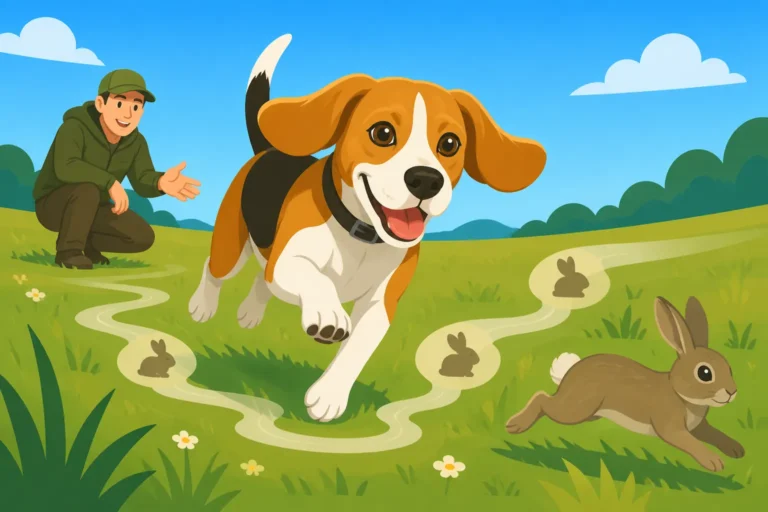
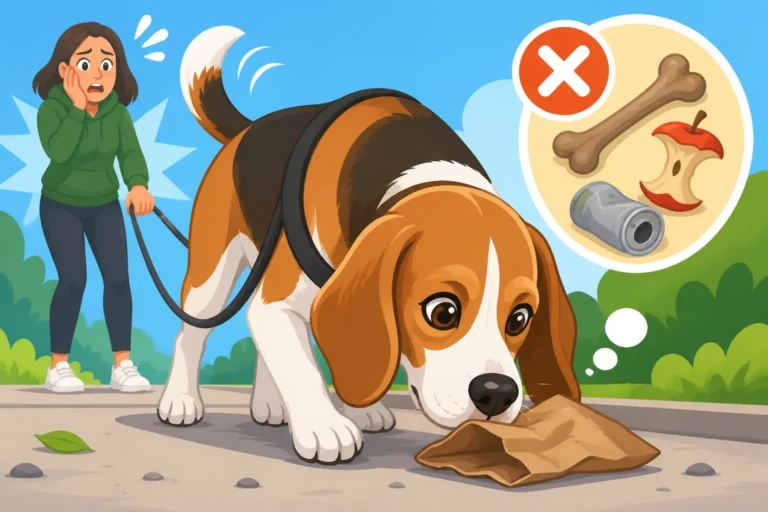
Imagine having 220 million scent receptors, compared to our paltry five million. That's a Beagle's world. When they catch a whiff of a rabbit that passed by hours ago, or a deer that walked the same path a day before, it's like a siren call. Their entire being is consumed by that scent. On a short leash, this instinct often translates into constant pulling, lunging, and a frustrated owner. You're not just walking your dog; you're often being dragged by a furry vacuum cleaner intent on solving the latest olfactory mystery. It's truly a test of arm strength and patience. You can read more about What a Beagle Experiences on a Scent Trail.
The Need for Safe Exploration and Enrichment
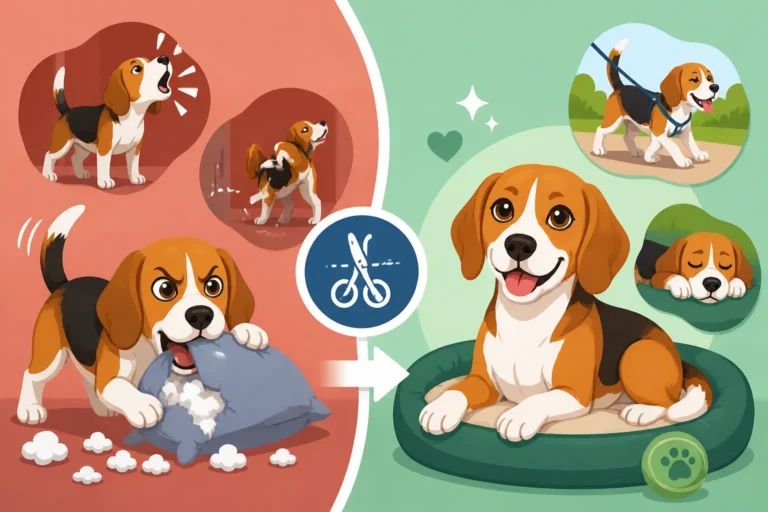
Beagles were bred to hunt in packs, following a trail for miles. This isn't just a quirky trait; it's a deep-seated behavioral need. Denying them the chance to use their nose fully can lead to boredom, frustration, and even destructive behaviors at home. They need mental stimulation as much as physical exercise. A long line allows them to explore a wider area, investigate intriguing smells, and feel a sense of independence, all while remaining tethered to you for safety. It's about giving them a job, even if that job is just "scent detective for the afternoon." This kind of engagement is vital for their well-being and helps immensely with channeling their natural drive into positive activities.
Understanding the Different Long Line Lengths Available
When you start looking for a long line, you'll quickly realize there isn't just one size fits all. The length you choose will depend on where you plan to use it and what kind of freedom you want to offer your Beagle. It's not just about more length; it's about the right length for the situation.
The "Short" Long Line: 10-15 Feet
Think of this as your transitional long line. It's a great stepping stone from a standard leash if you're not quite ready for the full freedom of a super long line, or if you're in an area that isn't completely open.
- When it's ideal: This length is perfect for parks with some open grass, or quieter trails where you want to give your Beagle a little more room to sniff without worrying about them getting too far ahead. It's also excellent for working on foundational recall skills in a slightly more distracting environment than your backyard. You can practice that "come" cue from a greater distance, rewarding them generously when they respond.
- Pros: Easier to manage and less likely to tangle than longer lines. It still offers more freedom than a standard leash, reducing some of that constant pulling. It’s also less intimidating for owners new to long line training. You maintain a good level of control without sacrificing all exploration.
- Cons: A dedicated Beagle nose might still feel a bit constrained, especially if a truly enticing scent is just beyond their reach. It’s not enough length for wide-open field exploration.
The "Standard" Long Line: 20-30 Feet
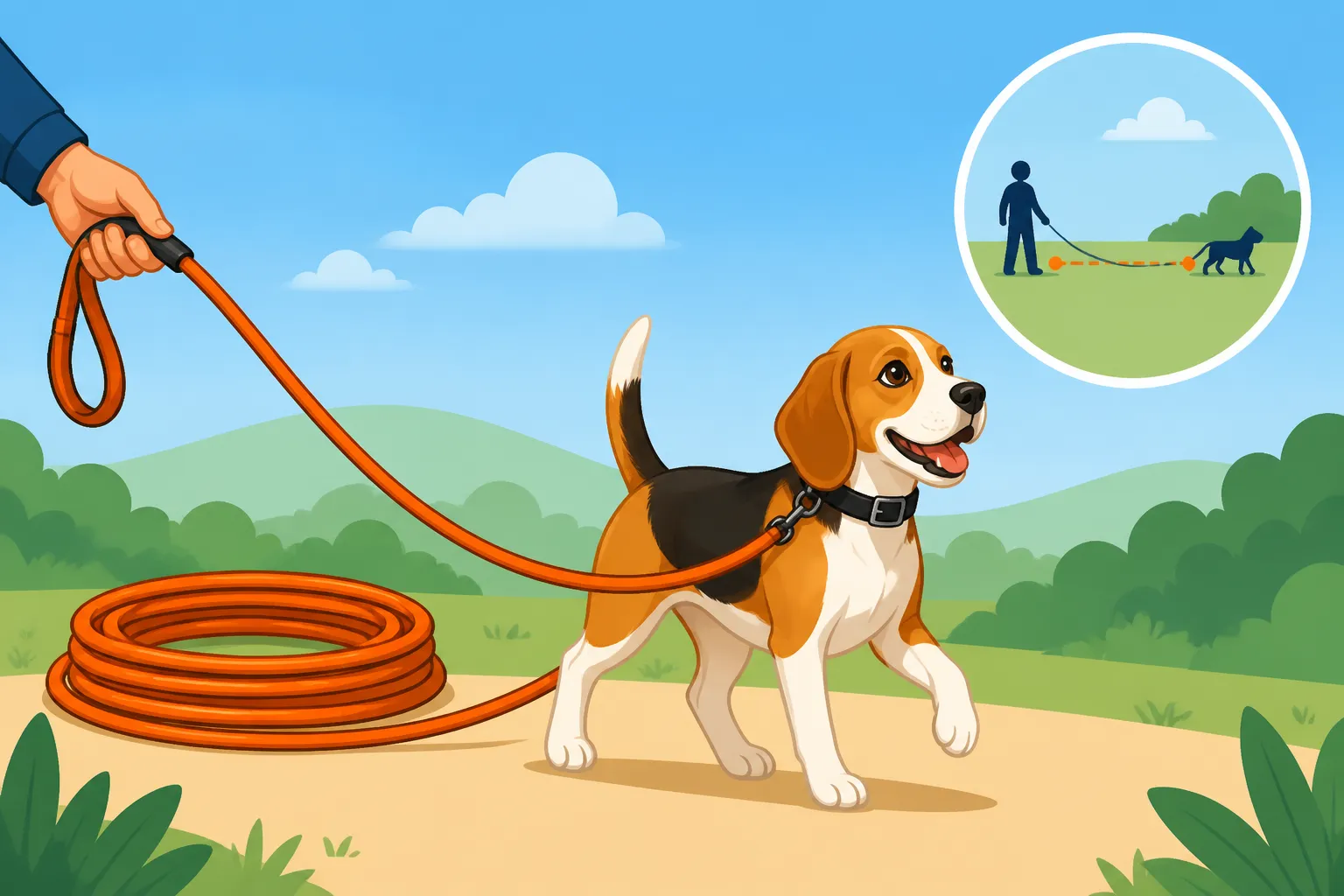
This is often considered the sweet spot for many Beagle owners. It strikes a good balance between freedom and manageability for most environments.
- When it's ideal: This length shines in larger open spaces like fields, wooded trails, or big backyards where you want to let your Beagle roam further but still need to intervene quickly if necessary. It allows them to make wider arcs, investigate bushes, and really get their nose down to work. It’s a fantastic length for truly engaging Sniffing Walks and Why They Tire a Beagle Out.
- Pros: Provides a substantial amount of freedom, allowing your Beagle to feel almost off-leash. It's long enough to let them follow a scent trail for a bit, giving them that much-needed mental stimulation. It's still generally manageable to reel in or step on if they try to bolt for something particularly interesting. Many long lines you find on Amazon will be in this range.
- Cons: Can start to get tangled, especially in dense brush or around trees. Requires more attention from you to keep it from wrapping around obstacles or other people. If you're not used to handling a longer line, it can feel a bit cumbersome at first.
The "Extended" Long Line: 50+ Feet
Now we're talking serious freedom, perfect for wide-open spaces and dedicated scent work.
- When it's ideal: For expansive fields, empty beaches, or very open parks where there's little to no risk of your Beagle encountering hazards or other people unexpectedly. This length truly simulates off-leash freedom, allowing them to run, explore, and follow long scent trails. It’s often used in actual tracking or scent detection training, where the dog needs a huge radius to work within.
- Pros: Maximum freedom for your Beagle to explore, run, and follow scents to their heart's content. It’s incredibly enriching and physically tiring for them, which can lead to a much calmer dog at home. If you want to really let your Beagle be a Beagle, this length allows for that.
- Cons: This length requires significant skill and awareness from the handler. It gets tangled very easily, especially in anything but wide-open spaces. It's harder to reel in quickly and stepping on it requires precision. Not suitable for areas with other dogs, people, or close-proximity obstacles. It can also be quite heavy and cumbersome to carry and manage.
Here's a quick comparison of these lengths:
| Length (Feet) | Ideal Use Case | Pros | Cons |
|---|---|---|---|
| 10-15 | Parks, quiet trails, recall practice | Manageable, less tangle, good control | Limited true "freedom," still some pulling |
| 20-30 | Open fields, wooded trails, large yards | Good balance of freedom & control, enriching | Can tangle, requires more handler attention |
| 50+ | Expansive open spaces, tracking | Maximum freedom, deep enrichment | Difficult to manage, high tangle risk, heavy |
Choosing the Right Length for Your Beagle and Environment
Selecting the perfect long line isn't just about the numbers; it's about a realistic assessment of your dog, your environment, and your comfort level as a handler. Don't feel pressured to get the longest one right away.
Consider Your Beagle's Personality and Training Level
Is your Beagle a seasoned scent-hound who understands the concept of the long line, or are they a puppy still figuring out the world? A younger, less trained Beagle might benefit from starting with a shorter long line (15-20 feet) to help you both get accustomed to handling it. For a dog that consistently pulls or has minimal recall, a very long line might be too much too soon, leading to tangles and frustration for both of you.
Think about your Beagle’s energy levels. A high-energy, driven Beagle might need more length to truly burn off steam and satisfy their sniffing urges. A more relaxed or older Beagle might be perfectly happy with a moderate length. Always keep their individual temperament in mind.
Assess Your Typical Walking Environments
This is perhaps the most critical factor. Be brutally honest about where you usually walk your Beagle.
- Urban Parks with Trees/Benches: A 15-20 foot line is likely your maximum here. Anything longer will become a spaghetti nightmare, wrapping around every tree, bench, and unsuspecting squirrel.
- Open Fields/Meadows: This is where a 20-30 foot line shines. It gives them ample room to explore without you having to constantly reposition yourself. If the field is truly vast and empty, a 50-foot line could be used, but proceed with caution if there are any hidden dips or holes they could dart into.
- Wooded Trails: Stick to the shorter end, probably 10-20 feet. The density of trees, roots, and undergrowth makes anything longer incredibly difficult to manage and prone to snagging. You’ll spend more time untangling than walking.
- Backyard: If you have a large, securely fenced backyard, a 20-30 foot line can be great for controlled sniffing and practice without worrying about escape. However, remember that even a long line is not a substitute for a secure physical fence, as Beagles are notorious escape artists! Beagle Escape Artistry and How to Contain It is a critical read if your yard isn't escape-proof.
Your Comfort and Skill as a Handler
Handling a long line requires more active participation than a standard leash. You need to pay attention to where your Beagle is, where the line is, and where you are in relation to obstacles.
- Start Shorter, Go Longer: If you're new to long lines, start with a 15 or 20-foot option. Master the art of coiling, letting out, and reeling in the line without getting tangled or dropping it. Once you feel confident, you can always invest in a longer one.
- Practice in a Safe Space: Your first few times using a long line shouldn't be in a bustling park. Find a quiet, open area with minimal distractions. This allows you to focus on your handling technique and your Beagle's responses.
- Prioritize Safety: Never tie a long line to yourself, especially not around your waist or wrist. A sudden lunge from a strong Beagle could cause serious injury. Always hold the line firmly, allowing it to slide through your hands (wear gloves if needed) or step on it to stop your dog. For training purposes, a good quality harness is often recommended over a collar, as it distributes pressure more evenly if your Beagle hits the end of the line.
Training Tips for Using a Long Line Effectively
Getting a long line is just the first step; learning how to use it safely and effectively is where the real magic happens. It’s a tool for training and enrichment, not just a longer leash.
Introduce the Long Line Gradually
Don't just clip on a 50-foot line and expect your Beagle to understand. Start in a familiar, low-distraction environment, like your backyard. Let them drag the line at first, getting used to the feeling of it following them. Supervise them closely, as they might try to chew on it or get tangled.
Once they're comfortable dragging it, start holding the line, letting it out gradually as they explore. Practice calling them back and rewarding them generously when they return. The goal is to associate the long line with fun and freedom, not restriction. Remember, BAXTER & Bella, and other online training platforms, offer resources and courses that can guide you through these initial steps for building a strong foundation.
Mastering Your Handling Technique
This is key to avoiding frustration and potential injury.
- Coiling and Releasing: Learn to gather the excess line in loose coils in your hand, allowing you to quickly release it as your Beagle moves away or reel it in when they come closer. Avoid letting the line drag too much on the ground, as it can snag, get dirty, or get stepped on.
- The "Foot Brake": If your Beagle suddenly decides to chase a squirrel or bolt for something, the safest way to stop them (other than a super-fast recall) is to step on the line with your foot. Never wrap the line around your hand or arm, as a sudden jolt can cause rope burn or even dislocate a shoulder.
- Visual Awareness: Always be looking ahead. Where is your Beagle going? Are there trees, lamp posts, or other people they might wrap the line around? Anticipating their movements will save you a lot of untangling time. It also lets you prepare for a sudden stop if they hit the end of the line.
Working on Recall and Check-Ins
A long line is an invaluable tool for practicing recall in real-world scenarios. It provides a safety net while you build confidence in your Beagle's ability to come back when called.
- Positive Reinforcement is Crucial: Every time your Beagle checks in with you or comes when called, even if they've only come a short distance, reward them with high-value treats and enthusiastic praise. Make coming back to you the best thing ever. This builds a positive association that will eventually strengthen their recall even without the line. Many Beagle owners find The Treats a Beagle Will Work Hardest For are crucial for successful recall.
- Vary Your Practice: Don't just call them when they're about to hit the end of the line. Call them when they're sniffing something interesting, when they're halfway towards you, or when they're looking at you. This teaches them that "come" can happen at any time, not just when they're "forced" to.
- Emergency Recall: Develop an emergency recall cue – a distinct word or whistle that you only use in truly urgent situations. Practice this on the long line, making it a high-stakes, high-reward exercise. The goal is for them to drop everything and sprint back to you. You can learn more about Emergency Recall Cues That Reach a Beagle.
Harness vs. Collar for Long Line Use
For safety and comfort, I strongly recommend attaching a long line to a well-fitting harness, not directly to a collar.
- Reduced Neck Strain: If your Beagle suddenly hits the end of the line while running, the impact on a collar can cause severe neck and throat injury. A harness distributes that pressure across their chest and shoulders, reducing the risk of harm. This is especially important for Beagles, who are known for their strong prey drive and sudden lunges.
- Better Control: Many harnesses, especially those with a front clip, can offer better control by redirecting your Beagle's momentum if they pull. This makes it easier for you to manage the line and guide them without causing discomfort.
- Comfort for Exploration: A comfortable harness allows your Beagle to move freely, sniff the ground, and explore without feeling constricted. Ensure it fits snugly but doesn't chafe.
Remember, the long line is a tool to facilitate safe freedom, not to replace responsible ownership. Always be aware of your surroundings, and never let your Beagle out of your sight, even on the longest of lines. It truly is about giving them a chance to indulge their incredible senses safely.
Disclaimer
This article is for general informational purposes only and does not constitute professional advice. Laws, prices and regulations vary by location and change over time. Consult a qualified professional for guidance on your specific situation.