Choosing OFA or PennHIP for a Beagle
It's heartbreaking to imagine our energetic Beagles, those bundles of sniffing joy, eventually slowing down because of joint problems. Many of us worry about conditions like hip dysplasia, and it leaves us wondering how to best protect them and make informed choices, especially if we're considering breeding or just want peace of mind. This guide will walk you through two primary methods for evaluating a Beagle's hip health – OFA and PennHIP – helping you understand their differences and decide which path is right for your furry family member.
Why Proactive Hip Health Screening Matters for Beagles
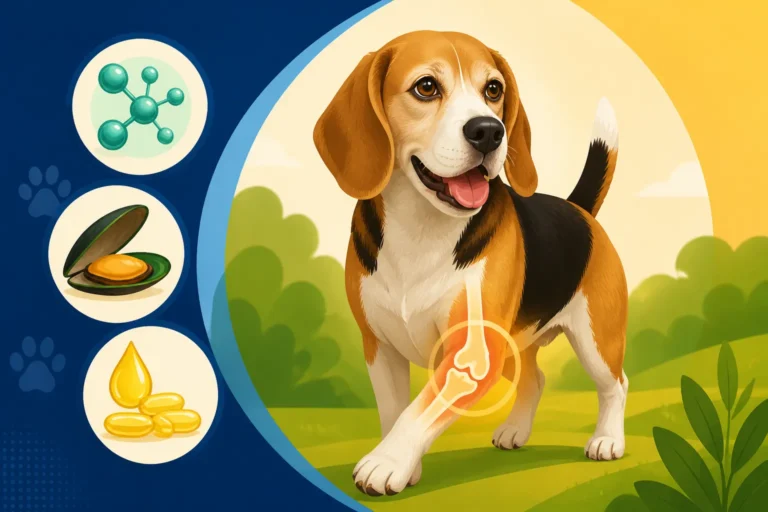
When you picture a Beagle, you probably see a happy-go-lucky hound with its nose to the ground, tail wagging furiously as it bounds through a field or trots along a suburban sidewalk. Beagles are known for their exuberance and love of activity, and a big part of keeping them merry throughout their estimated Beagle Lifespan and the Twelve to Fifteen Year Range is ensuring their joints are sound. Hip dysplasia, a condition where the hip joint doesn't form correctly, can severely impact this quality of life, leading to pain, arthritis, and a significant reduction in mobility.
The reality is, even though Beagles are generally a hardy breed, they aren't immune to orthopedic issues. While not as prevalent as in some larger breeds, hip dysplasia does occur in Beagles, and proactive screening is a crucial step, especially for breeders, to reduce its incidence in future generations. For pet owners, understanding the risks and having their dog screened can help them plan for potential issues, implement preventative care, and ensure their Beagle lives as comfortably as possible. Early knowledge allows for early intervention, which can make all the difference in managing Beagle Arthritis Arriving in Middle Age.
The Genetics Behind Joint Health Concerns
It's easy to think of a dog's health as simply a result of its diet and exercise, but genetics play an enormous role, particularly in conditions like hip dysplasia. This is an inherited, polygenic trait, meaning multiple genes contribute to its development, and environmental factors can also influence its expression. A Beagle might carry the genes for hip dysplasia but show no outward signs, or it might develop severe issues. This genetic component is precisely why reputable breeders prioritize health testing. They understand that by screening their breeding stock, they can make informed decisions to minimize passing on these predispositions.
Without proper screening, even healthy-looking parents could produce puppies prone to hip dysplasia, which is a major concern for the breed's long-term health. That's why organizations like the Orthopedic Foundation for Animals (OFA) and the University of Pennsylvania Hip Improvement Program (PennHIP) exist—to provide standardized methods for evaluating hip conformation and identifying dogs at risk. These tests are cornerstones of responsible Beagle Health Testing Under CHIC protocols, ensuring that breeders are working towards healthier lines.
Recognizing the Subtle Signs of Hip Discomfort
Sometimes, our Beagles are so stoic and eager to please that they'll hide their discomfort until it becomes quite advanced. It's important for us, as their caretakers, to be vigilant for even subtle changes that might indicate hip problems. You might notice your Beagle becoming less enthusiastic about their usual walk, or perhaps they're struggling to jump onto the couch where they once leaped with ease. A slight limp after exercise, stiffness when waking up, or a reluctance to use stairs could all be quiet cries for help.
Other signs might include a "bunny hop" gait when running, a reduced range of motion, or even muscle loss in the hindquarters. If you notice any of these, it’s definitely time for a chat with your vet. While these signs don't automatically mean hip dysplasia, they warrant investigation. Remember, catching these issues early can open up more treatment options and help maintain your Beagle's comfort for longer. An important consideration for any joint health issue is weight; Beagle Obesity Treated as a Health Problem can significantly worsen joint pain and progression of conditions like hip dysplasia.
Delving into OFA Certification for Beagles
The Orthopedic Foundation for Animals (OFA) is probably the most widely recognized and utilized hip screening method in the United States. It's been around for decades, providing a database and certification for various orthopedic and genetic health clearances in dogs. Many breed clubs, including the National Beagle Club of America, recommend or require OFA certifications as part of responsible breeding practices. When you see "OFA certified" on a pedigree, it means the dog has undergone a specific radiographic evaluation and received a passing grade.
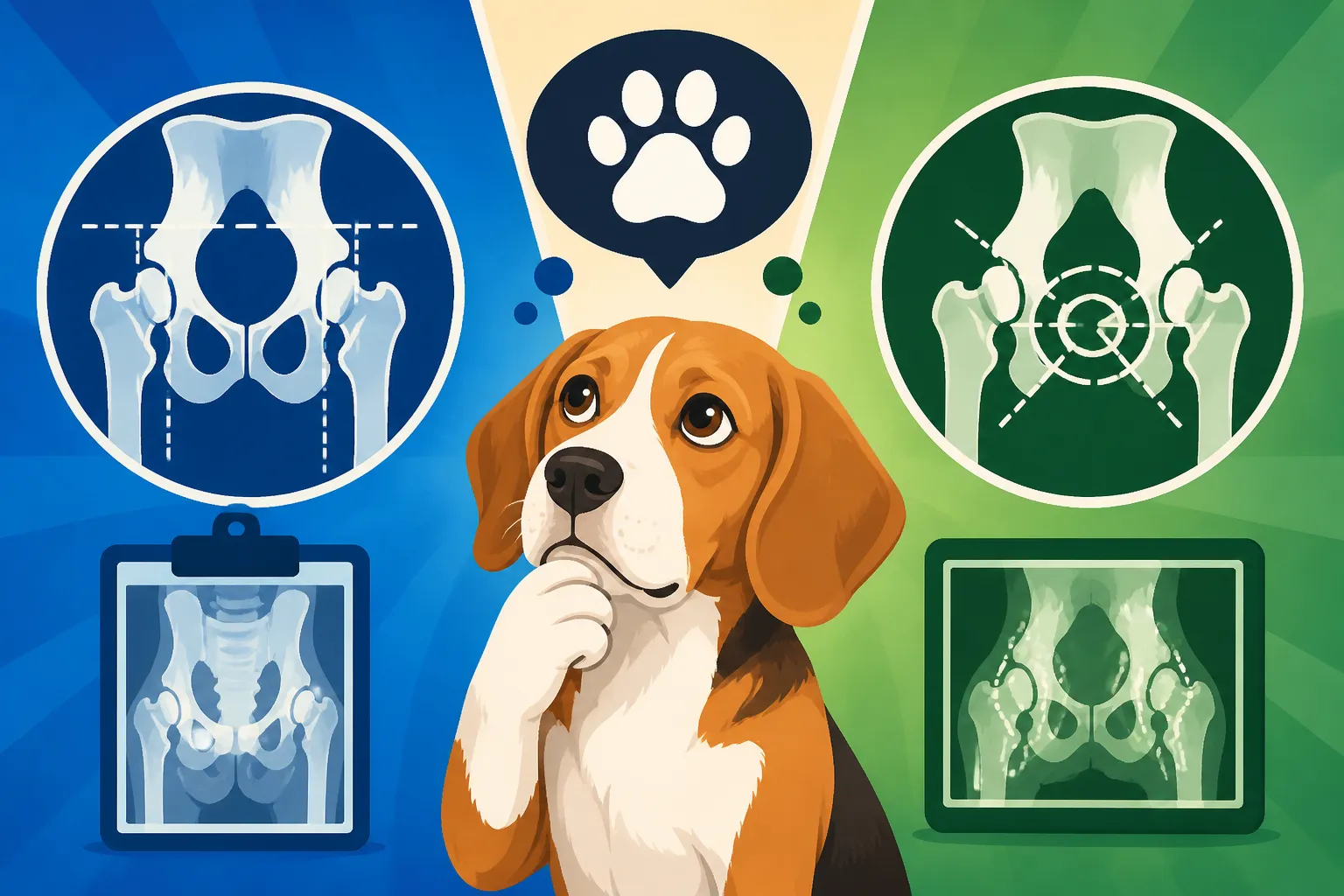
The core idea behind OFA hip certification is to assess the conformation of the hip joint through a single X-ray image. This image is then reviewed by a panel of three independent, board-certified veterinary radiologists who assign a grade based on specific criteria. This standardized approach aims to identify dogs with good hip health, thereby guiding breeders in their efforts to produce healthier puppies.
The OFA Hip Evaluation Process
Getting an OFA hip evaluation for your Beagle involves a straightforward, albeit specific, procedure. First, your dog must be at least 24 months old (two years) to receive a preliminary or final certification. This age requirement is crucial because a dog's skeletal system isn't fully mature until then, and evaluating before this point could lead to inaccurate results. Your Beagle will need to be sedated or anesthetized for the X-ray, as precise positioning is absolutely critical for an accurate reading. This ensures the hips are perfectly aligned, preventing any rotational artifacts that could skew the interpretation.
The X-ray itself is a ventrodorsal projection, meaning your Beagle will lie on its back with its hind legs extended straight back and rotated inward. Your veterinarian will send these radiographs, along with a submission form, directly to OFA. The process typically takes a few weeks for the radiologists to review and assign a grade. The costs for the X-rays and sedation will vary by veterinary clinic, and there's also a separate fee paid to OFA for the review.
Understanding OFA Hip Grades
Once the radiographs are reviewed by the OFA panel, your Beagle will receive one of seven possible hip grades. These grades range from excellent to severe dysplasia. The key for breeding purposes, and often for pet owners seeking reassurance, is to receive a "passing" grade, which includes excellent, good, or fair.
Here's a quick breakdown of the OFA grades:
| OFA Grade | Description | Suitability for Breeding (OFA Recommendation) |
|---|---|---|
| Excellent | Superior hip joint conformation, nearly perfect. | Recommended |
| Good | Well-formed hips, better than average for the breed. | Recommended |
| Fair | Minor irregularities, but functionally normal. | Recommended |
| Borderline | Not clearly dysplastic nor normal; re-evaluation recommended. | Not recommended |
| Mild | Significant hip laxity and/or degenerative changes. | Not recommended |
| Moderate | Considerable hip laxity, distinct degenerative changes. | Not recommended |
| Severe | Marked hip laxity, severe degenerative changes. | Not recommended |
Only Beagles receiving an "Excellent," "Good," or "Fair" rating are considered free of hip dysplasia and are recommended for breeding by the OFA. This system helps breeders filter out dogs that might pass on problematic genetics. Even if you don't plan to breed, getting a "Fair" or better can offer peace of mind, though it doesn't entirely rule out future arthritis or other joint problems unrelated to the initial hip conformation. It’s also important to note that OFA also performs evaluations for other joints, such as elbows, patellas, and even cardiac health, all of which contribute to a comprehensive health picture for your Beagle. When considering the long-term health of your dog, a robust pet insurance plan, such as those offered by Healthy Paws, can be incredibly helpful for covering unexpected veterinary costs, regardless of their OFA status.
Unpacking PennHIP Evaluation for Beagles
While OFA focuses on a single extended view, the University of Pennsylvania Hip Improvement Program (PennHIP) takes a different, often more precise, approach to assessing hip health. PennHIP was developed at the University of Pennsylvania School of Veterinary Medicine and has gained significant traction for its ability to identify hip laxity (looseness) earlier and with greater accuracy. This method emphasizes the concept that hip laxity is a primary indicator of a dog's susceptibility to developing hip dysplasia, even before overt signs appear.
PennHIP is often considered a more quantitative and objective assessment because it measures the actual looseness of the hip joint. This can be particularly appealing to breeders who want the earliest possible indicators of risk in their lines. The procedure involves three distinct radiographic views and a mathematical measurement called the distraction index.
The PennHIP Radiographic Technique
The PennHIP method is a more complex radiographic procedure than OFA, requiring specialized training and certification for veterinarians. Not all vets are PennHIP certified, so you might need to find a clinic with specific expertise. Like OFA, sedation or anesthesia is necessary to ensure precise positioning and muscle relaxation, which is critical for accurate measurements of hip laxity.
The procedure involves three separate X-ray views:
- Distraction View: This is the unique aspect of PennHIP. A specialized device (distractor) is used to push the femoral heads (ball) out of the acetabula (socket), measuring how much space can be created between them. This directly quantifies hip laxity.
- Compression View: This view measures the maximal seating of the femoral head into the acetabulum, ensuring proper positioning.
- Hip Extended View: Similar to the single OFA view, this is also taken to assess joint conformation and look for any existing signs of osteoarthritis.
These three X-rays provide a comprehensive picture, with the distraction index being the most telling measurement. The images are then sent to PennHIP for evaluation and calculation of the distraction index. Because PennHIP measures laxity, it can be performed on Beagles as young as 16 weeks, offering a much earlier indication of hip health than OFA. This earlier insight is invaluable for breeders making decisions about future breeding stock.
Interpreting the PennHIP Distraction Index
Instead of a subjective grade, PennHIP provides a Distraction Index (DI), which is a numerical value that quantifies the amount of hip laxity. The DI ranges from 0 to 1, where 0 indicates no laxity (a very tight hip) and 1 indicates extreme laxity (a very loose hip). Lower DI values are always better.
What makes PennHIP particularly useful is that it provides a breed-specific percentile ranking for your Beagle's DI. This means your Beagle's hip laxity is compared to all other Beagles in the PennHIP database. For example, if your Beagle has a DI of 0.4 and is in the 80th percentile, it means 80% of Beagles in the database have tighter hips than yours, and only 20% have looser hips.
Generally, a DI of 0.3 or less is considered to have very tight hips and a low risk for developing hip dysplasia. As the DI increases, so does the risk. The goal for breeders is to select Beagles with DI values well below the breed average to reduce the incidence of hip dysplasia in their lines. This objective data helps breeders make more informed decisions, potentially contributing to a significant reduction in hip dysplasia prevalence over generations. If your Beagle's DI suggests a higher risk, it doesn't mean they will definitely develop dysplasia, but it does mean preventative measures and monitoring are even more important. Understanding these risks can also inform how you plan for your dog's future care, perhaps influencing your choice of pet insurance from providers like Healthy Paws.
OFA Versus PennHIP: Making the Right Choice for Your Beagle
So, you're faced with two excellent, but different, options for evaluating your Beagle's hip health. Both OFA and PennHIP aim to achieve the same goal – reducing the incidence of hip dysplasia – but they go about it in distinct ways. Deciding which one is right for your Beagle often comes down to your specific goals, whether you're a breeder, a performance dog owner, or simply a pet parent seeking maximum peace of mind.
It's important to remember that neither test is "bad"; they just offer different insights. Many breeders even choose to do both tests to get the most comprehensive picture possible of their dog's hip structure and function.
Key Differences in Methodology and Interpretation
The fundamental difference lies in what they measure and how they measure it. OFA primarily assesses hip conformation through a single, extended hip X-ray, looking for signs of well-formed joints and the absence of degenerative changes. The evaluation is largely subjective, relying on the expert opinion of three radiologists who assign a grade. The minimum age for final certification is 24 months.
PennHIP, on the other hand, measures actual hip laxity (looseness) using a unique distraction view, in addition to standard and compressed views. This provides an objective, quantitative measurement (the Distraction Index) and a percentile ranking relative to the breed. PennHIP can also be performed much earlier, as young as 16 weeks, offering valuable information long before a dog reaches breeding age. This earlier insight can be critical for breeders planning their breeding programs.
Here’s a quick comparison:
| Feature | OFA (Orthopedic Foundation for Animals) | PennHIP (University of Pennsylvania Hip Improvement Program) |
|---|---|---|
| Primary Focus | Hip conformation and presence/absence of degenerative changes. | Hip laxity and predisposition to hip dysplasia. |
| Methodology | Single, extended ventrodorsal X-ray view. | Three X-ray views: distraction, compression, extended. |
| Evaluation | Subjective grading by 3 radiologists (Excellent, Good, Fair, Borderline, Mild, Moderate, Severe). | Objective Distraction Index (DI) from 0-1, with breed percentile. |
| Minimum Age | 24 months for final certification. | 16 weeks (can be done earlier, but DI stable after 16 weeks). |
| Certification | Public database (optional). | Restricted database, results sent to client and PennHIP. |
| Cost | Generally lower for the OFA review, but vet costs vary. | Generally higher due to specialized training and more X-rays. |
| Vet Requirement | Any licensed vet can take the X-ray. | Vet must be PennHIP certified. |
Considerations for Breeders and Pet Owners
For breeders, the choice often boils down to a balance of tradition, comprehensiveness, and early detection. Many breed clubs, like the American Kennel Club (AKC) and the National Beagle Club, have long recognized OFA as the standard. OFA clearances are part of the Canine Health Information Center (CHIC) program, a comprehensive health database. However, PennHIP offers the advantage of earlier detection and a more objective measure of laxity, which many argue is a better predictor of future hip dysplasia. Some dedicated breeders choose to do both, performing PennHIP at 16 weeks for early insight and then following up with OFA at 24 months for a comprehensive, publicly recognized certification. This dual approach provides the most robust picture of a Beagle's hip health, helping to ensure the health of future generations and reducing the prevalence of conditions like Beagle Hip Dysplasia and Everyday Joint Wear.
For pet owners not planning to breed, the decision might be simpler. If you're simply looking for reassurance, an OFA screening at 24 months provides a clear "pass" or "fail" result that is widely understood. If you have concerns about hip health early on, perhaps due to family history or a vet's suspicion, PennHIP's ability to test at 16 weeks could be invaluable for proactive management. Knowing your Beagle's hip status, even as a pet, can help you make informed decisions about exercise intensity, preventative Joint Supplements That Help an Aging Beagle, and managing their weight to avoid How Extra Weight Raises Beagle Disc Pressure. It also allows you to plan for potential future veterinary expenses, where having pet insurance from a reliable provider like Healthy Paws can truly make a difference.
Ultimately, the most important thing is to consult with your veterinarian. They can discuss your Beagle's individual needs, family history, and your specific goals to recommend the most appropriate screening method. Whether you choose OFA or PennHIP, you're taking a responsible step towards ensuring your beloved Beagle maintains its joyful bounce for as many years as possible.
Disclaimer
Please remember that this article is intended for informational purposes only and should not be taken as professional veterinary advice. Always consult with a qualified veterinarian for any health concerns or before making any decisions about your Beagle's care, diet, or treatment. Health testing methodologies and recommendations can change, so always refer to the most current guidelines from veterinary organizations.