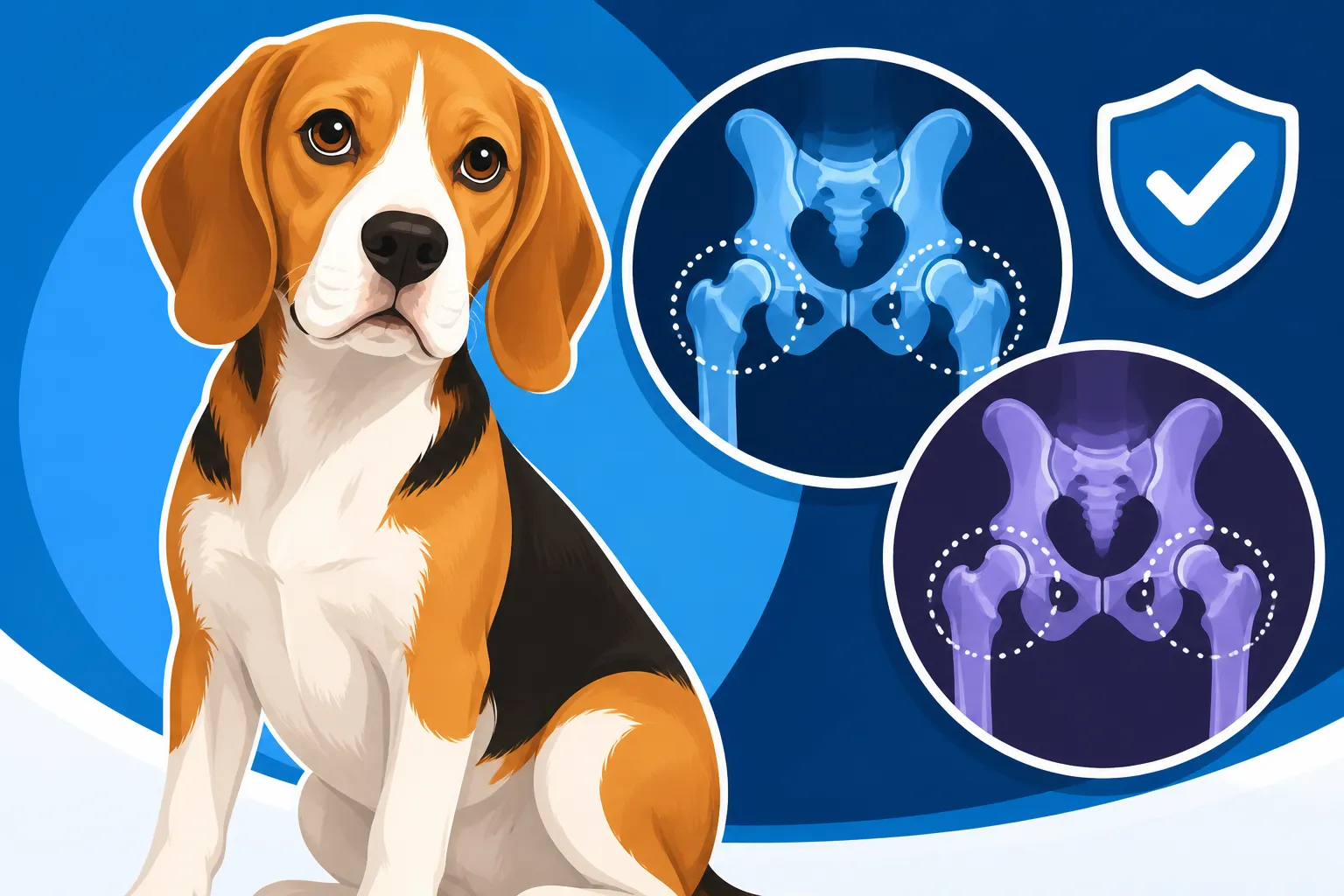
Beagle Hip Screening by OFA or PennHIP
It’s a common misconception that only giant breeds suffer from hip issues, leading many Beagle owners to believe their active, medium-sized hound is immune. However, even Beagles, with their sturdy build and boundless energy, can develop debilitating conditions like hip dysplasia. This guide will meticulously break down the two primary methods for evaluating a Beagle's hip health – OFA and PennHIP – helping you understand their differences and why screening is a crucial step for both responsible breeding and lifelong pet ownership.
Understanding Canine Hip Dysplasia in Beagles
When we talk about a dog’s hips, we’re referring to a "ball and socket" joint. The head of the femur (the ball) fits snugly into the acetabulum (the socket) of the pelvis. In a healthy hip, these parts move smoothly together, lubricated by synovial fluid, allowing for fluid motion. Hip dysplasia is a developmental condition where this joint doesn't form correctly. Instead of a tight fit, there's a looseness, or laxity, in the joint, which can lead to friction, wear and tear, and eventually, painful arthritis. It's a progressive disease, meaning it tends to worsen over time.
For Beagles, while not as prevalent as in, say, a German Shepherd or Labrador Retriever, hip dysplasia is still a concern. Their genetic predisposition, combined with environmental factors like rapid growth, excessive weight, and certain types of exercise, can contribute to its development. A Beagle struggling with hip pain might show reluctance to jump, difficulty getting up, a "bunny hop" gait, or even a decrease in their famously cheerful activity level. Catching these signs, or better yet, preventing the condition through careful breeding and management, is paramount.
The Genetics and Mechanics of Hip Dysplasia
Hip dysplasia is largely inherited, meaning it's passed down from parent dogs to their offspring. However, it's not a simple "either-or" gene; it's polygenic, involving multiple genes, which makes predicting its occurrence tricky. This genetic component is why responsible breeders emphasize screening their breeding stock. Even Beagles with seemingly normal hips can carry the genes for dysplasia, passing them on to puppies that may later develop the condition. The mechanics involve that loose fit we mentioned. When the joint is lax, the ball doesn't sit deep within the socket. This causes the bones to rub against each other abnormally, especially during movement. Over time, this constant grinding leads to cartilage damage, inflammation, and the formation of osteophytes (bone spurs), which are the hallmarks of osteoarthritis.
The impact isn't just discomfort; it significantly reduces a dog's quality of life. Imagine trying to chase a squirrel or enjoy a long scent walk when every step sends a jolt of pain through your hips. For a breed as active and scent-driven as a Beagle, this can be devastating. Early recognition and management, including understanding the underlying mechanics, become vital for improving their comfort and mobility. The goal of screening isn't just to identify affected dogs, but to reduce the incidence of the disease across the breed population through informed breeding choices.
Why Screening Matters Even for an Active Beagle
You might look at your energetic Beagle, constantly on the go, nose to the ground, and think hip issues couldn't possibly affect them. But their very activity level can sometimes mask early signs of discomfort or, paradoxically, exacerbate an underlying genetic predisposition if their joints aren't structurally sound. A Beagle might compensate for mild hip pain by shifting weight or altering its gait, making it harder for owners to notice until the condition is more advanced. This is why objective screening methods are so important.
For breeders, screening is an ethical imperative. To contribute to the long-term health of the breed, they need to ensure they're not inadvertently passing on genes that will cause future generations pain. For pet owners, understanding your Beagle's hip status can inform critical decisions about exercise regimens, weight management, and potential preventative care. Knowing if your dog is at risk allows you to implement strategies to protect their joints, such as providing joint supplements that help an aging Beagle or installing ramps and steps that protect a Beagle's spine and hips, making their environment safer. It’s about proactive care, giving your Beagle the best chance at a long, comfortable life, full of joyous romps and productive sniff-fests.
The Orthopedic Foundation for Animals OFA Screening
The Orthopedic Foundation for Animals (OFA) is perhaps the most well-known and widely used system for evaluating hip and elbow health in dogs in the United States. Established in 1966, OFA maintains a massive database of canine health information, making it a cornerstone for responsible breeders. Their primary goal is to promote the health and welfare of companion animals through objective evaluation of inherited orthopedic diseases. For Beagles, participating in OFA screenings contributes to a broader understanding of breed health trends and helps breeders make informed decisions.
The OFA system relies on specific radiographic positioning and a panel of expert radiologists to assess hip conformation. This standardized approach allows for a consistent evaluation across different breeds and geographic locations. While originally focused on hip and elbow dysplasia, OFA has expanded its certifications to include other conditions, making it a comprehensive resource for Beagle health testing under CHIC, the Canine Health Information Center program, which provides a centralized database for canine health information.
How OFA Evaluation Works
The OFA hip evaluation process begins with a veterinarian taking specific X-rays of your Beagle's hips. The dog must be at least 24 months old for a preliminary or final certification, as hip development is not considered complete before this age. This age requirement is crucial because it ensures that the hips have reached their mature form, providing a more accurate assessment. The Beagle is typically sedated to ensure proper positioning, which is critical for an accurate radiograph. The standard view is a ventrodorsal projection, where the dog lies on its back with its hind legs extended straight and parallel to each other, and the femurs rotated slightly inward.
These X-rays are then submitted to OFA, where three independent, board-certified veterinary radiologists review them. They look for specific indicators of hip dysplasia, such as femoral head coverage by the acetabulum, degree of subluxation (partial dislocation), and evidence of degenerative joint disease. The radiologists grade the hips based on their findings, and a consensus is reached on the final OFA rating. This multi-reader approach adds a layer of objectivity and helps ensure the reliability of the results, providing breeders and owners with a well-vetted assessment of their Beagle's hip structure.
Interpreting OFA Ratings and What They Mean
OFA hip ratings are categorized into seven phenotypic classifications: Excellent, Good, Fair, Borderline, Mild, Moderate, and Severe. The first three, Excellent, Good, and Fair, are considered "passing" grades and receive an OFA certification number, meaning the dog's hips are deemed free of radiographic evidence of hip dysplasia. Beagles with these ratings are generally considered suitable for breeding, assuming other health clearances are also satisfactory.
- Excellent: Superior hip conformation, with the femoral head deeply seated in a well-formed acetabulum.
- Good: Well-formed hip joint with good congruence, slightly less than Excellent.
- Fair: Minor irregularities in hip conformation, but still considered within normal limits and unlikely to develop clinical signs of hip dysplasia.
Ratings of Borderline, Mild, Moderate, or Severe are considered "dysplastic" and are not certified.
- Borderline: Not clear evidence of dysplasia, but some joint changes suggest a higher risk. Re-evaluation is often recommended.
- Mild: Minor evidence of hip dysplasia, with some subluxation and/or early degenerative changes.
- Moderate: Significant subluxation, shallow acetabula, and definite degenerative changes.
- Severe: Marked evidence of hip dysplasia, with major subluxation, shallow acetabula, and extensive degenerative changes.
Understanding these ratings is essential for breeders striving to improve their lines and for owners seeking to understand their dog's health status. A healthy Paws insurance policy, for instance, might cover treatments for hip dysplasia if it develops later, but it's always better to know the genetic predisposition upfront.
The Pros and Cons of OFA Certification
OFA certification has several undeniable benefits. Its long-standing reputation and extensive database provide a consistent and widely recognized standard across many breeds, including the Beagle. The use of multiple expert radiologists for evaluation adds a layer of objectivity and reduces the chance of a single subjective opinion. For breeders, OFA certification offers a clear benchmark for selecting breeding stock, helping to reduce the incidence of hip dysplasia over generations. It also provides transparency for puppy buyers, allowing them to verify the hip health of prospective parents. The fact that the results are publicly available (unless the owner opts out) fosters accountability within the breeding community.
However, OFA also has its drawbacks. The primary concern often cited is the age requirement; a Beagle must be two years old for a final certification. This means a breeder must wait two years before definitively knowing the hip status of a potential breeding dog, which can delay breeding programs. Another limitation is that the standard OFA X-ray position (extended leg view) might not always reveal subtle joint laxity, especially in dogs that appear normal on this view but might still carry a genetic risk. While it assesses static conformation, it doesn't directly measure the amount of "looseness" in the joint under stress, which is where PennHIP offers a different perspective. Additionally, the need for sedation for proper positioning carries a small, albeit present, risk, which should be considered, especially if a Beagle emergency signs that cannot wait until morning arises during or after sedation.
PennHIP's Approach to Hip Evaluation
PennHIP, developed at the University of Pennsylvania, offers an alternative and, in some ways, complementary approach to canine hip evaluation. Unlike the OFA method which focuses on static conformation, PennHIP is designed to quantitatively measure hip joint laxity—the degree of looseness in the joint. This measurement is considered a better indicator of a dog's susceptibility to developing hip dysplasia, even at a younger age. The philosophy behind PennHIP is that early identification of hip laxity allows for proactive management and more informed breeding decisions.
The PennHIP method has gained significant traction since its inception, particularly among breeders and veterinarians who are looking for a more precise and predictive tool for assessing hip health. It provides a numerical score for each hip, allowing for a more nuanced understanding of a dog's risk factor compared to OFA's broader categorical grades. This precision can be incredibly valuable when trying to breed away from potential health issues within a line of Beagles.
The Distraction Index and Joint Laxity
The core of the PennHIP method lies in its ability to measure joint laxity, which is quantified by the Distraction Index (DI). The DI is a numerical measurement that reflects the maximum amount the femoral head can be displaced from the acetabulum. A higher DI indicates greater laxity, and therefore, a higher risk of developing hip dysplasia. This is different from the OFA's primary assessment of degenerative changes. PennHIP can detect laxity even before outward signs of arthritis appear, making it a powerful predictive tool.
To obtain the DI, three specific radiographs are taken: a standard extended view (similar to OFA), a compression view, and a distraction view. The distraction view is key: the dog's hips are gently pushed apart using a specialized device, allowing the measurement of how much the femoral head moves out of the socket. This distraction is what quantifies the "looseness" of the joint. The DI ranges from 0 to 1, with values closer to 0 indicating very tight hips and values closer to 1 indicating very loose hips. Dogs with a DI of 0.3 or less are considered to have very tight hips and are at the lowest risk for developing hip dysplasia. This objective, numerical approach provides a precise, quantifiable measure of a Beagle’s hip health, offering more granular data than a subjective grading system.
The PennHIP Procedure and Reporting
The PennHIP procedure requires specific training and certification for veterinarians, ensuring that the X-rays are taken consistently and correctly. Your Beagle will need to be sedated to achieve the precise positioning required for all three radiographic views, which is similar to the OFA procedure. The three views include the distraction view to measure joint laxity, a compression view to assess the "truest" hip conformation without laxity, and an extended hip view to check for existing degenerative joint disease, just like in the OFA method. Once the images are captured, they are sent to the PennHIP analysis center.
The results you receive will include the Distraction Index (DI) for each hip, along with an interpretation of these measurements relative to other Beagles in the PennHIP database. This gives you a percentile ranking, showing how your dog's hip laxity compares to others of the same breed. For example, a Beagle with a DI in the 70th percentile means its hips are tighter than 70% of other Beagles evaluated. The report also indicates the presence or absence of osteoarthritis. This comprehensive reporting provides a detailed picture of your Beagle's hip health and its genetic predisposition, informing both breeding decisions and long-term care plans.
Advantages and Disadvantages of PennHIP
PennHIP offers several distinct advantages, particularly its ability to quantitatively measure hip laxity and its predictive power. It can be performed on Beagles as young as 16 weeks (4 months) of age, providing breeders with information much earlier than OFA's 24-month requirement. This early assessment allows breeders to make earlier decisions about potential breeding stock, saving time and resources. The numerical Distraction Index is objective and less prone to subjective interpretation than visual grading systems. Furthermore, research suggests that the DI is a stronger predictor of a dog's likelihood to develop hip dysplasia later in life, even if the hips appear normal on an extended view X-ray. For pet owners, early identification of laxity means proactive measures can be taken, such as careful exercise management and maintaining a healthy weight to prevent Beagle obesity treated as a health problem, reducing stress on joints.
However, PennHIP also has its limitations. The primary disadvantage is that it requires specific training and equipment, meaning fewer veterinarians are certified to perform the procedure compared to OFA. This can make finding a PennHIP-certified vet more challenging, especially in rural areas, and the cost can sometimes be higher due to the specialized nature of the procedure and interpretation. Like OFA, it requires sedation, which, as mentioned, carries inherent risks. While its predictive power is strong for laxity, it's worth noting that not all dogs with hip laxity will develop clinical signs of hip dysplasia, and some dogs with seemingly tighter hips can still develop issues if other factors (like genetics and environment) are at play. It's a powerful tool, but like any diagnostic, it's one piece of a larger health puzzle for your Beagle.
Choosing Between OFA and PennHIP for Your Beagle
Deciding between OFA and PennHIP for your Beagle can feel like a big decision, especially if you're a breeder navigating the complexities of genetic health. Both systems aim to provide insight into hip health, but they do so with different methodologies, evaluation criteria, and even ideal timing. It's not necessarily a matter of one being definitively "better" than the other in all circumstances; rather, it's about understanding which method aligns best with your goals, whether you're looking for a broad assessment for breeding or a highly predictive measure for a young puppy.
Many breeders and owners find value in both systems, sometimes even utilizing both methods to get the most comprehensive picture of their Beagle's hip health. The key is to be informed about what each test offers and to consult with your veterinarian to determine the most appropriate choice for your individual dog and your specific objectives.
Key Differences in Methodology and Timing
The most fundamental difference between OFA and PennHIP lies in their primary focus and the timing of the evaluation. OFA predominantly assesses the static conformation of the hip joint and the presence of degenerative joint disease based on a single extended-leg X-ray. It provides a subjective, consensus-based grade (Excellent to Severe) at 24 months of age or older. The goal is to identify dogs free of radiographic signs of dysplasia at maturity.
PennHIP, on the other hand, quantitatively measures joint laxity (looseness) using three distinct X-ray views, most notably the distraction view. It provides an objective, numerical Distraction Index (DI) and a percentile ranking. Crucially, PennHIP can be performed on Beagles as young as 16 weeks (4 months), making it an excellent early predictor of susceptibility to hip dysplasia. This early timing is a significant advantage for breeders who want to make informed decisions about puppies much earlier in their development. While OFA looks at what is, PennHIP attempts to predict what could be.
Here's a quick comparison:
| Feature | OFA Hip Evaluation | PennHIP Hip Evaluation |
|---|---|---|
| Primary Focus | Static conformation, presence of degenerative disease | Quantitative measurement of joint laxity |
| Evaluation Type | Subjective grading by 3 radiologists (Excellent-Severe) | Objective numerical Distraction Index (0-1) & percentile |
| Minimum Age | 24 months for final certification | 16 weeks (4 months) |
| X-ray Views | 1 (extended leg ventrodorsal) | 3 (extended, compression, distraction) |
| Predictive Power | Good for visible disease at maturity | High for future risk of dysplasia, even in young dogs |
| Accessibility | Widely available | Requires certified veterinarian |
Factors to Consider for Breeders and Pet Owners
For Beagle breeders, the choice often comes down to timing, cost, and the specific information desired. If you want to identify dogs that are clearly free of hip dysplasia at maturity for breeding, and you're willing to wait until the dog is two years old, OFA is a solid, widely recognized choice. It satisfies the requirements for programs like the Canine Health Information Center (CHIC) number for Beagles. However, if you want an earlier, more predictive assessment of hip laxity in puppies to guide decisions about which dogs to hold back for future breeding or placement, PennHIP offers a significant advantage. Some diligent breeders even opt for both: PennHIP at a younger age for early insights, and then OFA at two years for the official certification. This dual approach provides a comprehensive view.
For pet owners, if you're simply curious about your Beagle's joint health, or if your vet suggests screening due to a suspicion of hip issues, the choice might be simpler. Your veterinarian may have a preference based on their own certification and the specific diagnostic questions they're trying to answer. If you're adopting a puppy from a reputable breeder, they should have already performed one or both of these screenings on the parent dogs. Discussing these results with your breeder is a vital step in ensuring you're bringing home a healthy puppy. Regardless of the method chosen, understanding the results can help you tailor your Beagle's care, considering factors like Beagle Arthritis Arriving in Middle Age and how proactive management can mitigate its severity.
How Screening Results Impact a Beagle's Future
The results of hip screening, whether OFA or PennHIP, have profound implications for a Beagle's future, particularly for those involved in breeding programs. For a breeder, passing hip scores (OFA Excellent, Good, Fair, or low PennHIP DI) validate their breeding choices and allow them to confidently continue their line, contributing to the overall health of the breed. Conversely, failing scores (OFA Mild, Moderate, Severe, or high PennHIP DI) indicate that a dog should not be bred, preventing the transmission of dysplastic genes to future generations. This is a critical ethical responsibility that helps reduce the prevalence of this painful condition.
For individual Beagle owners, these results empower them to make informed decisions about their dog's lifestyle and potential medical care. A Beagle with excellent hip scores can typically engage in a full range of activities without undue concern for hip pain, though smart management is always wise. For a Beagle with less-than-ideal scores, perhaps a "Borderline" OFA or a higher PennHIP DI, the owner can take proactive steps. This might include ensuring the dog maintains a healthy weight to reduce joint stress, providing appropriate joint supplements, avoiding high-impact activities, or considering physical therapy. Early knowledge allows for early intervention, potentially delaying the onset of debilitating arthritis and improving the Beagle's quality of life throughout its Beagle Lifespan and the Twelve to Fifteen Year Range. Knowing this information can also guide discussions with insurance providers like Healthy Paws about coverage for potential orthopedic issues.
Preparing Your Beagle for Hip Screening
Getting your Beagle ready for hip screening, regardless of whether you choose OFA or PennHIP, involves a few key steps to ensure the procedure is safe, accurate, and as stress-free as possible for your beloved hound. Remember, both methods require sedation, so careful planning with your veterinarian is crucial. This isn't just a routine check-up; it's a diagnostic procedure that yields vital information about your dog's long-term skeletal health.
The most important preparation involves understanding the age requirements and discussing the sedation process with your vet. A well-prepared Beagle, with an informed owner, is key to a successful screening and accurate results. This proactive approach helps ensure you get the most out of the evaluation and can make the best decisions for your Beagle's well-being down the line.
Age Requirements and Sedation Considerations
As previously discussed, age is a significant factor in hip screening. For OFA certification, your Beagle must be at least 24 months old. This two-year mark is considered the age at which hip joints are fully developed, and thus, a final, permanent assessment can be made. Preliminary OFA evaluations can be done at a younger age (as early as 4 months), but these are not considered definitive and may not reflect the final mature hip status. For PennHIP, the minimum age is much lower, at 16 weeks (4 months). This allows for earlier identification of hip laxity, providing a predictive assessment sooner.
Both OFA and PennHIP procedures require the Beagle to be sedated or anesthetized. This is absolutely critical for proper positioning, as even slight movements or incorrect limb placement can skew the radiographic images and lead to inaccurate results. Sedation ensures the muscles are relaxed, allowing for the precise manipulation of the limbs and pelvis needed to capture clear, diagnostic X-rays. Discussing the sedation protocol with your veterinarian is paramount. They will assess your Beagle's overall health, including any pre-existing conditions, to determine the safest sedation plan. You’ll typically be asked to fast your Beagle for a certain period before the appointment, just as you would for any procedure requiring anesthesia, to minimize the risk of aspiration.
Finding a Qualified Veterinarian for the Procedure
Not all veterinarians perform both OFA and PennHIP evaluations, or they may specialize in one over the other. The standard OFA extended view X-rays can be taken by any licensed veterinarian who is proficient in proper positioning. However, the interpretation of these X-rays is done by OFA's board-certified radiologists, not your local vet. For PennHIP, the situation is different: the procedure itself requires specific training and certification for the veterinarian taking the X-rays. This is because the distraction view requires specialized equipment and a precise technique to accurately measure joint laxity.
Therefore, when preparing for hip screening, your first step should be to consult with your regular veterinarian. Discuss your goals for the screening – whether it's for breeding certification, early risk assessment, or diagnostic purposes – and ask for their recommendation on which method is best for your Beagle. If they are not PennHIP certified, they can usually refer you to a local veterinary clinic or specialty hospital that is. The PennHIP website also offers a search tool to find certified veterinarians in your area. Choosing a veterinarian who is experienced and meticulous with radiographic positioning, regardless of the method, is essential for obtaining high-quality images that will lead to accurate and reliable results for your Beagle.
Beyond the X-Rays: Managing Beagle Hip Health
Receiving hip screening results for your Beagle is a significant milestone, whether they're passing with flying colors or indicate some degree of laxity or dysplasia. But the journey of managing your Beagle's hip health doesn't end with the X-rays. In fact, it's just the beginning. Understanding the results empowers you to make proactive choices that can significantly impact your dog's comfort, mobility, and overall quality of life throughout its Senior Beagle Care After the Age of Ten years and beyond.
Even Beagles with excellent hips can benefit from a lifestyle that supports joint health, while those with less-than-perfect scores absolutely require thoughtful management. It's about combining genetic knowledge with practical, everyday care to give your energetic hound the best possible chance at a pain-free, active life.
Lifestyle Choices to Support Healthy Hips
One of the most impactful things you can do for your Beagle's hip health, regardless of their screening results, is to maintain an ideal body weight. Beagle Obesity and the Diseases It Brings On is a major contributor to joint stress and can significantly worsen the progression of hip dysplasia and arthritis. Every extra pound your Beagle carries puts additional strain on its hips, accelerating wear and tear. Work with your vet to determine your Beagle's ideal weight and stick to a healthy diet and portion control. For a breed that would happily eat all day, feeding a Beagle that would happily eat all day means careful management and using their food drive as a training lever, not a free-for-all.
Appropriate exercise is also crucial. While Beagles need plenty of activity to satisfy their energetic and scent-driven nature (think Scent Work as the Job a Beagle Was Built For), avoid high-impact activities that involve excessive jumping, twisting, or repetitive hard landings, especially if your Beagle has any degree of hip laxity. Instead, focus on low-impact activities like regular walks on varied terrain (which builds supporting muscle), swimming, and controlled leash work. Regular, moderate exercise helps build and maintain strong muscles around the hip joints, providing natural support and stability. Consider using Ramps and Steps That Protect a Beagle Spine and hips to help them avoid jumping onto furniture or into cars, which can put unnecessary strain on their joints.
Early Intervention and Treatment Options
If your Beagle's hip screening indicates laxity or early signs of dysplasia, it's not a death sentence for their mobility. Early intervention can make a world of difference. Your veterinarian might recommend a combination of therapies to slow progression and manage discomfort. This often includes joint supplements containing ingredients like glucosamine, chondroitin, and MSM, which can help support cartilage health and reduce inflammation. Omega-3 fatty acids, often found in fish oil, are also excellent for their anti-inflammatory properties and overall joint health. You might also want to explore a quality pet insurance plan, such as one from Healthy Paws, early on to help cover potential treatment costs for these conditions.
Beyond supplements, there are several other avenues to explore. Physical therapy, including hydrotherapy (swimming in a controlled environment), therapeutic exercises, and massage, can strengthen supporting muscles, improve range of motion, and reduce pain. Non-steroidal anti-inflammatory drugs (NSAIDs) might be prescribed during flare-ups to manage pain and inflammation. In more advanced cases, or if conservative management isn't sufficient, surgical options might be considered. These range from procedures that aim to improve joint congruence (like a triple pelvic osteotomy, often performed in younger dogs) to total hip replacement in severe cases. The best approach will always be individualized to your Beagle's specific condition, age, and overall health, developed in close consultation with your veterinary team.
Disclaimer
The information provided in this guide is for general educational and informational purposes only, and does not constitute veterinary medical advice. Always consult with a qualified veterinarian for any health concerns or before making any decisions related to your Beagle's health and treatment.