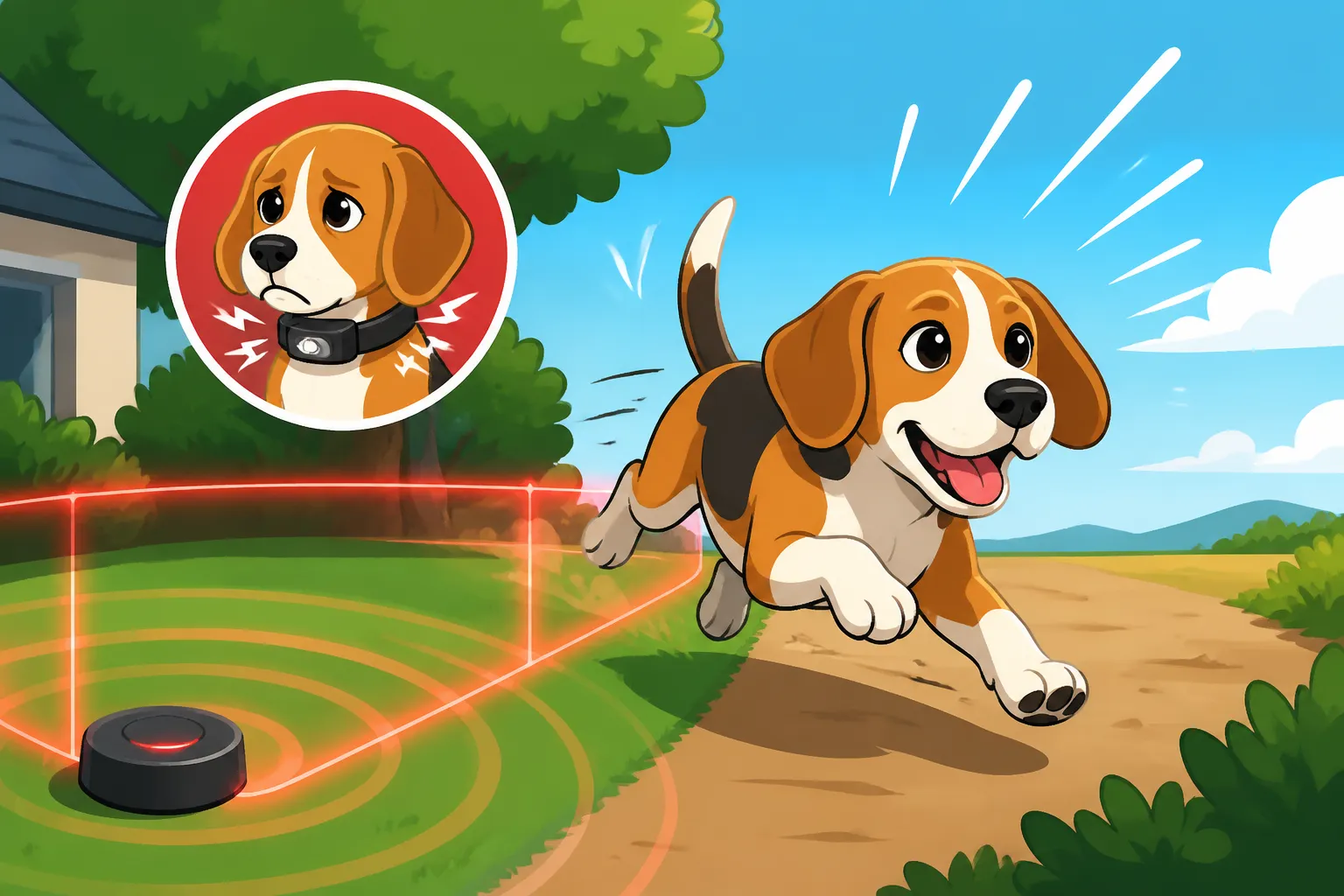
Why Invisible Fences Fail With a Beagle
It’s a common scenario: you’ve dreamed of giving your Beagle the freedom of a big yard, but you’re wary of a traditional fence. You see advertisements for invisible fences, promising an easy, aesthetically pleasing solution, and it sounds like a perfect fit. Yet, for many Beagle owners, the reality is a heartbreaking cycle of escapes, stress, and worry. This guide will dive deep into why invisible fences often fail to contain this unique and determined breed, and explore more reliable, real-world solutions to keep your beloved hound safe and sound.
The Unbeatable Power of a Beagle's Nose
To understand why an invisible fence often doesn't stand a chance against a Beagle, you first have to grasp the sheer, overwhelming power of their nose. It's not just a cute twitch; it's their entire world, their primary way of experiencing and understanding everything around them.
Why Scent Overrides Everything Else
Imagine having 220 million scent receptors, all working overtime, constantly pulling in a tapestry of odors that we humans can barely even conceive of. That’s a Beagle’s reality. While we see a squirrel darting across the yard, a Beagle doesn’t just see it – they smell the intricate trail it left behind, the precise path it took, and every tiny marker of its presence. That rabbit that hopped through your flowerbed three hours ago? Your Beagle knows exactly where it went, what it ate, and probably even its emotional state.
This isn't just a strong sense; it's a driving force. When a Beagle latches onto a particularly enticing scent, it’s like an irresistible siren call. Their brain is hardwired to follow that trail, to unravel the mystery. It’s what they were bred to do for centuries, tracking game for hunters. Everything else – your voice, the pain of a collar correction, even the promise of a treat – often fades into the background. For a Beagle, following that scent is the most compelling thing in their world at that moment. You might try to teach a strong "Beagle Recall That Works Before the Nose Wins" but when that truly high-value scent hits, even the best-trained Beagle can become temporarily deaf.
The Dopamine Hit of the Chase
Following a scent trail isn't just an intellectual exercise for a Beagle; it’s a deeply rewarding experience that triggers a flood of positive neurochemicals, like dopamine, in their brain. Each step they take, each new layer of scent they uncover, reinforces this behavior. It’s a natural high, a pure, instinctual joy that’s incredibly difficult to interrupt.
This isn’t stubbornness in the human sense; it’s pure, unadulterated canine bliss. When your Beagle is locked onto a scent, they're not defying you; they're fulfilling their deepest genetic purpose. The thrill of the chase, even if it's just tracking a phantom rabbit across the neighbor's lawn, is an incredibly powerful motivator. An invisible fence shock, while unpleasant, might only be a momentary blip in this intense, rewarding experience. They weigh the discomfort against the immense satisfaction of the hunt, and more often than not, the hunt wins. This powerful drive is a key reason "Why a Beagle Will Follow a Scent for Miles".
Instinct Over Pain: The Beagle's Hunting Drive
Beagles were developed for a very specific job: to hunt rabbits and hare, often in packs, for long periods. This heritage imbues them with a remarkable tolerance for discomfort and an unwavering focus when on a trail.
Bred to Ignore Discomfort
Think about what a hunting hound had to endure: brambles, cold weather, exhaustion, and sometimes painful encounters. They were expected to push through all of that, driven by their nose and the desire to track their quarry. This ingrained resilience means that a momentary shock from an invisible fence, while certainly not pleasant, often isn't enough to override their profound genetic programming. They'll experience the discomfort, yes, but for many Beagles, the allure of the scent trail on the other side of the boundary is simply too strong.
They might yelp, they might flinch, but if that captivating smell of a deer, a rabbit, or even another dog is just beyond the barrier, many Beagles will simply "power through" the static correction. They learn quickly that the brief sting is finite and that the rewards on the other side are often greater. This inherent drive for adventure is one of the biggest challenges for any owner trying to "Train a Beagle Around 220 Million Scent Receptors".
The Inconsistency of Correction
Another major issue with invisible fences is the inconsistency of the correction and the Beagle's ability to "pattern" it. The static correction only happens at the boundary. Once a Beagle has pushed through the initial shock and is outside the designated area, there's no further deterrent. They are free to roam, follow scents, and explore to their heart's content. There's no negative consequence for being outside the boundary, only for crossing it.
This means a Beagle quickly learns that once they've taken the initial unpleasant zap, they're free. And when it's time to come back into the yard? They often experience another shock, which can be incredibly confusing and counterproductive. Why should they return to a place that zaps them, when the outside world is so full of exciting smells and no further punishment? This creates a dilemma where the "punishment" for leaving is just a quick hurdle, and the "punishment" for returning is often the same. It's not a clear, consistent training tool for a breed that needs extremely clear boundaries and positive reinforcement.
The False Sense of Security Invisible Fences Create
For owners, an invisible fence can feel like a good compromise – no ugly physical fence, but still a promise of containment. However, this often translates into a false sense of security that puts Beagles at significant risk.
Learning to "Take the Zap"
Many Beagles, especially those with a strong prey drive or a particularly intriguing scent to follow, quickly learn to "take the zap." This isn't just anecdotal; it's a widely observed behavior. They might hesitate, they might even yelp, but if the motivation is strong enough – a squirrel, a passing dog, or the irresistible lure of a distant scent – they will often brace themselves, run through the boundary, endure the momentary pain, and be free.
Once they've done it once or twice, they understand the system. They know the shock is temporary and doesn't follow them. This can be terrifying for an owner, realizing their beloved hound is suddenly a mile down the road, nose to the ground, completely oblivious to their frantic calls. The system has failed, not because the Beagle is "bad," but because their instincts are simply stronger than the technology's deterrent. And for a breed that is prone to "Beagle Ear Infections Under Those Long Ears", the extra stress or potential for injury during an escape is a significant concern.
Owner Frustration and Repeated Escapes
The cycle of an invisible fence with a Beagle often looks like this: owner installs it, feels good about the perceived freedom, the Beagle escapes for the first time, owner panics, adjusts the collar/level, Beagle escapes again, owner gets frustrated, increases the level further, Beagle still escapes. It's a never-ending battle against their very nature. This repeated failure leads to immense frustration for owners, and more importantly, puts the Beagle in danger.
Imagine the stress of constantly worrying if your dog will bolt. Picture the frantic search parties, the flyers posted, the fear of traffic or other animals. An invisible fence is designed to keep dogs in, but for a Beagle, it often only keeps them near the boundary, leaving them vulnerable to wandering off when something truly compelling appears. The money spent on installation and equipment often feels wasted when the core purpose isn't met. If an escape leads to an injury, an insurer like Healthy Paws might cover the emergency vet visit, but prevention is always better than treatment.
| Containment Method | Initial Cost | Reliability for Beagles | Training Required | Safety Concerns | Aesthetic Impact |
|---|---|---|---|---|---|
| Invisible Fence | Moderate | Low (prone to "taking the zap") | Moderate (to associate boundary) | Escape risk, confusion, physical injury from running into traffic | Low (no visible fence) |
| Physical Fence | High | High (if properly built) | Low (for boundary understanding) | Digging, climbing if not secure | High (visible barrier) |
| Long Line/Leash | Low | High (direct control) | Moderate (leash manners) | Entanglement, limited range | None (portable) |
Real-World Solutions for Containing Your Clever Beagle
Given the unique challenges Beagles present, a multi-layered approach to containment and safety is often the most successful strategy. It's about working with their nature, not against it.
Building a Truly Beagle-Proof Physical Fence
The gold standard for Beagle containment is a sturdy, physical fence. But not just any fence. Beagles are notoriously clever and determined. For a fence to truly be Beagle-proof, you need to consider height and digging prevention. A minimum of 5 to 6 feet is often recommended, as Beagles can be surprisingly agile climbers or jumpers if motivated.
More critically, you must address their propensity for digging. Burying a wire mesh (like hardware cloth) along the bottom of the fence line, extending inwards by about a foot and then down, creates an effective "Digging Barriers Along a Beagle Fence Line". Alternatively, a concrete footer or large landscape timbers can serve the same purpose. Regular checks of the fence line for any new weak spots or escape attempts are also crucial. Make sure your gate latches are robust and not easily manipulated. For all your fencing needs, or even just ideas on what works, stores like Chewy offer a range of products and resources that can help you plan your ideal setup. This investment in a secure yard is an investment in your Beagle's safety and your peace of mind.
Harnessing and Training for Safe Outings
While a secure yard is paramount, Beagles still need to explore the world beyond their property. This is where a good harness and consistent training become vital. Ditch the neck collar for walks; a well-fitting front-clip harness is far safer and gives you much more control over their enthusiastic pulling towards every captivating scent. This helps protect their neck and delicate trachea from injury.
Focus on building a rock-solid recall, but understand that even the best recall can fail when a truly high-value scent hits. Therefore, always assume your Beagle is an escape artist on a mission. This means no off-leash walks in unfenced areas. Use a long line (a 15-30 foot leash) in safe, open spaces to give them a sense of freedom while maintaining control. Practice "Beagle Recall Games to Play in the Backyard" where distractions are lower, gradually increasing the challenge. Reward heavily with high-value treats (perhaps something from Ollie, known for their tasty, healthy options) every single time they return to you. Consistent, positive reinforcement is key to making you more rewarding than any squirrel.
Technology as a Backup, Not a Primary Barrier
While invisible fences fail as primary containment for Beagles, other technologies can serve as valuable backup tools. GPS tracking collars, for instance, can be invaluable if your Beagle does manage to escape. These devices can help you pinpoint their location quickly, dramatically increasing the chances of a safe reunion. They are a tool for recovery, not prevention.
Think of them like a car's airbags – you hope you never need them, but you’re glad they’re there if something goes wrong. Always ensure the tracker is securely attached to a sturdy collar or harness, as Beagles can be quite adept at shedding equipment. Combine this with a microchip and visible ID tags, which are essential for any dog, especially one with a strong wanderlust. Remember, no technology replaces a physical barrier or vigilant supervision, but "Beagle GPS Collars and Tracking Tags" offer an extra layer of reassurance that can be incredibly helpful when your scent-driven hound decides to follow their nose beyond your property.
Disclaimer
This article is for general informational purposes only and does not constitute professional advice. Laws, prices and regulations vary by location and change over time. Consult a qualified professional for guidance on your specific situation.