Beagle Hypothyroidism and Policy Exclusions
It’s a truly awful feeling when your beloved Beagle starts showing signs of something amiss – maybe they're gaining weight unexpectedly, acting more lethargic than usual, or their beautiful coat isn't quite right. When the vet delivers a diagnosis like hypothyroidism, your first thought is naturally about your dog's well-being. But quickly, a knot forms in your stomach as you wonder, "Will my pet insurance even cover this?" This guide is here to untangle the frustrating reality of Beagle hypothyroidism and how pet insurance policies often handle (or, more accurately, don't handle) pre-existing conditions.
Understanding Beagle Hypothyroidism
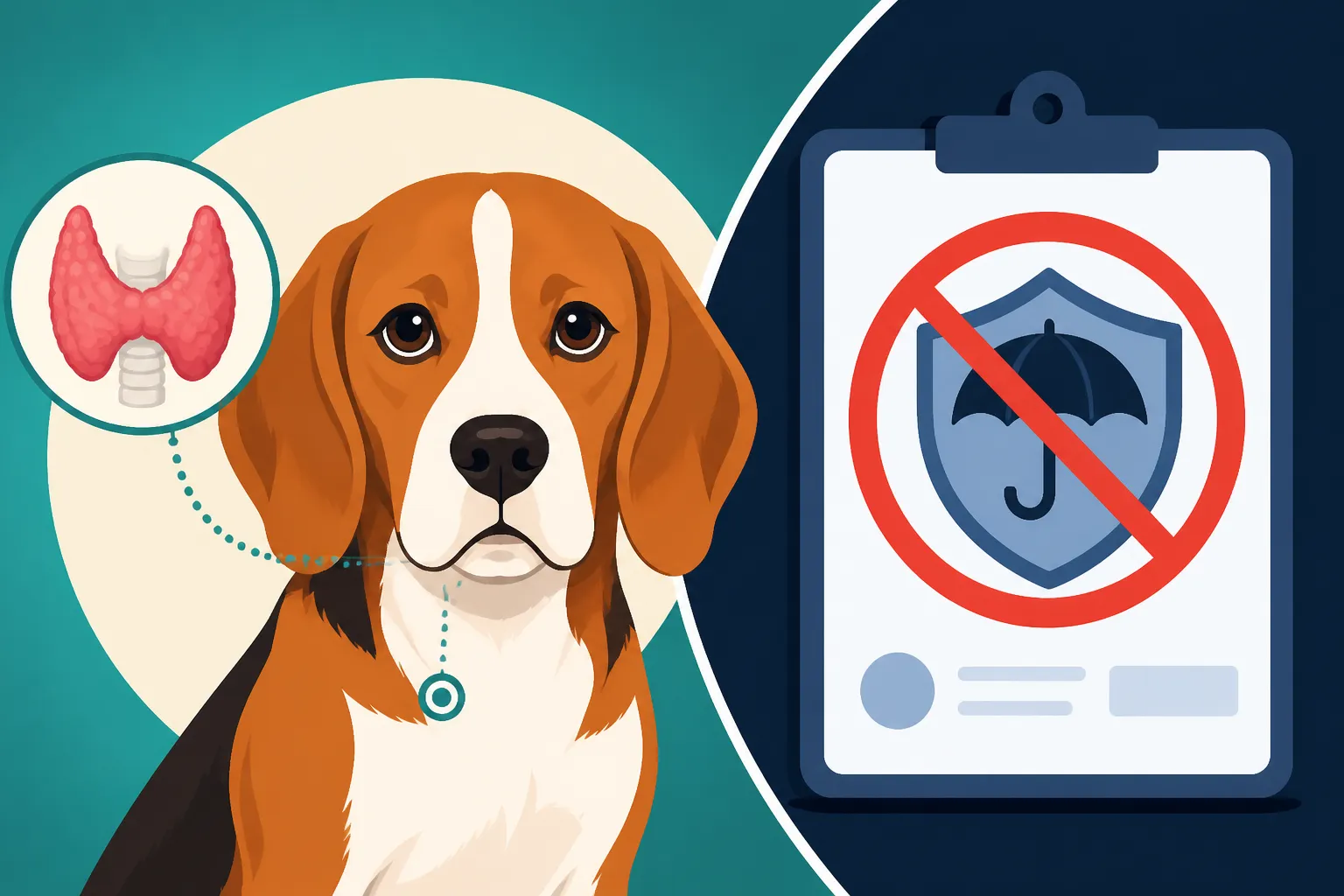
Hypothyroidism is a common endocrine disorder in dogs, and unfortunately, Beagles are among the breeds frequently diagnosed with it. It's a condition where your Beagle's thyroid gland doesn't produce enough thyroid hormone, which is crucial for regulating metabolism. The thought of your vibrant, scent-driven companion slowing down due to an internal issue can be heartbreaking.
What Hypothyroidism Means for Your Beagle
When your Beagle's thyroid isn't pulling its weight, a whole cascade of changes can occur. The most noticeable symptom for many owners is unexplained weight gain, even if their Beagle hasn't been overeating. It’s not just a matter of looking a bit chunky; this weight gain can put extra strain on their joints and overall health. You might also notice a significant drop in their usual boundless energy, leading to lethargy or a general lack of enthusiasm for walks and playtime. It’s easy to dismiss these changes as just your Beagle getting older, but they can be critical indicators of an underlying problem.
Beyond weight and energy levels, hypothyroidism can manifest in their skin and coat. You might observe hair loss, particularly on their flanks and tail, or their coat might become dull, dry, and brittle. Some Beagles develop a "tragic" facial expression due to puffiness around the eyes. Other, less obvious signs can include an intolerance to cold, or even a slow heart rate. It’s really tough as an owner to connect these disparate symptoms, especially when your Beagle is otherwise acting like their usual happy-go-lucky self for periods. If you're seeing any of these signs, it's worth digging deeper into the common Beagle Hypothyroidism Symptoms Owners Notice First.
How Hypothyroidism Is Diagnosed
Diagnosing hypothyroidism isn't always a straightforward process, which can add to the stress for owners. It typically involves a series of blood tests that measure the levels of various thyroid hormones in your Beagle's system. The primary tests include total T4 (thyroxine) and free T4, as well as TSH (thyroid-stimulating hormone). A low T4 and high TSH usually confirm the diagnosis. However, sometimes the results can be a bit ambiguous, especially if your Beagle has other concurrent illnesses that can suppress thyroid hormone levels, a phenomenon known as "euthyroid sick syndrome."
Your veterinarian might recommend a full thyroid panel, which gives a more comprehensive picture of thyroid function. This often includes antibodies against thyroid hormones, which can indicate an autoimmune form of thyroiditis, a common cause of hypothyroidism in Beagles. Because these conditions can be subtle, sometimes a vet might recommend repeat testing after a few weeks, or even a trial course of medication to see if symptoms improve. It's a journey that requires patience and a good relationship with your vet, especially if your Beagle's symptoms are mild or non-specific. Often, vets recommend Thyroid Testing a Beagle at Twenty-Four Months for at-risk breeds to catch issues early.
Pet Insurance and Pre-Existing Conditions
Now, let's tackle the elephant in the room when it comes to covering conditions like hypothyroidism: the dreaded "pre-existing condition" clause. This is where many well-intentioned owners find themselves in a difficult spot, desperately wishing they had bought insurance sooner.
The "Pre-Existing Condition" Clause
In the world of pet insurance, a "pre-existing condition" is generally defined as any illness or injury that showed symptoms, or was diagnosed, before your policy’s effective date or during its waiting period. This definition is absolutely crucial, and it’s where most claims for conditions like hypothyroidism get denied. It doesn't always matter if your vet officially diagnosed the condition; if there's any mention of related symptoms in your Beagle's medical records prior to coverage, even if they seemed minor at the time, the insurer can flag it.
Imagine your Beagle started gaining weight or seemed a little tired three months before you purchased your Healthy Paws policy. You might not have thought anything of it then, perhaps attributing it to a treat-heavy holiday season or just a lazy phase. But if these symptoms were noted in a vet visit, and then later your Beagle is diagnosed with hypothyroidism after your policy starts, the insurer might review those earlier notes and deem it pre-existing. It's a brutal reality that catches many owners off guard.
How Insurers Determine Pre-Existing Conditions
Pet insurance companies, including popular providers like Chewy Pet Insurance (often underwritten by major insurers) and Ollie Pet Insurance (which may partner with third-party insurers), rely heavily on your pet's medical history to determine if a condition is pre-existing. When you file a claim for a condition, they will request all of your Beagle’s veterinary records, sometimes going back years. They meticulously comb through these documents, looking for any mention of signs, symptoms, or diagnoses that could be related to the current claim.
For hypothyroidism, they'll be looking for any notes about:
- Unexplained weight gain: Even a casual mention.
- Lethargy or decreased activity: If your vet notes your Beagle seems "quieter" than usual.
- Skin or coat changes: Dry skin, hair loss, recurrent infections.
- Muscle weakness or stiffness: Subtle lameness that might later be attributed to metabolic issues.
It's important to understand that pet insurance isn't like car insurance, where you get into an accident and then file a claim. With pet insurance, it’s about protecting against future, unforeseen health issues. Once symptoms appear, it’s generally too late for that specific condition to be covered. This is why getting coverage when your Beagle is a puppy or young adult, before any significant health issues arise, is so critical. For more general information, take a look at our guide on Beagle Insurance Premiums Provider by Provider.
Waiting Periods and Their Impact
Another critical aspect of pet insurance policies is the "waiting period." This is a specific amount of time that must pass after your policy's start date before coverage for certain conditions kicks in. Most policies have:
- Accident waiting periods: Often very short, maybe 2-5 days.
- Illness waiting periods: Typically longer, commonly 14 days, but some can be 30 days or even longer.
- Orthopedic condition waiting periods: These can be even longer, sometimes 6 months to a year, for things like hip dysplasia or cruciate ligament issues.
If your Beagle shows any symptoms of hypothyroidism during the illness waiting period, even if it’s just a vague note from a quick vet visit for something else, the condition will be classified as pre-existing and excluded from coverage. This is a common point of frustration. Owners often rush to get insurance once they notice a problem, only to find that the waiting period renders their new policy useless for that immediate concern. It’s a protection for the insurance companies against people buying policies only when their pet is already sick.
Here's a simplified look at typical waiting periods:
| Condition Type | Common Waiting Period Range |
|---|---|
| Accidents | 1 – 5 days |
| Illnesses | 14 – 30 days |
| Orthopedic Conditions | 30 days – 12 months |
| Cruciate Ligament Issues | 6 – 12 months |
It's vital to read your specific policy documents carefully, as these periods can vary significantly between providers and even between different plans from the same provider.
Navigating Insurance Exclusions for Hypothyroidism
Coming to terms with a pre-existing condition exclusion can be incredibly disheartening. You want the best for your Beagle, and suddenly, a major medical cost is entirely on your shoulders.
What If Your Beagle Was Already Diagnosed?
If your Beagle was formally diagnosed with hypothyroidism before you enrolled in pet insurance, or if the diagnosis occurred during the waiting period, the stark reality is that the condition will almost certainly be excluded from coverage. This means that all future costs associated with managing their hypothyroidism – from the lifelong medication they'll need to regular blood tests to monitor their hormone levels – will not be covered by your policy.
This can feel like a punch to the gut, especially when you're already worried about your pet's health. You've invested in insurance for peace of mind, only to find this particular peace is unattainable. It underscores the critical lesson that pet insurance is most effective when acquired before any health issues, even minor ones, have had a chance to surface. The same principle applies to other common Beagle health concerns, such as Beagle Epilepsy Counted as a Pre-Existing Condition or Beagle Disc Disease and the Policy Waiting Period.
Managing Costs Without Insurance Coverage
While the news of an exclusion is tough, it doesn't mean you're without options for managing your Beagle's care. Hypothyroidism is a treatable condition, and with consistent medication, your Beagle can lead a long, happy, and healthy life. The main medication is typically levothyroxine, a synthetic thyroid hormone.
Here's how to manage the costs:
- Budgeting for Medication: Levothyroxine is a lifelong medication. While the monthly cost isn't usually exorbitant, it adds up over years. You can often save money by asking your vet if a generic version is available, or by purchasing from online pharmacies like Chewy or reputable human pharmacies that also dispense pet medications. Be sure to compare prices.
- Regular Blood Tests: Your Beagle will need periodic blood tests to ensure their medication dosage is correct. These usually happen more frequently at first, then settle into a routine of once or twice a year. Factor these into your annual vet budget.
- Emergency Fund: Building a dedicated emergency fund for your pet's health needs is crucial, especially when certain conditions are excluded. Even a small amount saved regularly can make a big difference when vet bills arise.
- Vet Payment Plans: Some veterinary clinics offer payment plans for larger bills. Don't hesitate to ask your vet's office if this is an option.
- CareCredit or Scratchpay: These are third-party financing options specifically designed for veterinary care, offering deferred interest or installment plans.
- Financial Assistance Programs: For owners facing severe financial hardship, there are some non-profit organizations that offer assistance for veterinary care. While less common for chronic conditions like hypothyroidism, it's worth exploring if you are struggling.
Remember, even if hypothyroidism isn't covered, your policy should still cover new, unrelated illnesses or accidents that arise after your waiting periods. So, while you'll pay for the thyroid medication, if your Beagle then breaks a leg or develops a urinary tract infection, those should be covered according to your policy's terms. It’s important to understand the full scope of your policy; a deep dive into What a Beagle Policy Limit Covers Disc Surgery might give you perspective on coverage for other major issues. For a comprehensive look at what you might spend over time, consider reading The Lifetime Bill for a Beagle That Reaches Fifteen and Beagle Medical Costs for Epilepsy and Thyroid Disease.
When to Enroll Your Beagle in Pet Insurance
The absolute best time to enroll your Beagle in pet insurance is when they are a puppy or a young adult. The younger and healthier your Beagle is when you enroll, the less likely they are to have any pre-existing conditions that will be excluded. This maximizes the value and peace of mind your policy can provide.
Think about it: Beagles, while generally healthy, are prone to certain breed-specific issues. Beyond hypothyroidism, they can be predisposed to conditions like epilepsy, ear infections, and certain orthopedic problems. If you wait until your Beagle starts showing signs of these issues, you'll likely face the same pre-existing condition exclusions.
For example, many Beagles have their first seizure between six months and six years of age. If you wait until after your Beagle has had its first seizure, that will almost certainly be considered a pre-existing condition and all future seizure-related treatments will be excluded. This is why we often recommend Insuring a Beagle Before the Epilepsy Window Opens. The same proactive approach applies to hypothyroidism. Getting coverage early means that if your Beagle develops hypothyroidism later in life, and there were no prior symptoms noted, your policy will very likely cover the treatment.
It’s an investment in your Beagle’s future health, and it’s one that truly pays off when those unexpected diagnoses come along. While How a Beagle Premium Rises Each Year is a consideration, early enrollment offers the best chance for comprehensive coverage.
Disclaimer
This article is intended for informational purposes only and does not constitute professional veterinary or insurance advice. Always consult with a qualified veterinarian for any health concerns regarding your Beagle and with your pet insurance provider for specific policy details and coverage questions. Pet insurance policies vary widely, and it is crucial to read your specific policy documents to understand what is covered and what is excluded.