What Should Come Home With a Beagle Puppy
Bringing a new Beagle puppy home is one of the most exciting, heartwarming experiences, but let's be honest, it can also feel like navigating a maze of endless pet store aisles and conflicting advice. Many new owners find themselves utterly overwhelmed, staring at a sea of products and wondering which ones are genuinely essential for their new furry family member and which are just clever marketing. This comprehensive guide is designed to cut through the noise, walking you through every practical necessity to ensure your Beagle puppy settles in safely, happily, and with everything they need from day one.
Setting Up Your Puppy's Sanctuary: Crates, Beds, and Bowls
When your tiny Beagle puppy first arrives, they’re stepping into a brand new world, far from their littermates and the only home they’ve ever known. Creating a safe, comfortable, and predictable "den" for them is paramount, and it starts with a few foundational items that will serve them well through puppyhood and beyond.
Choosing the Right Crate for Growth and Comfort
A crate isn't a punishment; for a Beagle, it's a sanctuary, a secure den, and an invaluable tool for house training. Beagles are, by nature, den animals, descendants of pack hounds who sought out cozy, safe spaces. A crate taps into this natural instinct, providing a secure spot where they can feel safe and relaxed. This is particularly true for a breed that was "Crate Training a Beagle Bred to Sleep in a Pack" and is often much happier with a clear space of its own.
When selecting a crate, size is crucial. You want one large enough for your adult Beagle to stand up, turn around, and lie down comfortably, but not so big that they can relieve themselves in one corner and sleep in another. For most Beagles, especially the 13-inch and 15-inch varieties, a medium-sized crate (typically 30-36 inches long) will suffice. Look for models with a divider panel so you can adjust the internal space as your puppy grows, gradually expanding it until they reach their full size. Wire crates offer good ventilation and visibility, allowing your puppy to feel connected to the family while still having their own space. Plastic crates, often used for travel, can feel more den-like and may be preferred by some Beagles for the increased privacy. Consider where the crate will live in your home. Placing it in a busy family area initially helps your puppy feel less isolated, integrating them into the household routine even when crated.
Soft Bedding and Cozy Spaces
Inside that crate, and in other designated rest spots around your home, comfortable bedding is non-negotiable. A soft, supportive bed provides warmth and comfort, mimicking the feeling of sleeping alongside their littermates. However, puppies, especially Beagles, can be enthusiastic chewers, so durability is key. Look for beds made with tough, chew-resistant fabrics, or consider simple blankets that are easy to wash and replace if they get too chewed. For younger puppies, a soft, plush mat or a couple of old towels can work perfectly inside the crate; they're easily washable if accidents happen. As they get older, you might invest in a more robust, orthopedic bed for their main resting spots.
Beyond the crate, having a dedicated bed or mat in a common area, like the living room, gives your Beagle another comfortable spot to relax and observe the family without being underfoot. This helps them learn where they are allowed to settle down, rather than claiming your couch as their primary domain. Ensure all bedding is machine washable, as puppy accidents and general Beagle-induced grime (oh, those muddy paws and exploring noses!) are simply a part of life.
Food and Water Bowls that Work for Beagles
Mealtime is serious business for a Beagle, and choosing the right bowls can make a difference in hygiene and how quickly they inhale their food. Stainless steel bowls are generally recommended by veterinarians because they are durable, easy to clean, and resistant to bacteria buildup. They're also virtually indestructible, which is a bonus with a rambunctious puppy. Ceramic bowls are another good option, as they are heavy and less likely to tip over, but they can chip or break. Avoid plastic bowls, which can harbor bacteria, absorb odors, and sometimes cause skin irritation around the chin.
Size matters too; choose bowls appropriate for a puppy, but keep in mind their adult size. For water, a heavy, non-tip bowl is essential to prevent spills, especially if you have an energetic puppy prone to zooming around. For food, consider a "Slow Feeders for a Beagle That Inhales Food" type of bowl. Beagles are notoriously fast eaters, a trait that can lead to gulping, indigestion, and even a higher risk of bloat (though less common in Beagles than larger, deep-chested breeds, it's still good practice to slow them down). These bowls often have ridges or obstacles that make your puppy work a little harder for each bite, extending mealtime and aiding digestion. If your Beagle's long, floppy ears tend to dip into their food and water bowls, consider slightly elevated bowls or bowls with a narrower opening.
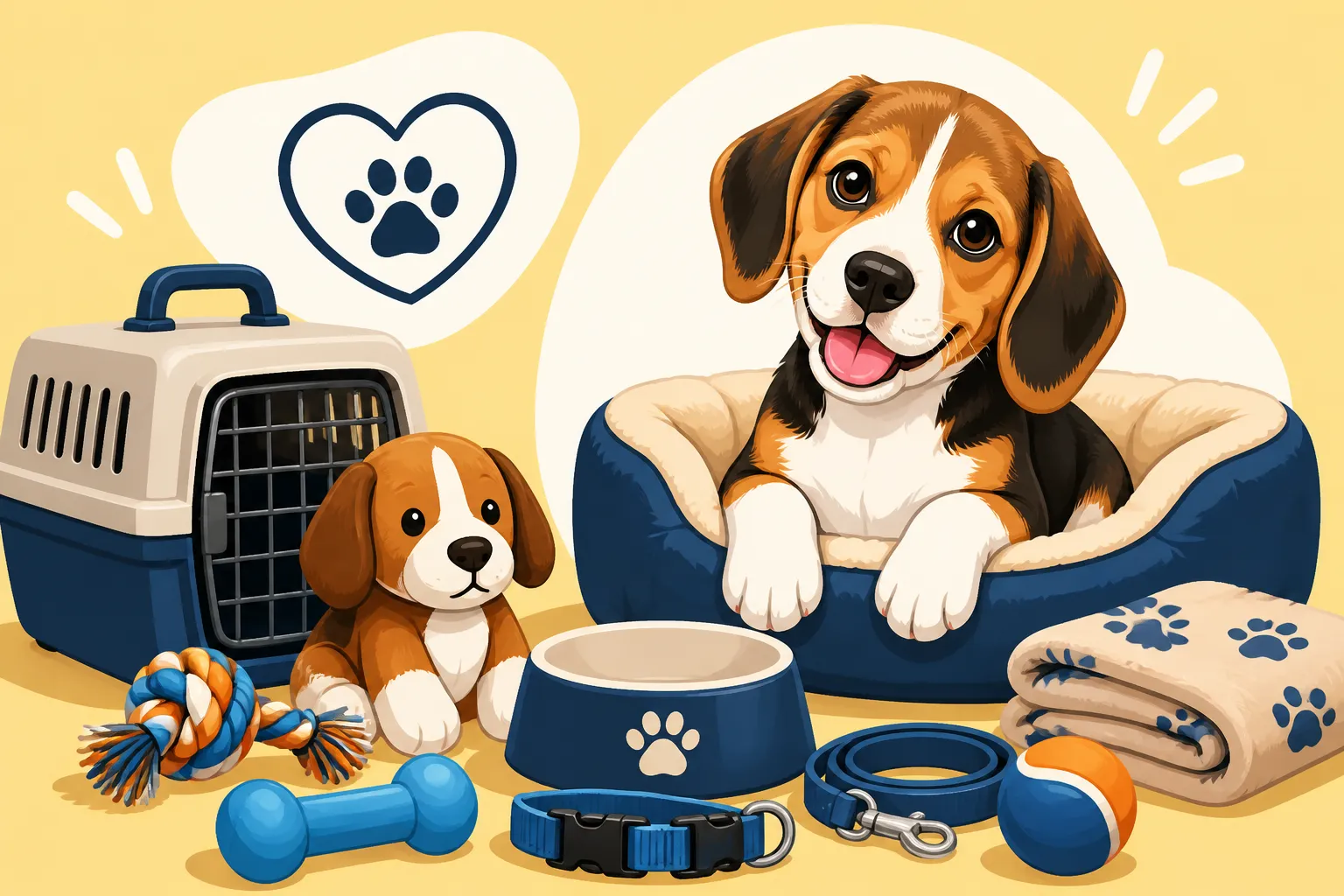
| Item | Purpose | Key Considerations | Brands/Notes |
|---|---|---|---|
| Crate | Safe den, house training, travel | Wire or plastic, adjustable divider, adult size (30-36 inches) | Midwest Homes for Pets, Frisco, Amazon Basics |
| Bedding | Comfort, warmth, den feeling | Chew-resistant, machine washable, soft plush for puppies, easily replaceable | Kong, K9 Ballistics (chew-proof), basic blankets/towels |
| Food Bowls | Eating meals | Stainless steel or ceramic, sturdy, appropriate size, slow-feeder option | OurPets, Durapet, Outward Hound (slow feeders) |
| Water Bowls | Hydration | Stainless steel or ceramic, heavy base, non-tip, wide enough for snout | Road Refresher (spill-proof), Yeti (durable), simple stainless steel |
Essential Gear for Walks, Play, and Safety
Beagles are built for action, and their world revolves around their incredible sense of smell. Equipping them with the right gear for outdoor adventures and ensuring their safety within your home are critical aspects of bringing a puppy home.
Harnesses, Leashes, and ID Tags for Adventurous Noses
From the moment your Beagle puppy is old enough to venture out, a proper harness and leash are non-negotiable. A harness is vastly superior to a traditional neck collar for walking a Beagle. Why? Because a Beagle's neck and throat are sensitive, and they are masters of pulling when their nose hits an interesting scent trail. A collar can put undue pressure on their trachea, potentially causing injury, especially if they lunge. A harness, particularly a front-clip harness, distributes pressure across their chest and shoulders, allowing you more control without hurting them. This is why "Why a Harness Protects a Beagle's Neck" is such an important topic for new owners.
Start with a lightweight, adjustable puppy harness that fits snugly but comfortably. As they grow, you'll upgrade to a more robust, often "front-clip harnesses for a Beagle that pulls toward scent", which is excellent for managing their famous scent-driven pulling. For leashes, a standard 6-foot leash made of nylon or leather is perfect for daily walks and training. Later, you'll likely find yourself exploring "The Long Line Length a Beagle Actually Needs" for secure outdoor sniffing adventures in open, safe areas.
Never underestimate a Beagle's ability to follow its nose to the ends of the earth. Every Beagle, from puppyhood on, must wear ID tags with your current contact information, and should be microchipped. Microchipping provides a permanent form of identification that significantly increases the chances of being reunited if they ever go missing. Given that "Why a Beagle Will Follow a Scent for Miles," these layers of identification are truly lifesavers. Many Beagle owners also invest in "Beagle GPS Collars and Tracking Tags" as an extra layer of security, especially for those adventurous hounds. Brands like Fi and Tractive offer excellent GPS tracking options that can be invaluable.
Toys for Chewing, Mental Stimulation, and Engagement
Beagle puppies have a natural drive to explore and chew, both for teething and to investigate their world. Providing appropriate toys is essential to redirect this energy away from your furniture and shoes. Look for durable, puppy-safe chew toys made from rubber or tough nylon. Brands like Kong (classic Kongs can be stuffed with treats or peanut butter and frozen for extended engagement) and Nylabone offer a variety of sizes and textures suitable for puppies. Remember, always supervise your puppy with new toys to ensure they can't chew off and swallow small pieces.
Beyond simple chew toys, Beagles thrive on mental stimulation. Their powerful noses and keen intelligence mean they love to solve problems, especially if food is involved! "Puzzle Feeders That Genuinely Slow a Beagle" and "Snuffle Mats and Scatter Feeding for a Beagle" are fantastic ways to engage their mind, reduce boredom, and make mealtime last longer. These types of toys are crucial for preventing destructive behaviors that often stem from boredom or unmet intellectual needs. Interactive toys, like tug ropes (for supervised play) or soft fetch toys, help you bond with your puppy and provide an outlet for their energy. Rotate toys frequently to keep your puppy interested and prevent boredom.
Puppy-Proofing Your Home: Safety First
Before your Beagle puppy even sets paw inside your home, a thorough puppy-proofing session is paramount. Beagles are curious, food-motivated, and will explore everything with their mouths and noses. Start by getting down on your hands and knees to see your home from their perspective. What looks appealing to chew? What could they swallow? Common household hazards include electrical cords, toxic household cleaners, medications, small objects that can be swallowed (like coins, batteries, or small toys), and certain house plants (lilies, sago palms, and many others are highly toxic). Secure these items out of reach.
Baby gates are your best friend during puppyhood, allowing you to restrict your Beagle's access to certain areas of the house until they're fully house-trained and trustworthy. Beagles are notorious for "A Beagle That Raids the Trash Every Night," so invest in sturdy, lidded trash cans that they cannot tip over or open. Secure cabinet doors with child locks if they contain hazardous materials. Keep toilet lids down to prevent them from drinking from the toilet bowl. Understanding the dangers of "A Beagle Vomiting After Eating Something Outside" should also make you hyper-vigilant about what they might pick up indoors. Always have emergency vet contact information readily available, as curious puppies can get into trouble quickly.
Grooming, Health, and Initial Nutrition Needs
Bringing a Beagle puppy home isn't just about fun and games; it's also about laying the foundation for a lifetime of good health and care. This means establishing a routine for grooming, setting them up with appropriate nutrition, and being prepared for their initial health needs.
Grooming Essentials for That Dense Double Coat and Droopy Ears
Even though Beagles have a short, dense double coat, they do shed, especially seasonally. Regular grooming helps manage this shedding and keeps their coat healthy. A rubber curry brush or a shedding tool like a Furminator for short coats will be your best friend. Start brushing your puppy gently from a young age to get them accustomed to the process, making it a positive experience. This is also a great time to do a quick check for any lumps, bumps, or skin irritations.
Bathing a Beagle doesn't need to be a weekly affair, but having a gentle, puppy-safe shampoo on hand is essential for those inevitable moments when they roll in something questionable outside or simply get too muddy. Follow up with a good rinse to prevent skin irritation.
"Beagle Ear Cleaning as a Weekly Job" cannot be stressed enough. Those adorable, long, floppy ears are perfect traps for moisture, dirt, and debris, making them highly susceptible to infections. You'll need a vet-approved ear cleaning solution and cotton balls (never Q-tips, which can push debris further in). Getting your puppy used to having their ears handled and cleaned early will save you a lot of struggle later. Understand "Why Beagle Ears Trap Moisture So Well" and how consistent cleaning can prevent painful, recurring infections.
Finally, nail care and dental hygiene are critical. Invest in puppy-sized nail clippers or a dremel grinder. Getting your Beagle puppy used to having their paws handled and nails trimmed from a young age is crucial. For dental care, pick up a dog-specific toothbrush and enzymatic toothpaste. Start by simply letting them lick the toothpaste off your finger, then gradually introduce the brush. Consistent at-home brushing is the best way to prevent dental disease later in life. Remember, "Brushing a Beagle's Teeth From Puppyhood On" can prevent painful issues and costly vet bills down the road.
Nutrition: Starting Your Beagle Puppy Off Right
One of the first things you'll need is a high-quality puppy food. The breeder should provide you with a small bag of the food your puppy has been eating. If you plan to switch foods, do so gradually over 7-10 days to avoid stomach upset. Look for puppy formulas that are appropriate for medium-sized breeds and meet AAFCO nutritional guidelines. Brands like Purina Pro Plan, Royal Canin, and Hills Science Diet are often recommended by veterinarians, and many are readily available from retailers like Chewy. For those interested in fresh food options, services like Ollie deliver human-grade, pre-portioned meals right to your door, which can be great for controlled nutrition.
Feeding a Beagle puppy involves careful measurement. "Splitting a Beagle's Day Into Two Measured Meals" for an adult is standard, but puppies typically need 3-4 meals a day initially, gradually reducing to two as they grow. "The Daily Calorie Target for a Twenty Pound Beagle" will be different from "Feeding a Fifteen-Inch Beagle at Twenty-Eight Pounds," so follow the feeding guide on your chosen puppy food and adjust based on your puppy's body condition and energy levels. "What a Beagle Puppy Weighs at Eight Weeks" is a good baseline, but their growth rate will vary. Free feeding is generally not recommended for Beagles, given their tendency to overeat and gain weight quickly.
Safe, healthy treats are also a must, especially for training. Choose small, soft, high-value treats that can be easily broken into even smaller pieces. This allows you to reward frequently without overfeeding.
Initial Health and Wellness Considerations
Your puppy's health journey begins the moment they arrive. Schedule a vet visit within the first few days of bringing your puppy home for a comprehensive check-up. This initial visit allows your vet to assess their overall health, ensure they're free of parasites, and discuss their vaccination schedule. The breeder should provide you with their vaccination records and deworming history; share these with your vet.
It's also crucial to discuss parasite prevention with your vet, including year-round protection against fleas, ticks, and heartworm. "Year-Round Parasite Prevention for a Beagle" is vital, as these outdoor-loving dogs are prone to encountering parasites.
Finally, consider pet insurance as soon as you bring your puppy home. "Insuring a Beagle Before the Epilepsy Window Opens" or other potential hereditary conditions develop can save you thousands of dollars over their lifetime. Pet insurance companies like Healthy Paws offer various plans that can cover accidents, illnesses, and even hereditary conditions if enrolled before diagnosis. Beagles, unfortunately, are prone to certain health issues like epilepsy and hypothyroidism, and having insurance in place before these conditions manifest (typically between 6 months and 6 years for epilepsy) means they will be covered, rather than deemed a pre-existing condition. Research different plans and waiting periods to find the best fit for your family and your new Beagle puppy.
Disclaimer
The information provided in this article is for general educational purposes only and is not a substitute for professional veterinary advice. Always consult with a qualified veterinarian for any health concerns or before making any decisions about your Beagle's care.