Fencing a Yard That a Beagle Cannot Escape
It’s a tale as old as time for Beagle owners: you turn your back for a second, a captivating scent drifts by, and suddenly, your beloved hound has vanished, following that invisible trail into the great unknown. The sheer frustration, the panic, the endless searches – it’s a feeling no dog parent wants to experience. This comprehensive guide is here to equip you with all the knowledge and practical strategies needed to fence a yard that even the most determined, scent-driven Beagle can’t escape, offering peace of mind and safety for your adventurous companion.
Understanding the Beagle Escape Artist Mentality
Before we even talk about lumber and wire, we need to talk about Beagles. They aren't trying to be naughty; they're simply following instincts that are deeply ingrained in their DNA. Understanding why they escape is the first crucial step in effectively preventing it. It's not about being stubborn or disobedient; it's about being a Beagle.
The Unbeatable Nose Drive
Let's be brutally honest: your Beagle's nose is a superpower, a finely tuned instrument built for one purpose – to find and follow scent. With roughly 220 million scent receptors, compared to our mere 5 million, their world is an intricate tapestry of odors we can't even begin to comprehend. When a rabbit, a squirrel, or even just another dog's pee-mail crosses their path, that scent becomes an irresistible magnet, overriding everything else. Your heartfelt calls of "come!" or even the promise of the tastiest treat often simply don't register against the overwhelming draw of a fresh trail. It’s like asking a human to ignore their favorite song playing loudly in their headphones while someone whispers their name from across the room. The scent isn't just a distraction; it’s their entire focus, their mission. This is why a Beagle should never be off leash unfenced. They will absolutely follow their nose, and your voice will simply stop registering.
Instinct to Roam and Hunt
For centuries, Beagles were bred to hunt in packs, tracking game across vast distances for hours on end. This history isn't just a fun fact; it's the blueprint for their behavior today. They possess an inherent desire to roam, to explore, and to put that incredible nose to work. When your Beagle is in your backyard, and a fascinating new scent wafts in from the neighboring park, or the woods beyond, their primal instincts kick in. It's not personal; it's not a slight against your amazing home or delicious meals. It's just them being a Beagle, answering the call of the wild, albeit a very domesticated version of it. Validating this instinct helps us move past frustration and towards proactive, effective solutions that work with their nature, rather than constantly fighting against it. They aren’t seeking to annoy you; they’re seeking adventure, driven by millions of years of selective breeding for scent work.
Pack Mentality and Boredom
Beagles are social creatures, bred to work and live in packs. While your family is their pack, being left alone in a yard for extended periods can trigger feelings of isolation or boredom. A solitary, under-stimulated Beagle is a prime candidate for escape attempts. They might not be driven by a specific scent trail initially, but rather a desire to find their "pack" or simply something interesting to do. If the backyard offers little in the way of mental or physical stimulation, an escape becomes an enticing adventure, a way to alleviate the monotony. This is often where a Beagle separation anxiety in a pack breed can manifest, leading them to try to get out and find you, or other dogs. Providing enrichment within the secure confines of your yard becomes just as important as the fence itself. Without enough to keep their busy minds and noses occupied, the outside world, with all its unknown possibilities, becomes far too tempting a prospect to ignore.
Essential Fence Characteristics for Beagle Containment
When it comes to Beagles, a fence isn't just a boundary; it's a fortress. It needs to be designed with their unique abilities and motivations in mind. Skimping on these essential characteristics will almost guarantee an escape sooner or later.
The Critical Fence Height
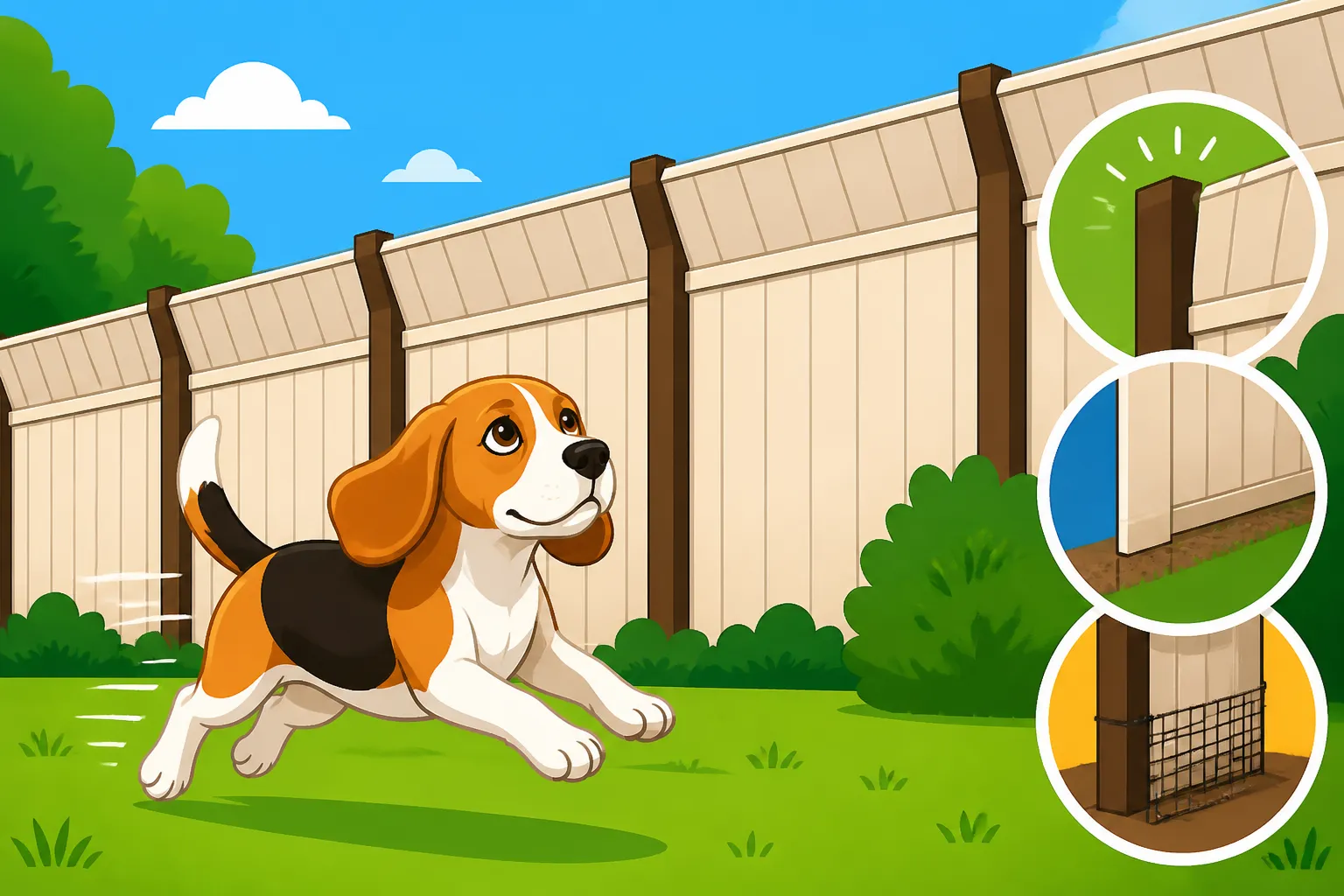
Many people underestimate a Beagle's ability to jump, especially the smaller 13-inch variety. They might not be Olympic high-jumpers, but a motivated Beagle can clear a surprising height, especially if there's any kind of leverage. For a Beagle, a standard 4-foot fence is often more of an invitation than a deterrent. They can scramble, use their powerful hind legs to push off, or find footholds. To truly secure your yard, you need a minimum of a 5-foot fence, with 6 feet being even better, particularly if your Beagle has shown any inclination to climb or if there are objects near the fence line they can use as a boost. Think about it: a determined Beagle, especially one on the trail of a squirrel, can often achieve feats of agility that would surprise you. It’s not about their size; it’s about their drive and ingenuity. This higher barrier makes it much harder for them to even consider going over, shifting their focus away from jumping. Make sure to choose a fence that is truly the fence height that actually holds a Beagle.
Material Matters: Durability and Visibility
The type of material your fence is made from plays a huge role in its effectiveness against a Beagle's escape attempts.
- Wood Fences: Offer excellent privacy, which can be a huge benefit for Beagles who are easily triggered by visual stimuli like passing dogs or people. If they can't see it, they're less likely to bark at it or be tempted to chase it. However, wood needs to be robust. Boards should be securely fastened, with no gaps or loose sections that a Beagle could exploit by pushing through or widening. Regular maintenance is critical to prevent rot or damage that creates weak points.
- Vinyl Fences: Similar to wood in terms of privacy and generally low maintenance, vinyl can be a good option. Ensure the panels are securely installed and the bottom edge is well-sealed to the ground to prevent digging. High-quality vinyl is quite durable and smooth, offering little in the way of climbing holds.
- Chain-Link Fences: While common, chain-link fences present unique challenges for Beagles. The open weave provides ready "toe holds" for climbing, and smaller, more agile Beagles can sometimes find ways to squeeze through wider gaps if the fencing isn't taut. If you have an existing chain-link fence, consider adding fence slats (privacy slats that weave through the links) to remove climbing opportunities and reduce visual stimuli, or even a layer of smaller gauge wire mesh.
- Wrought Iron Fences: Beautiful and sturdy, but typically not ideal for Beagles due to the gaps between the pickets. A Beagle, especially a smaller one, can often squeeze through surprisingly narrow openings. If you opt for wrought iron, ensure the spacing between the vertical bars is narrow enough to prevent your Beagle from getting their head through, let alone their body. You may need to add additional mesh or panels to the lower sections.
Ultimately, the material should be strong enough to withstand pushing, pawing, and even chewing, and it should present a consistent, unbroken barrier.
Foundation and Ground Level Security
This is where many Beagle owners face their biggest challenge: the digging. Beagles are natural diggers, whether it’s to follow a scent underground or simply to create a cool spot on a hot day. A fence that stops at ground level is an open invitation for a determined Beagle to tunnel their way to freedom.
To prevent this, your fence needs a secure foundation that extends below the ground.
- Burying the Fence Line: The most direct approach is to bury the bottom edge of your fence at least 6-12 inches deep. For chain-link or wire fences, this means extending the wire into a trench.
- L-Footers or Wire Skirts: A highly effective method is to create an "L-footer." This involves burying a section of wire mesh (like hardware cloth or strong chicken wire) horizontally inward from the bottom of the fence, about 12-18 inches wide. When your Beagle starts to dig at the fence line, they quickly encounter this buried barrier, which discourages them because they can't dig under it. This is a primary strategy for digging barriers along a Beagle fence line.
- Concrete: For serious diggers, a concrete footing poured along the base of the fence provides an impenetrable barrier. This is a more permanent and costly solution but is incredibly effective.
- Landscape Ties or Pavers: Laying heavy landscape ties or pavers tightly against the inside base of the fence, extending inward, can also act as a deterrent. The weight makes it difficult for a Beagle to start digging right at the edge, pushing them further back from the fence line.
Ignoring ground-level security is like leaving the front door unlocked. A smart Beagle will find that weak point and exploit it every single time.
Fortifying Existing Fences Against Beagle Escapes
You might already have a fence, but it's just not quite cutting it for your wily Beagle. Don't despair! There are many ways to beef up your current setup without starting from scratch. These modifications can turn a "good enough" fence into a "Beagle-proof" fortress.
Adding Height to a Low Fence
If your existing fence is under the recommended 5-6 feet, adding height is crucial. Beagles, especially young and athletic ones, can surprise you with their vertical leap, particularly if motivated by a tantalizing smell or a squirrel taunting them from the other side.
- Lattice Extensions: For wooden fences, adding a section of sturdy wooden or vinyl lattice on top can effectively increase the height. Make sure the lattice is securely fastened to the existing fence posts and rails. While lattice isn't completely opaque, it adds enough visual and physical barrier to make jumping less appealing and more difficult.
- Wire Mesh Extensions: This is a popular and often more economical solution. You can attach strong, heavy-gauge wire mesh (like welded wire or hardware cloth) to the top of your existing fence. Use durable zip ties or fencing staples to secure it tightly to the posts and top rail. Ensure the mesh extends straight up or even angles slightly inward at the top to prevent climbing. Choose a mesh with small openings that don't offer toe-holds for climbing.
- "Coyote Rollers" or "Oscillot" System: These innovative additions are designed to prevent dogs (and coyotes!) from getting over fences. They consist of a series of rotating, cylindrical bars installed along the very top of the fence. When a dog attempts to jump up and grab the top, the rollers spin, preventing them from getting a grip and pulling themselves over. While an investment, these can be incredibly effective for persistent climbers or jumpers. They are designed for a variety of fence types, including wood, chain link, and masonry.
Remember, any added height needs to be as robust as the original fence and securely attached. A flimsy extension is just a temporary challenge for a determined Beagle.
Preventing Digging Underneath
Even if you've added height, a Beagle's determination to follow a scent often leads them under the fence. This is a prime escape route. Addressing this means creating a subterranean barrier that frustrates their digging instincts.
- Buried Wire Skirts (L-Footers): As mentioned previously, this is one of the most effective methods. Dig a trench along the base of your fence, 6-12 inches deep and 12-18 inches wide. Lay heavy-gauge wire mesh (like galvanized hardware cloth or welded wire with small openings) in the trench, running it vertically up the fence side a few inches, and then horizontally inward into your yard. Secure the vertical part to the fence and then bury the horizontal skirt. When your Beagle digs, they hit the buried wire and are deterred. This is particularly effective because they instinctively try to dig at the fence line, not a foot or two into the yard.
- Concrete or Pavers: For a truly impenetrable barrier, pour a concrete footer along the fence line, extending several inches below ground and a few inches above ground. Alternatively, lay heavy concrete pavers or landscape timbers tightly against the fence base, ensuring they are deeply embedded or otherwise secured to prevent them from being pushed aside. The sheer weight and solidity of these materials make digging impossible.
- Large Rocks or Boulders: Strategic placement of large, heavy rocks or boulders along the inside perimeter of the fence can also deter digging. Ensure they are too heavy for your Beagle to move and create a continuous barrier. This can be a more natural-looking solution if done thoughtfully.
- Thorny Bush Planting: While not an immediate solution, planting thorny or dense, prickly shrubs (like roses or certain types of barberry, away from your Beagle’s main play areas where they might injure themselves) along the fence line can naturally discourage digging over time. The discomfort of the thorns makes the area unappealing for excavation. However, be absolutely sure the plants are not toxic to dogs, as a Beagle will often sample anything new.
Regularly inspect your fence line, especially after heavy rains, which can expose previously buried sections or create new weak points.
Securing Gates and Entry Points
Gates are notorious weak links in any fence system, and a Beagle will thoroughly investigate every single one. A loose latch, a gap at the bottom, or an easily opened mechanism is an express ticket to freedom.
- Double-Latching Systems: Relying on a single, simple hook-and-eye latch is a recipe for disaster. Install at least two sturdy latches on your gate. A self-latching gate (which automatically latches when closed) combined with a secondary manual latch (like a barrel bolt or a padlock-ready gate latch) provides extra security. Position the latches high enough so your Beagle cannot jump up and release them with their paws or nose.
- Gaps at the Bottom and Sides: Carefully inspect your gate for any gaps at the bottom, sides, or where it meets the posts. A Beagle can squeeze through astonishingly small spaces. Install a gate sweep or a weather strip along the bottom to close any ground-level gaps. Add a piece of wood or metal flashing to the sides if there's enough room for a determined nose to wedge through.
- Springs and Self-Closing Hinges: Using self-closing hinges with a spring mechanism ensures that your gate always swings shut automatically. This is a lifesaver if a family member accidentally leaves the gate ajar. Combine this with a self-latching mechanism for foolproof closure.
- Padlocks and Combination Locks: For extra security, especially if you have a particularly clever Beagle or if you'll be away for an extended period, consider using a padlock or combination lock on your main gate. This provides an additional layer of security against both your dog and potential intruders.
- Hardware Durability: Ensure all hinges, latches, and bolts are heavy-duty and securely screwed into sturdy wood or metal posts. Flimsy hardware will bend, break, or come loose over time, especially with a Beagle routinely testing its integrity.
Think of your gate as the drawbridge to your castle; it needs to be as strong and secure as the rest of your fortifications to prevent any unwelcome (or, in this case, unauthorized) exits.
Specialized Fencing Solutions for Beagles
Sometimes, a standard fence just won't cut it. For Beagles, who have a unique combination of scent drive, curiosity, and surprising agility, certain specialized approaches are more effective than others.
Physical Barriers: Wood and Vinyl Privacy Fences
When it comes to Beagles, a physical barrier that removes visual stimulation can be incredibly effective. A solid fence removes the "I see it, I must chase it!" trigger, significantly reducing the urge to escape.
- Visual Blockage: Wood and vinyl privacy fences are fantastic because they create an opaque wall between your Beagle and the outside world. This means they can't see the mail carrier, the neighborhood cat, the passing children, or another dog. When these visual triggers are removed, many Beagles are less inclined to bark incessantly or attempt to breach the perimeter. This creates a calmer environment for them within the yard.
- Durability and Smooth Surfaces: High-quality wood and vinyl fences are generally durable and don't offer many climbing opportunities. The smooth surfaces of vinyl, in particular, make it very difficult for a Beagle to get a purchase to climb over. With wood, ensure there are no horizontal slats or crossbeams on the inside of the fence that a clever Beagle could use as a ladder.
- Maintenance Considerations: Wood fences require more maintenance (staining, sealing, checking for rot) than vinyl, but both need regular checks to ensure no gaps have formed due to settling ground or shifting panels. Any small crack or loose board will be quickly investigated by a curious Beagle nose.
- Cost vs. Benefit: While often a higher upfront cost than chain-link, the benefits of reduced escape attempts, less barking, and increased peace of mind for both you and your Beagle often outweigh the expense. They offer a comprehensive solution for containing a breed that is famously difficult to keep in.
Chain Link Fences: Reinforcing for Beagles
Chain link fences are ubiquitous, often affordable, and relatively quick to install. However, for a Beagle, they present a puzzle rather than an impenetrable wall. They can be good, but they need reinforcement.
- Climbing Hazards: The diamond pattern of chain link provides natural footholds for climbing. A determined Beagle can, and often will, scale a chain-link fence if the motivation is high enough. To combat this, you can weave privacy slats into the chain link. These plastic or aluminum slats block the visual triggers and also fill in the gaps, making it much harder to climb. Alternatively, you can attach a layer of fine-mesh welded wire or hardware cloth to the lower sections of the chain link, effectively removing the climbing opportunities.
- Digging Issues: Just like other fence types, chain link often stops at ground level, making it easy for Beagles to dig underneath. Burying the bottom of the chain link or adding an L-footer made of buried wire mesh is essential. You can also install a concrete curb or pressure-treated lumber along the bottom to create a solid barrier against digging.
- Weak Points: Ensure the chain link is taut and securely fastened to the posts. Sagging sections create gaps that a Beagle can push through. Check for any areas where the bottom wire might have become detached from the frame, as this is an easy spot for them to wiggle under.
- Acoustics: Chain link doesn't absorb sound, so if your Beagle is prone to baying or barking at outside stimuli, a chain link fence won't help muffle the noise for your neighbors. This brings us back to the benefit of solid privacy fences for sound and visual control.
If a chain-link fence is your only option, be prepared to invest time and effort in reinforcing it from top to bottom. It's not a "set it and forget it" solution for a Beagle.
Why Invisible Fences Often Fail with Beagles
This is a point I cannot stress enough: invisible fences, also known as electronic or containment fences, are generally not an effective or humane solution for Beagles. Many new Beagle owners look into these, thinking they’re a modern, easy fix, but the reality is quite different for this particular breed. This is why invisible fences fail with a Beagle.
- Scent Drive Overrides Correction: The fundamental flaw with invisible fences for Beagles is their overwhelming scent drive. When a Beagle catches a scent, that instinct to follow is so powerful that it often completely overrides the mild electric correction from the collar. They might yelp, but they will blow right through the boundary, driven by their nose. Once they've taken the correction to get out, they often won't take a second correction to get back in. So, you end up with a Beagle on the wrong side of the boundary, unwilling to return.
- Lack of Physical Barrier: An invisible fence doesn't create a physical barrier. It relies on a negative association (the correction) with a boundary. Beagles, being intelligent and persistent, quickly learn the exact limits of the correction zone and will push those boundaries. They might also learn that if they run fast enough, the initial shock isn't that bad compared to the reward of the chase.
- False Sense of Security: For owners, an invisible fence provides a false sense of security. You might think your dog is contained, but they are incredibly vulnerable to external factors. Other animals (wildlife, stray dogs) can enter your yard without consequence, and your Beagle has no physical barrier to protect them. Similarly, your Beagle can easily run into traffic if a tempting scent leads them across the road.
- Behavioral Issues: Relying on negative reinforcement can also lead to behavioral problems. Some Beagles become anxious or fear-aggressive towards anything approaching the boundary, associating the correction with the stimulus rather than the boundary itself. Others might become hesitant to enter their own yard if the correction zone is too close to their entrance.
- Unreliable in Real-World Scenarios: Factors like collar battery levels, interference, or simply a Beagle's natural hardiness can make these systems unreliable. A low battery means no correction, and a strong-willed Beagle might just ignore a weaker shock.
In almost all cases, a physical fence is the only truly safe and reliable containment method for a Beagle. While the idea of an invisible fence sounds appealing, it simply isn't engineered to contend with the unique drives of this breed. If you are serious about keeping your Beagle safe and contained, a robust physical barrier is non-negotiable.
Strategic Landscaping and Yard Design for Security
Your fence is the primary defense, but clever landscaping and thoughtful yard design can significantly enhance its effectiveness, turning potential escape routes into deterrents and making your yard a more engaging place for your Beagle. This holistic approach leverages their instincts rather than just fighting them.
Creating Digging Deterrents with Landscaping
Since Beagles are champion diggers, you need to think strategically about what's happening at ground level around your fence. It's about making the act of digging at the fence line unappealing or impossible.
- Burying Hardscaping Elements: Beyond wire skirts, you can strategically place heavy, flat rocks, concrete pavers, or landscape timbers along the inside perimeter of your fence. Bury them partially or fully so they create a solid, continuous edge that your Beagle encounters if they try to dig. Ensure they are heavy enough that your Beagle can't simply push them aside.
- Dense, Thorny Plantings (with Caution): Planting dense, thorny, or unpleasant-to-dig-in shrubs along the interior fence line can act as a natural deterrent. Think about plants with prickly foliage or very dense root systems that make digging difficult. However, extreme caution must be exercised here to ensure any plants you choose are non-toxic to dogs. Many common landscape plants are poisonous. Always verify plant safety before planting. Place them far enough from the fence so your Beagle won't get stuck in them, but close enough to deter digging.
- Gravel or River Rock Strip: A 12-18 inch wide strip of coarse gravel or river rock along the inside of the fence can also discourage digging. Beagles generally don't enjoy digging through sharp or large rocks, and it provides an auditory cue when they try. Again, ensure the stones are too large to be ingested.
- Raised Garden Beds: If you have garden beds near the fence, elevate them. Raised beds act as a solid barrier to digging and also contain the soil, preventing your Beagle from easily getting to the fence line.
The goal is to make the fence line the least appealing spot for digging, redirecting their energy elsewhere in the yard.
Eliminating Launch Pads and Climbing Aids
Beagles are not known for being expert climbers, but they are incredibly opportunistic. Anything that offers a slight boost can become a launch pad over a fence that might otherwise seem tall enough.
- Clear the Perimeter: Walk your fence line both inside and out and identify anything that could be used as a step or leverage point. This includes obvious items like woodpiles, compost bins, garden furniture, or even large potted plants. Remove them or move them far enough away so your Beagle cannot reach the top of the fence by using them.
- Snow Drifts: Don't underestimate the humble snowdrift! In snowy climates, accumulated snow can create a ramp right up and over your fence. Be extra vigilant during winter months, regularly clearing snow away from the fence line to maintain the full height of your barrier.
- Tree Branches: If you have trees close to your fence, check if any low-hanging branches offer a route over. Trim these back so they don't provide a climbing opportunity, especially for the more agile Beagle. Remember, a Beagle on a mission can be surprisingly limber.
- Uneven Ground: Fill in any significant dips or rises near the fence line on the inside of the yard. Even a small mound of dirt can give your Beagle the extra boost needed to get over. The ground should be as level as possible right up to the fence.
Thinking like a Beagle escape artist is key here. If you could use it to get over, your Beagle probably can too.
Double-Gating and Secure Entries
Gates are the weakest points of any fence. For a breed as clever and determined as a Beagle, having multiple layers of security at entry and exit points is a smart strategy, creating what's sometimes called a "sally port" or "airlock."
- Creating an Enclosed Entryway: If your primary gate leads directly out to an unsecured area (like a sidewalk or driveway), consider building a small, fenced vestibule or second gate just inside the main one. This means that if someone accidentally leaves the main gate open, your Beagle is still contained by the inner gate. They would need to breach two gates to escape. This is a common and highly effective strategy for dog owners, particularly those with escape-prone breeds.
- Secure the Garage Access: For many homes, the garage is a common entry/exit point. Ensure that if your Beagle has access to the garage, the garage door leading to the outside is always securely closed and that there are no gaps under it. If the garage opens into the yard, the same rules apply as for any gate: ensure it's Beagle-proofed.
- Consistent Behavior: Implement strict rules about closing gates immediately upon entry or exit. Make it a habit for everyone who uses the gate. Distractions happen, so having those self-closing and self-latching mechanisms is still paramount, but human vigilance is the final layer of defense.
- Child Safety Latches: If children frequently use the gate, consider installing child-proof latches that require a specific sequence of movements to open. This reduces the risk of a child accidentally leaving a gate ajar.
The goal is to ensure that even if one layer of defense fails (a forgotten latch, a moment of distraction), there’s a backup to prevent your Beagle from making a dash for it.
Beyond the Fence: A Holistic Approach to Containment
A perfect fence is a huge part of the solution, but it's not the only part. A truly Beagle-proof system involves understanding their needs and providing an enriching environment that makes staying in the yard more appealing than escaping it. This goes hand-in-hand with the physical barriers.
Enriching the Yard to Reduce Escape Attempts
A bored Beagle is a destructive and escape-prone Beagle. If your yard offers nothing but empty space, they will create their own entertainment, which often involves exploring outside the boundaries.
- Scent Work Opportunities: Your Beagle's primary joy comes from its nose. Incorporate scent games into your yard. Hide high-value treats (perhaps from Chewy's excellent selection of durable, puzzle-friendly toys) for them to find. Use Snuffle Mats or slow feeders that release kibble as they sniff and forage. This provides mental stimulation and fulfills their natural drive in a safe, contained manner. A regular session of engaging their powerful nose through activities like these will tire them out more effectively than just physical exercise alone. Think about why a scent walk tires a Beagle faster than running.
- Puzzle Toys and Chews: Provide durable puzzle toys that dispense treats or kibble slowly, keeping them engaged for longer periods. Strong chew toys can also satisfy their oral fixation and reduce boredom-related destructive behaviors. Rotate toys regularly to keep them novel and exciting.
- Digging Pit: If your Beagle loves to dig, consider creating a designated "digging pit" in a corner of your yard, away from the fence. Fill it with sand or loose soil and regularly bury toys or treats for them to find. This gives them an approved outlet for their natural instinct, diverting them from the fence line.
- Shade and Shelter: Ensure your yard has adequate shade and shelter, especially in warmer climates. A comfortable Beagle is a happier Beagle. A dog house or a shaded area under a tree can be a welcome retreat.
- Regular Playtime: Dedicate time each day for active play with your Beagle in the secured yard. This strengthens your bond, burns energy, and provides mental stimulation through interaction. Playing fetch, tug-of-war, or simply running around with them makes the yard a fun, positive place.
By making your yard the most interesting place to be, you drastically reduce your Beagle’s motivation to seek adventure elsewhere.
Supervision and Training Reinforcement
Even with the most meticulously built and reinforced fence, human supervision remains a critical component of Beagle containment. Fences can fail, and accidents can happen.
- Active Supervision: Never leave your Beagle unsupervised in the yard for extended periods, especially if you have an escape artist on your hands. Be present, engage with them, and keep an eye on what they're doing near the fence line. Many escapes happen when owners assume the fence will do all the work.
- "Leave It" and "Come" Inside the Yard: Continue to practice and reinforce basic obedience commands, particularly "leave it" and "come," even within the confines of your secured yard. If a rabbit appears on the other side of the fence, a strong "leave it" could prevent them from obsessively trying to dig under. Similarly, a reliable "come" (even if just from a few feet away) is essential for overall safety. While Beagle recall and why your voice stops registering is a real challenge outside a fence, practicing it inside helps strengthen the foundation.
- Leash Walks as Primary Exercise: Remember that even a perfectly fenced yard shouldn't be your Beagle's only source of exercise. Regular walks on a leash, where they can safely explore new scents, are vital for their mental and physical well-being. This satisfies some of their roaming instincts in a controlled manner. Use a secure harness, not just a collar, to prevent them from slipping out if they pull toward a scent.
- Avoid Punishment for Escape Attempts: If your Beagle tries to dig or climb, redirect their behavior rather than punishing them. Punishment can create fear and anxiety, making them even more determined or sneaky in their escape attempts. Instead, praise and reward them heavily for engaging in appropriate behaviors (like playing with a toy or digging in their designated pit).
Supervision isn't about being a helicopter parent; it's about being a responsible Beagle owner, recognizing their strong instincts, and actively working to keep them safe.
GPS Trackers as a Last Resort Backup
Despite all best efforts, a truly determined Beagle might still find a way out, or a human error could leave a gate ajar. This is where a GPS tracking collar becomes an invaluable safety net. While they are not a primary containment solution (they don't prevent escape), they drastically increase your chances of finding your lost Beagle quickly.
- Real-Time Location Tracking: Devices like the Fi Collar or Whistle Go attach to your Beagle’s existing collar and use GPS, cellular, and Wi-Fi technology to provide real-time location tracking. If your Beagle goes missing, you can open an app on your smartphone and see their exact location on a map.
- Geo-Fencing Alerts: Most GPS trackers allow you to set up "safe zones" (your home, a friend's house, a dog park). If your Beagle leaves one of these designated areas, you'll receive an instant alert on your phone, giving you precious minutes to react.
- Activity Monitoring: Many trackers also monitor your dog's activity levels, sleep patterns, and even estimated calorie burn, giving you insights into their overall health and well-being. This data can also help you understand if your Beagle is getting enough exercise, which ties back into preventing boredom-induced escape attempts.
- Durability and Battery Life: Look for trackers that are waterproof and have long battery life, as Beagles can be rough on their gear and may be out for hours if they escape.
- Subscription Required: Most GPS trackers require a monthly or annual subscription service to cover the cellular data costs for tracking. Factor this into your budget. While the initial cost might seem high, the peace of mind and the increased likelihood of a swift reunion are priceless.
Think of a GPS collar as a "Get Out of Jail Free" card – you hope you never have to use it, but you're profoundly grateful to have it if you do. It's the ultimate backup plan for a breed renowned for its escape artistry. You can review Beagle GPS tracking collar prices to see what might fit your budget.
Cost Considerations for Beagle-Proof Fencing
Let's talk brass tacks: keeping a Beagle securely fenced isn't always cheap. But weighing the upfront investment against the potential costs and heartache of an escaped dog makes it clear that this is money well spent.
Budgeting for Materials and Installation
The cost of a Beagle-proof fence can vary wildly depending on your chosen materials, the size of your yard, and whether you do it yourself or hire professionals.
- Basic Chain Link (Reinforced): This might be your most economical starting point, but remember it needs reinforcement for a Beagle. Expect to pay anywhere from $10 to $20 per linear foot for materials alone, not including the added costs for privacy slats, buried wire, or concrete footers. Professional installation can easily double that.
- Wood Privacy Fence: A sturdy wood fence will likely cost between $20 to $40 per linear foot for materials, and $40 to $80+ per linear foot for professional installation. This varies greatly based on wood type, fence height, and complexity. The privacy aspect is a huge bonus for Beagles.
- Vinyl Privacy Fence: Often the most durable and lowest maintenance option, vinyl can range from $25 to $50 per linear foot for materials, and $50 to $100+ per linear foot for installation. While more expensive upfront, its longevity and ease of cleaning often make it a worthwhile investment over time.
- Wrought Iron (with Modifications): This is typically the most expensive, often ranging from $50 to $150+ per linear foot installed. Remember you’ll need to factor in additional costs for mesh infills or panels to make it Beagle-secure.
- Additional Security Features: Budget for things like L-footers (wire mesh costs, digging tools), extra gate latches, self-closing hinges, and any specialized deterrents like coyote rollers. These might add hundreds to over a thousand dollars to the total project, but they are crucial.
When planning your budget, remember that this is a long-term investment in your Beagle's safety and your peace of mind. It's part of the overall yearly cost of keeping a Beagle.
DIY vs. Professional Installation
Deciding whether to tackle the fencing project yourself or hire a professional is a significant financial and time consideration.
- DIY (Do-It-Yourself):
- Pros: Significantly lower labor costs. You only pay for materials, tools, and perhaps renting specialized equipment (like a post-hole digger). You have complete control over the design and execution.
- Cons: Requires significant time, physical effort, and specific skills (measuring, digging, carpentry, knowing local regulations). Mistakes can be costly in terms of wasted materials or an insecure fence that a Beagle can exploit. Digging trenches for L-footers or post holes can be grueling work. It might also take much longer than you anticipate.
- Professional Installation:
- Pros: Expertise and efficiency. Professionals know how to build secure fences, adhere to local codes, and have the right tools and crew to get the job done quickly and correctly. They often offer warranties on their work. A good fencing company will understand the need for deep posts and ground-level security.
- Cons: Higher cost due to labor. You're paying for their experience and efficiency. Lead times can be long, especially during busy seasons.
For a Beagle-proof fence, precision and durability are paramount. If you're not confident in your DIY skills for such a critical task, a professional installation might be the wiser, albeit more expensive, choice. Getting it right the first time can save you money and headaches down the road.
Long-Term Value of a Secure Fence
While the upfront cost of a robust, Beagle-proof fence might sting a bit, consider the immense long-term value and savings it provides.
- Safety and Peace of Mind: This is priceless. Knowing your Beagle is safely contained reduces anxiety about them getting lost, hit by a car, injured, or getting into something they shouldn't. The emotional toll of a lost pet is immeasurable.
- Avoidance of Medical Costs: An escaped Beagle can incur significant medical bills. Accidents with vehicles, fights with other animals, or ingesting toxic substances are all real risks for a loose dog. These emergency vet costs every Beagle owner should expect can easily run into thousands of dollars, far exceeding the cost of a good fence. Having a good pet insurance policy, like those offered by Healthy Paws, can certainly help if an accident does occur, but prevention is always better.
- Reduced Stress and Time: The time spent searching for a lost dog, putting up "lost" flyers, or contacting shelters is incredibly stressful and time-consuming. A secure fence eliminates this drain on your resources.
- Property Value: A well-built, attractive fence can also enhance your property value and curb appeal, making it a functional and aesthetic investment.
- Responsible Pet Ownership: Providing a safe and secure environment for your Beagle is a fundamental aspect of responsible pet ownership. It demonstrates your commitment to their well-being and prevents them from becoming a nuisance or danger to the community.
In essence, investing in a secure fence is an investment in your Beagle's life, health, and happiness, and ultimately, your own peace of mind.
Common Fencing Mistakes Beagle Owners Make
Even with the best intentions, it's easy to make assumptions or overlook details that a clever Beagle will quickly exploit. Learning from common mistakes can save you a lot of heartache (and vet bills!).
Underestimating the Beagle's Abilities
This is perhaps the most frequent and costly mistake. Many owners assume that because Beagles are relatively small, they're not escape artists. Nothing could be further from the truth.
- They are More Athletic Than They Look: While not usually sprinters or high jumpers like some breeds, Beagles possess incredible stamina, agility, and determination. They can dig for hours, squeeze through incredibly tight spaces, and use their powerful legs to scramble over obstacles. A short, seemingly innocuous fence can be easily overcome.
- Intelligence and Problem-Solving: Beagles are smart. They learn quickly through trial and error. If a certain spot on the fence is loose, or a gate latch is easy to manipulate, they will figure it out. They remember what works and will repeat it. It's not malicious; it's just efficient problem-solving from their perspective.
- Persistence is Key: A Beagle's drive to follow a scent or find an adventure is unmatched. They won't give up after a few tries. They'll keep digging, pushing, and testing until they find a weakness. Their persistence is truly their greatest asset in the field, and their greatest challenge for a fence.
Never underestimate your Beagle. Assume they are always looking for a way out, and build your fence accordingly. Their merry, easygoing demeanor often masks a cunning escape artist waiting for an opportunity.
Relying Solely on Invisible Fences
As discussed earlier, this is a critical mistake that far too many Beagle owners make, often to their regret.
- Ignores Core Instincts: Invisible fences fundamentally fail to address the Beagle's powerful, instinct-driven nose. A strong scent stimulus will almost always override the unpleasant sensation of an electronic correction. They are willing to take the discomfort to pursue the irresistible smell.
- No Physical Barrier: The biggest drawback is the lack of a physical barrier. This means your Beagle is vulnerable to anything that enters your yard (stray dogs, wildlife, even people) and provides no protection from external dangers like cars once they've bolted through the boundary.
- Stress and Confusion: While some dogs adapt to invisible fences, many Beagles experience stress, anxiety, or confusion. They might associate the correction with other stimuli in the environment (e.g., a passing child, another dog) rather than the invisible line, leading to fear or aggression towards innocent triggers.
- False Security for Owners: The technology provides a false sense of security for owners, leading them to believe their dog is truly contained when, in fact, they are highly susceptible to escape, and once out, are often unwilling to cross the boundary again to get back in.
For a Beagle, an invisible fence should never be considered a primary or standalone containment solution. Invest in a tangible, physical barrier that respects their breed-specific traits.
Neglecting Maintenance and Inspections
Even the best-built fence isn't a "set it and forget it" solution, especially when dealing with a Beagle. Over time, fences can degrade, and your Beagle might discover new vulnerabilities.
- Regular Walk-Throughs: Make it a habit to regularly walk the perimeter of your fence, both inside and out. Look for loose boards, sagging wire, new gaps, or areas where your Beagle has started digging. Do this at least once a month, and more frequently after heavy rainstorms or high winds, which can create new weaknesses.
- Check Gates and Latches: Pay extra attention to gates. Are the latches still secure? Do the self-closing hinges work properly? Are there any new gaps at the bottom or sides? These are often the first points of failure.
- Monitor Digging Spots: If you have areas where your Beagle has tried to dig in the past, keep a close eye on them. They might return to old habits or try a slightly different spot. Reinforce these areas immediately.
- Look for Launch Pads: As mentioned earlier, regularly check for any new items that might have accumulated near the fence line that could be used as a stepping stone. A stack of firewood, a forgotten gardening stool, or even a growing bush could become a new escape aid.
- Seasonal Checks: Pay particular attention during seasonal changes. In winter, snowdrifts can build up and act as ramps. In spring, thawing ground can shift fence posts and expose buried sections.
A proactive approach to fence maintenance is essential for long-term Beagle containment. It's much easier (and cheaper) to fix a small problem than to deal with the aftermath of a successful escape.
| Fence Type | Pros for Beagles | Cons for Beagles | Beagle-Proofing Cost/Effort |
|---|---|---|---|
| Wood Privacy | Blocks visual stimuli, solid barrier | Can be chewed, requires maintenance, potential gaps | Medium-High |
| Vinyl Privacy | Low maintenance, smooth (hard to climb), solid | Higher initial cost, can crack in extreme cold | Medium-High |
| Chain Link | Relatively inexpensive, durable | Easy to climb, visually permeable, often needs buried wire | Medium |
| Wrought Iron | Aesthetically pleasing, very strong | Large gaps (easy to squeeze through), very expensive | High (due to necessary modifications) |
| Invisible Fence | No physical presence, visually unobtrusive | Ineffective against scent drive, no physical barrier, unreliable | Low-Medium (but ineffective) |
Disclaimer
This guide offers general advice on fencing a yard for a Beagle. Every dog is an individual, and the effectiveness of any containment method can vary. Always consult with a professional fence installer and your veterinarian to ensure the safety and well-being of your specific Beagle. Local zoning laws and homeowner association rules regarding fence height and materials should also be reviewed before installation.